
An Olive Oil Lover’s Guide to Umbria
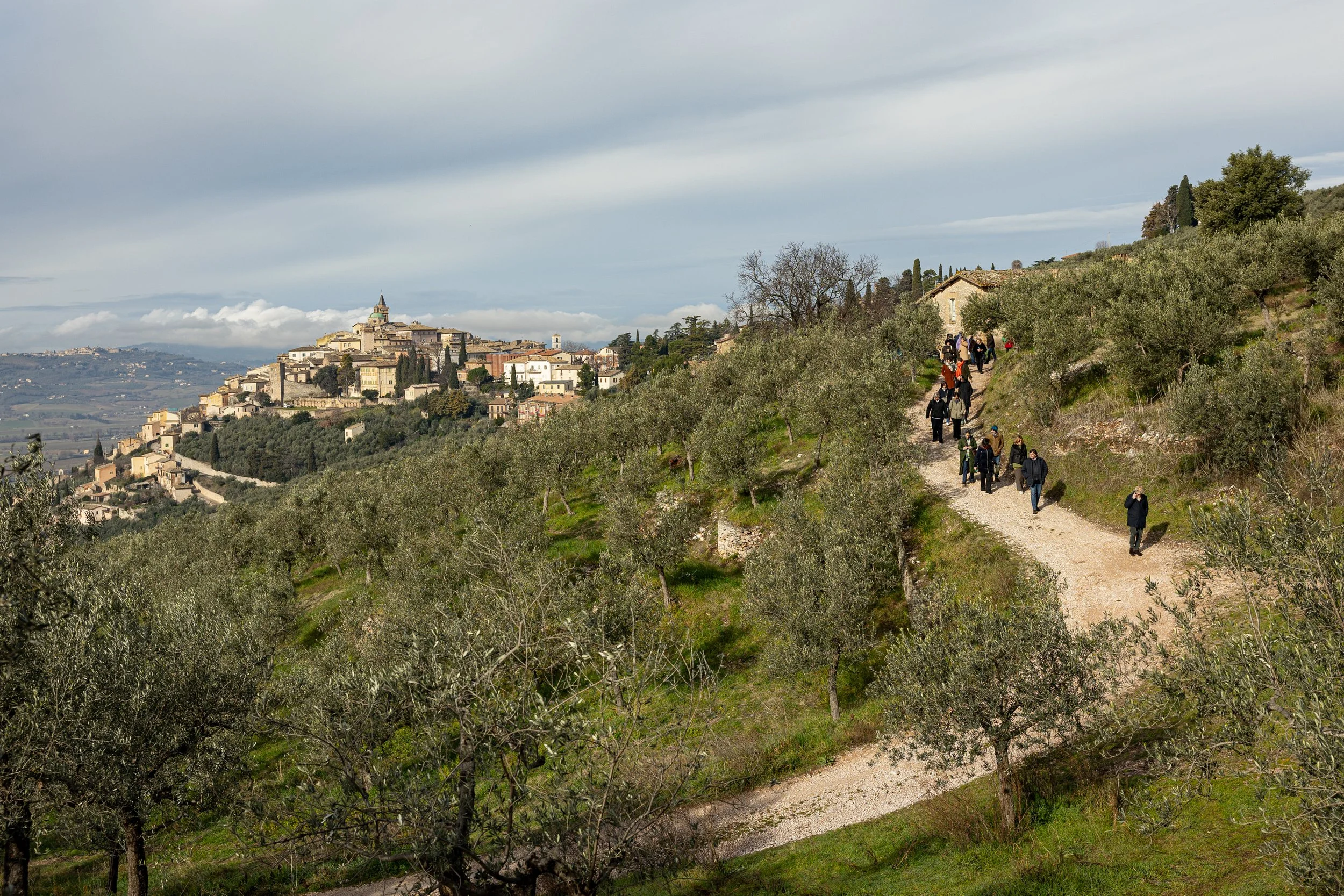
Exploring the Umbria DOP Olive Oil Road. Photo credit Pier Paolo Metelli for Strada Olio EVO DOP Umbria
What the Italian region of Umbria lacks in coastline, it makes up for with lush landscapes and abundant inland waters. Located in the heart of Italy between Tuscany, Lazio, and Marche, Umbria is marked by gentle slopes and valleys blanketed with olive trees, vineyards, and sunflower fields that are laced with rivers and lakes. Charming hilltop villages still bear clear signs of the region’s rich past, from Etruscan and Roman times to the medieval era.
Umbria also holds another kind of treasure: the work of local artisans, growers, and farmers, such as butchers, winemakers, and olive oil producers. In particular, extra virgin olive oil stands out as one of the defining elements of Umbria’s food and wine heritage.
The entire region falls under the Umbria PDO, which is divided into five colli — distinct olive-growing areas named for the surrounding hills — while the 60-kilometer-long olive grove stretching uninterrupted between Assisi and Spoleto is recognized by the U.N.’s Food and Agriculture Organization (FAO) as a Globally Important Agricultural Heritage System celebrating its beauty, culture, and community life. Local olive varieties, centuries-old traditions, and modern frantoi, or olive mills, come together amid churches, castles, villages, museums, and natural wonders to create a region rich in history and flavor.
Thanks in part to the Umbria DOP Olive Oil Road — a leading example of oil tourism in Italy that organizes events, tours, and activities throughout the region — local extra virgin olive oil serves as a guiding thread for exploring Umbria’s many treasures.
Typically robust and aromatic, Umbrian olive oil displays a remarkable range of flavors thanks to the region’s many cultivars, from the widely grown moraiolo, leccino, and frantoio to rarer local varieties. These olives thrive across the region, from the volcanic Colli Orvietani surrounding the beautiful town of Orvieto, perched atop a dramatic tuff cliff with its medieval center and magnificent cathedral, to the small Colli Amerini zone near the Lazio border.
Colli Assisi Spoleto: The Heart of Umbrian Olive Oil Heritage
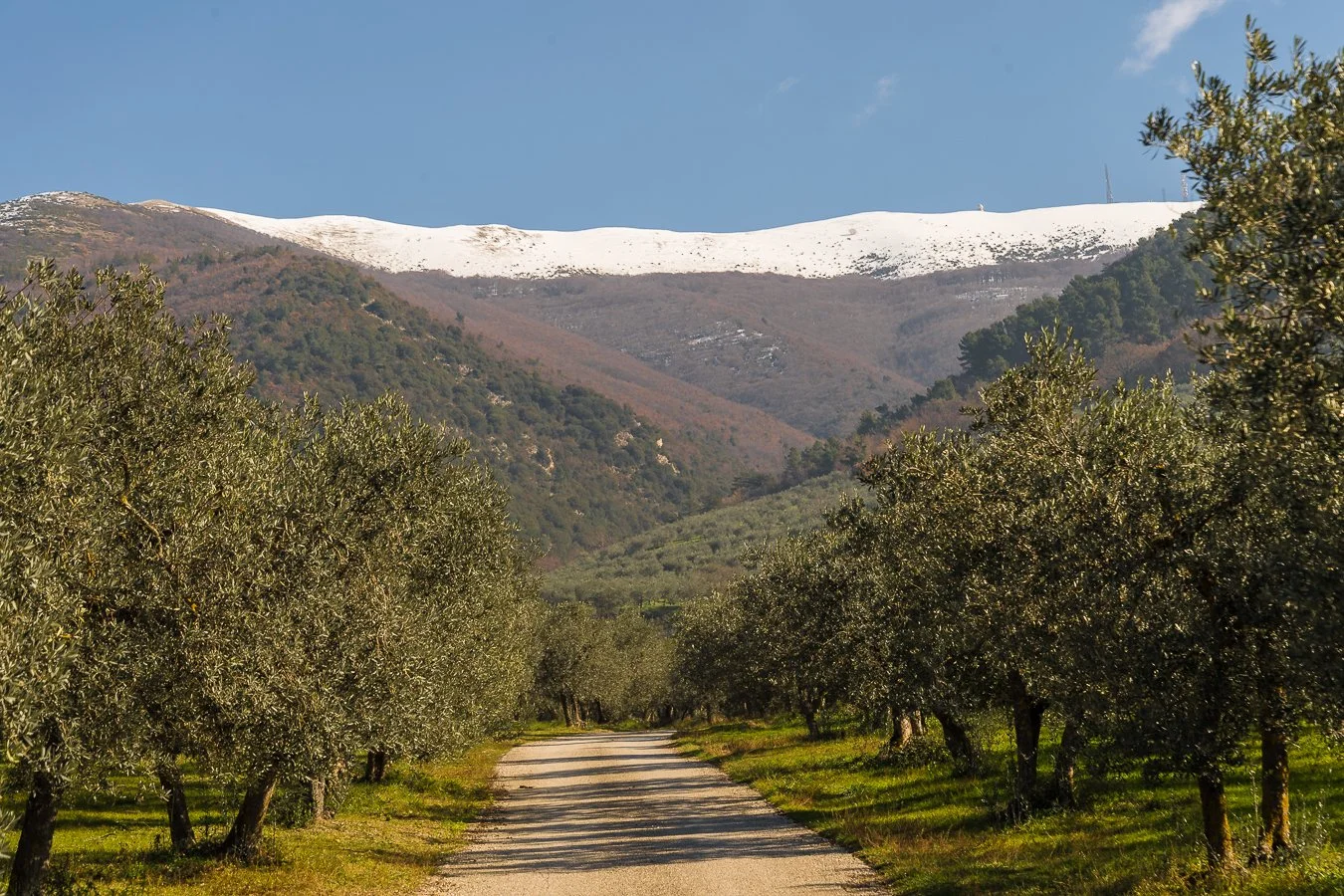
Olive groves at Frantoio Gaudenzi. Photo credit Frantoio Gaudenzi
The largest and most famous of Umbria’s five PDO subzones is the Colli Assisi Spoleto. It encompasses stunning historical and natural landmarks, including the charming town of Assisi, home to the majestic basilica dedicated to Francis of Assisi, the beloved saint who was born here and founded the eponymous monastic order devoted to poverty, solidarity, and nature. It is also home to the impressive Marmore Falls, whose three cascades form one of the highest waterfalls in Europe.
The hilly area also includes Trevi, a snail shell-shaped town woven together by fascinating alleys, picturesque squares, and flower-filled balconies. Widely considered the cornerstone of Umbria’s deeply rooted olive oil tradition, this lovely town is also home to the Museum of Olive Civilization, where visitors can learn about the region’s olive oil heritage and the history of the olive tree throughout the Mediterranean.
This area also produces some of Italy’s most awarded extra virgin olive oils thanks to outstanding local olive varieties—especially moraiolo, known for its bold, intensely bitter flavor—and the dedication of local producers. At the family-run Frantoio Gaudenzi, brothers Stefano and Andrea craft exceptional oils from olives grown in their groves across the region. Visitors can taste them at the company's headquarters near Trevi.
At the foot of the town, the Guidobaldi family runs Società Agricola Trevi Il Frantoio, producing extra virgin olive oil from moraiolo, leccino, and frantoio olives under both its own name and the premium Olio Flaminio label. A short distance away, in the flat hamlet of Bovara, stands the majestic Olive Tree of Sant’Emiliano, a thousand-year-old moraiolo tree that still bears fruit on land that once belonged to the Benedictine abbey of the same name.
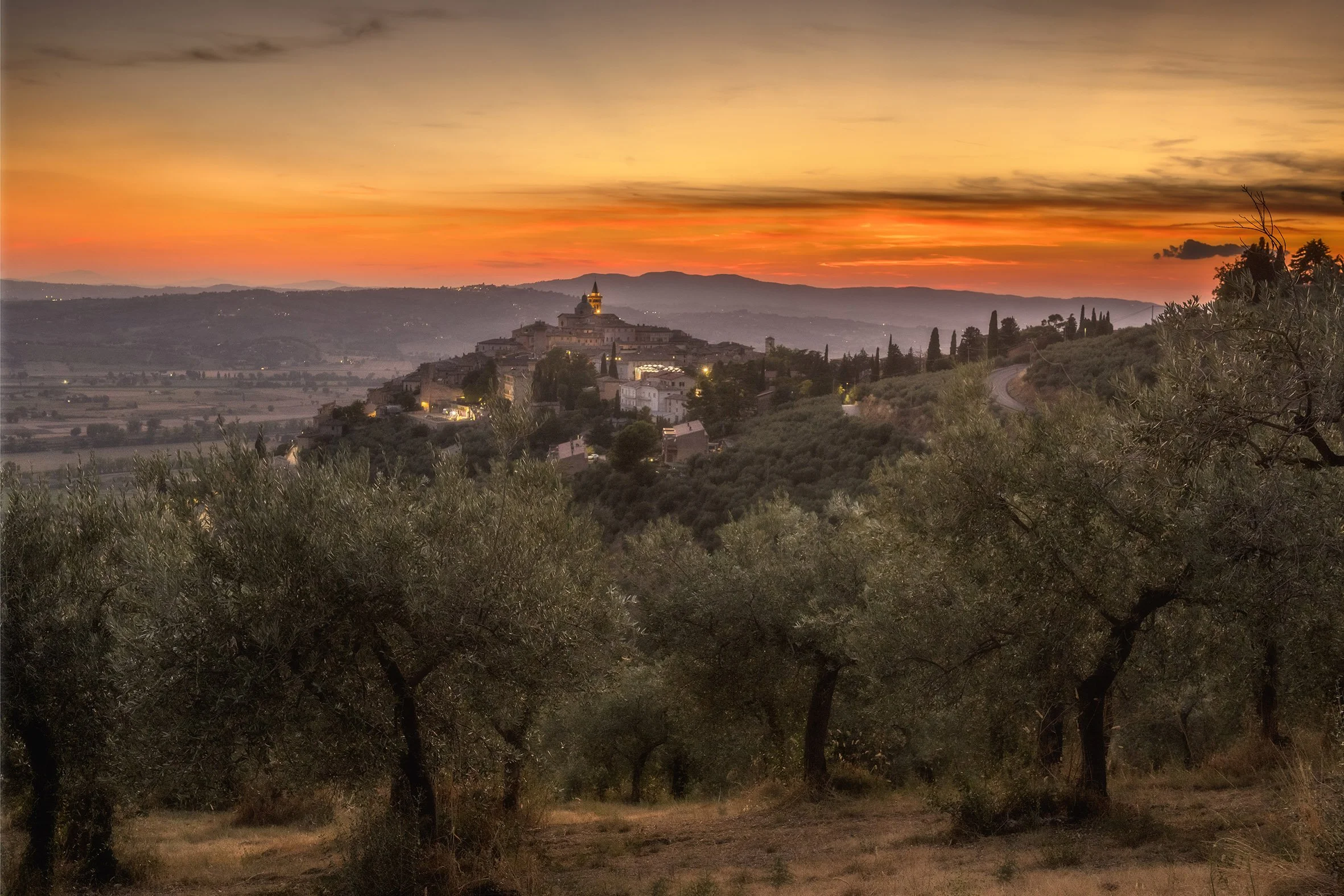
Sunset in the olive groves, overlooking Trevi. Photo credit Marfuga
In Campello sul Clitunno, not far from the beautiful Fonti del Clitunno nature park, the Marfuga family has been cultivating olive trees since 1817. Today, under the careful management of Francesco Gradassi, the estate produces outstanding oils, offers a wide range of tours and tastings, and welcomes guests to its warm and inviting farm.
Colli Assisi Spoleto also includes the enchanting medieval village of Spello. Among its winding alleys, intimate squares, and historic churches — including Santa Maria Maggiore, home to the splendid Baglioni Chapel with its Deruta majolica floor and magnificent frescoes by Pinturicchio — is Extra Vergine Oleoteca, a charming shop and bistro. Centered around a massive table crafted from a single olive tree, the space is lined with shelves showcasing regional and Italian extra virgin olive oils and other specialty products, while simple yet delicious dishes are served at outdoor tables in the piazzetta.
Colli Martani: Medieval Villages, Great Wines, and the Holy San Felice
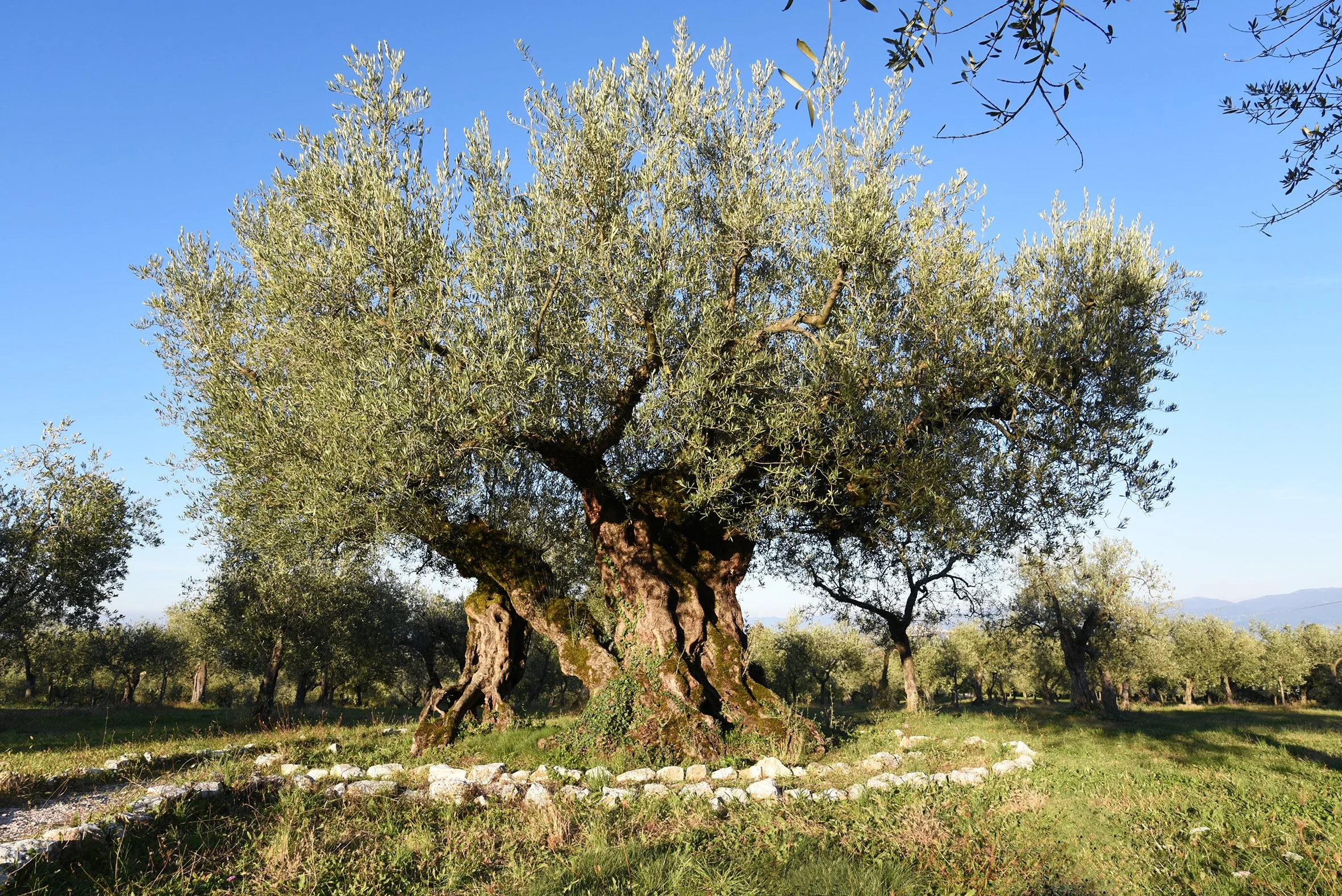
The Olive Tree of Macciano. Photo credit Claudia Pompilj
In the heart of Umbria, the Colli Martani area is perhaps the region’s most charming and beloved. Beautifully preserved medieval villages, renowned wineries, and picturesque olive groves define this charming corner of Umbria, where skilled craftsmen continue centuries-old traditions.
Alongside moraiolo and frantoio, the area’s signature olive variety is the rare San Felice. Linked to the abbey of the same name in Giano dell’Umbria, it produces oils with delicate herbaceous notes and a gentle bitterness and spiciness. Amid the groves and fields of the Oro di Giano olive farm stands the magnificent Olive Tree of Macciano. Having survived countless frosts over the centuries, it is deeply revered by locals. Legend has it that Francis of Assisi himself once leaned against its trunk, while its oil was traditionally used for votive lamps and medicinal purposes.
In the countryside around Bettona, a charming village that still bears traces of its Etruscan and medieval past, Graziano and Romina Decimi produce outstanding extra virgin olive oils, including a San Felice monocultivar and the No. 51 Slow Food Presidium extra virgin olive oil, a blend of moraiolo and other ancient varieties harvested from centuries-old trees growing on steep terraced hillsides. A visit to the estate includes an unforgettable sensory tasting.
Montefalco is home to the region’s most famous wine, made from the red Sagrantino grape. The Sagrantino Wine Road promotes wine tourism across the five villages of the DOC area — Montefalco, Bevagna, Gualdo Cattaneo, Castel Ritaldi, and Giano dell’Umbria — by connecting olive mills, farms, restaurants, agriturismi (farmhouse accommodations), and wineries. After admiring the Umbrian landscape from the panoramic terrace overlooking the valley that earned Montefalco the nickname "Balcony of Umbria," and visiting the Museum of San Francesco with its remarkable frescoes, stop at Olevm, a charming osteria just steps from the main square, where local ingredients, excellent wines, and extra virgin olive oil take center stage.
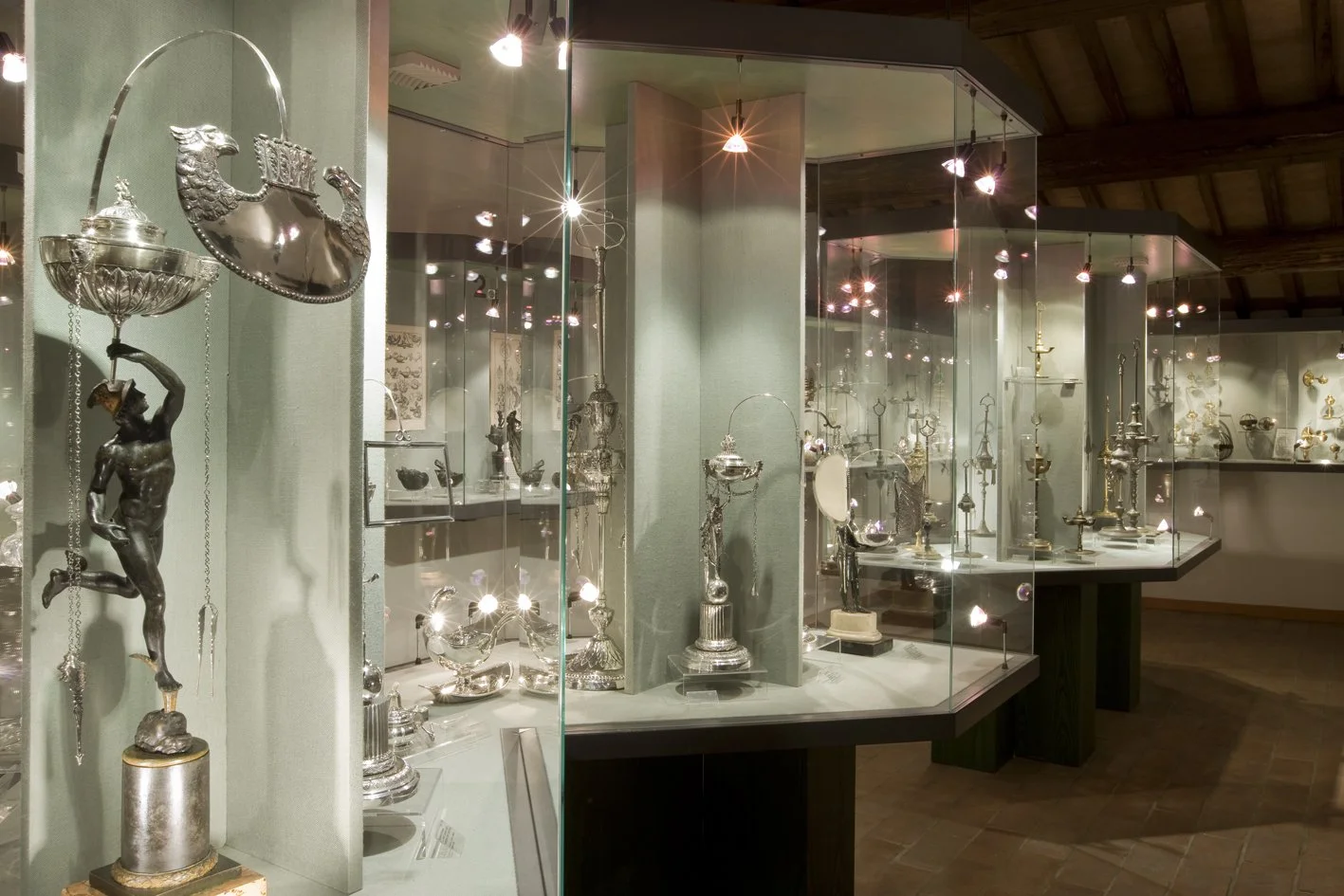
Antique oil lamps on exhibit at the MOO Olive Oil Museum. Photo credit Lungarotti Foundation
Torgiano is a picturesque village just outside Perugia, the region’s main city. Here, wine and olive oil go hand in hand, both in the surrounding countryside and in the village itself, where two excellent museums celebrate the history and culture of these defining local products. The MUVIT Wine Museum, established in 1974 and once referred to as “the best in Italy” by The New York Times, is complemented by the newer MOO Olive Oil Museum, housed in a former olive mill and showcasing an extensive collection of tools, oil lamps, and artifacts of rural life. Both museums are run by the Lungarotti Foundation, established by the late Maria Grazia Marchetti Lungarotti. The Lungarotti winery, founded in 1962 by her late husband Giorgio and now expertly managed by their daughter Chiara, remains another cornerstone of Umbria’s wine tradition.
Colli del Trasimeno: Olive Groves Along Lake Trasimeno
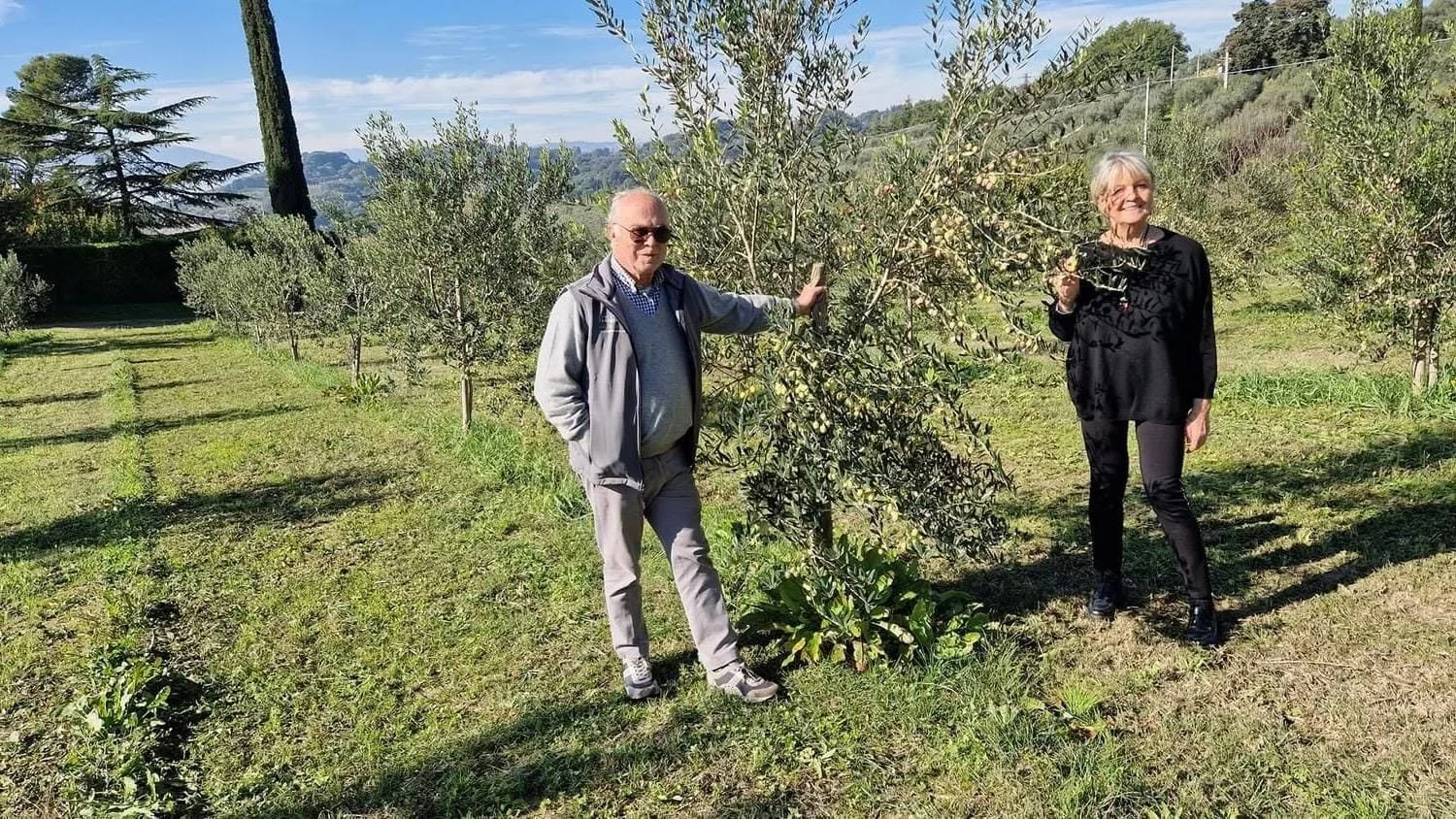
Giovanni and Giuliana Batta. Photo credit Frantoio Batta
The gentle hills surrounding beautiful Lake Trasimeno are dotted with olive groves. Stretching across the northern part of the region, from the charming town of Città di Castello to Perugia and the lake’s shores, this area is exceptionally rich in biodiversity and ideally suited to olive cultivation. The signature local variety is dolce agogia, an ancient olive that produces oils with fresh, herbaceous aromas and, despite its sweet-sounding name, pleasantly bitter and spicy notes.
Bustling with university life, culture, and music — including the winter and summer editions of the internationally renowned Umbria Jazz Festival — Perugia is well worth a visit in its own right. Explore its many museums, admire its magnificent palaces and the iconic Fontana Maggiore, a masterpiece of medieval art in Piazza IV Novembre (formerly Piazza Grande), or indulge in a chocolate tasting in honor of the city's long-standing confectionery tradition.
Just before entering Perugia, a short detour along the scenic Via San Girolamo leads to the Batta olive mill, housed in the same villa where Giovanni and Giuliana Batta live, surrounded by olive trees and a beautiful flower garden. Founded by Giovanni’s grandfather in 1923, the estate blends tradition with innovation, pairing carefully restored facilities with a modern olive mill. Today, it is home to more than 3,400 olive trees, primarily moraiolo, frantoio, and leccino cultivars, alongside the local borgiona and dolce agogia varieties, some of them centuries old. Lake Trasimeno is the area's other great attraction. Italy’s fourth-largest lake, it is home to three small islands, two of which — Isola Polvese and Isola Maggiore — can be reached by boat and explored by visitors.