
Why Great Olive Oil Takes a Full Year to Produce

Have you ever wondered what it’s like to be an olive oil producer, or how olive oil makes its journey from grove to bottle? Producing great olive oil is a year-round endeavor, with each season bringing its own challenges and decisions.
When I was an olive oil buyer, the new harvest always marked the beginning of a new olive oil year. Yet for producers, the work never really stops. Even as one harvest ends, preparations for the next are already underway. By winter, it is already time to start thinking about next year's harvest.
Winter: Pruning for Next Year’s Crop
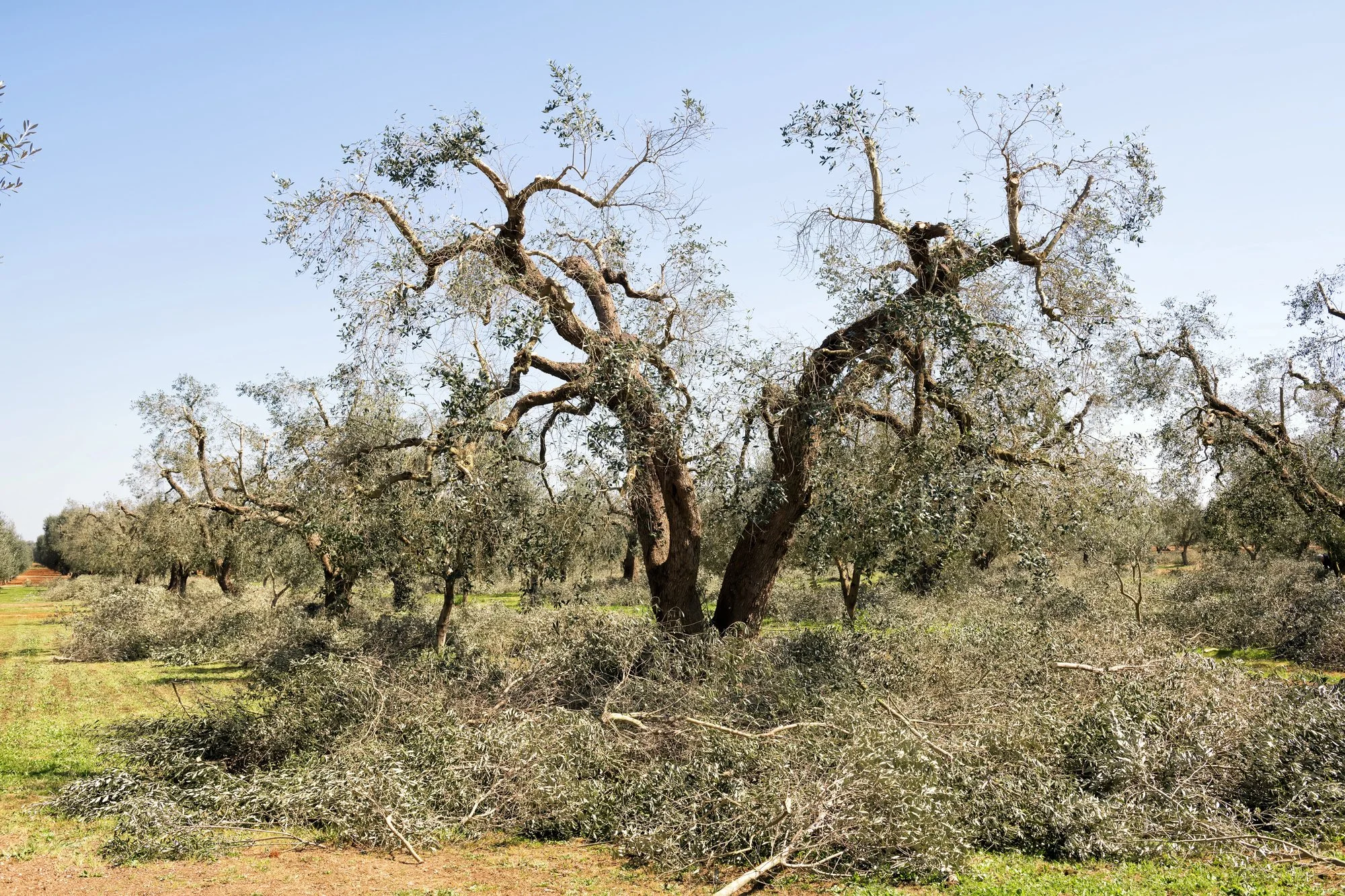
Olive trees being pruned in Salento, Puglia
While producers mill in October, November, and December, based on location and microclimate, late fall is a whirlwind of quality control, milling, filtering, bottling, and shipping. As the winter winds begin to soften, it is time to prune the trees.
Depending on the size of the producer, the varieties of trees, and the numbers of farm workers available, the trees are pruned in late winter into early spring. Some are trimmed every year, while at other farms the fields are on a two-to-three-year cycle.
The trees are pruned to allow sunlight and breezes through the canopy. As the olives are hand-picked (or hand-raked) in the fall, the trees may well be trimmed to keep the height manageable. But in the spring, we are looking at the buds, flowers, and “baby” olives on the trees.
The New Year: Attending Trade Shows

During winter, trade fairs take place around the world
For many producers, the competition season kicks off the social season in December, with awards presented in Rome. In the new year, competitions take place around the world, including Italy, Spain, Japan, and the U.S.
And then there are the trade fairs where they hope to make new contacts while supporting relationships with existing customers. These include Verona for SOL Agrifood together with Vinitaly, Olio Capitale in Trieste, Taste in Florence, TuttoFood in Milan, the Fancy Food Show in New York, and the U.S. International Olive Oil Competition.
Spring and Summer: Managing the Grove
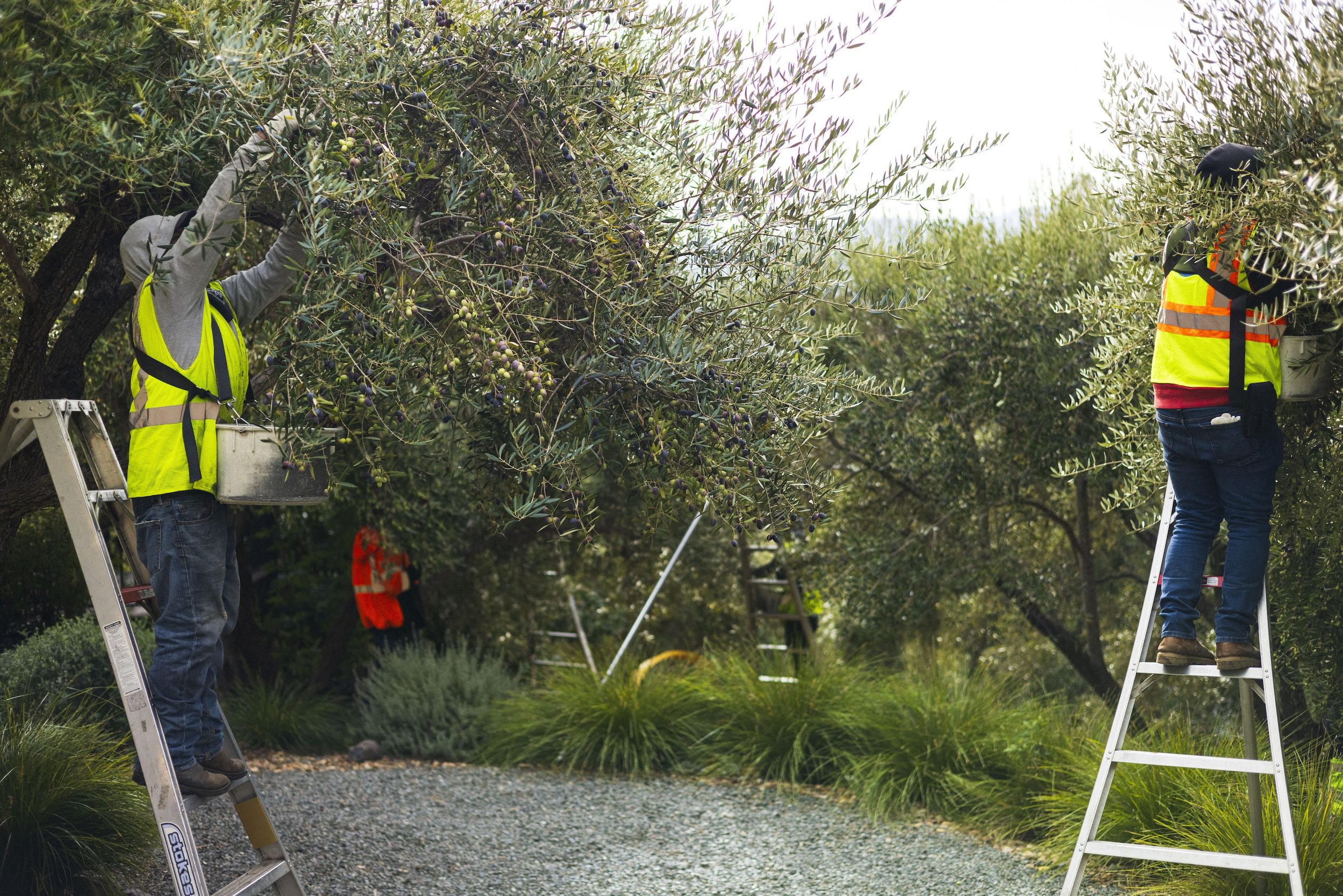
Gathering olives at the grove
As the competitions and trade fair season slows, the weather warms and the olive trees concentrate all their efforts on production. The producers monitor the fields daily. They watch the weather carefully to predict whether they will need to make adjustments to the application of protective clays, fertilizers and chemicals (as allowed by regulations), organic preparations, and irrigation, if possible.
Throughout the growing season, there are costs: fuel for equipment, energy to pump water for irrigation, sensors and traps for unwelcome bugs, preparation of equipment, hiring workers in advance of the fall harvest, and regulatory paperwork. Supplies, tubing, and filters.
Throughout July, August, and into September, there’s always an eye to the sky. Rain at the right time will assure a good harvest. Too much rain can bring a less concentrated olive oil and rain that falls at the wrong time can make it difficult to harvest on steep hillsides.
Harvest and Milling: Where the Year’s Work Pays Off
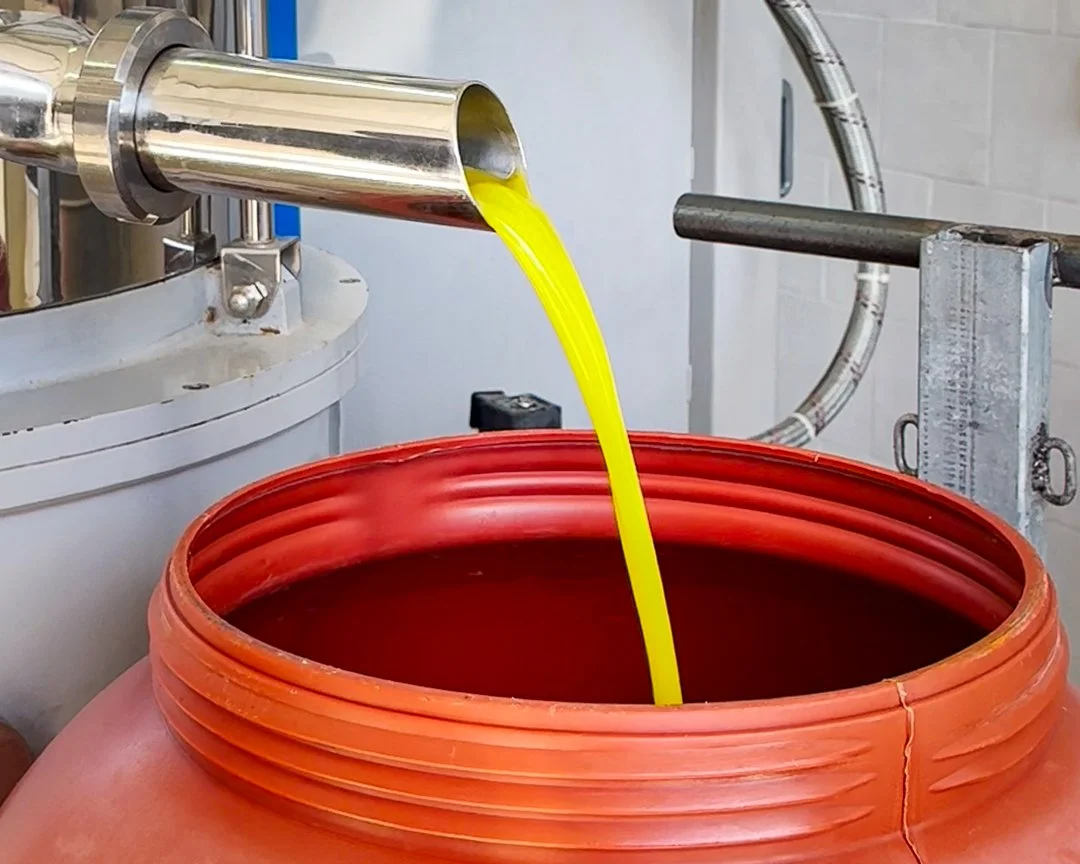
The first olive oil of the season is called olio nuovo. Photo credit Michele Becci
As the harvest approaches, the olives are tested for their yield and components. Optimizing is the name of the game — the assessment includes the ideal ripeness for the preferred flavor characteristics, the incoming weather (precipitation? temperatures?). Which fields, groves, or tree varieties are ready first? Wait a day? Wait a week? Is the olive fly nearby?
For most premium olive oils and most varieties of olives, the milling is done while the olives are green, perhaps with a blush of pink or purple. The riper the olive, the less pungent the oil, the greater the yield, and perhaps the lower the quality.
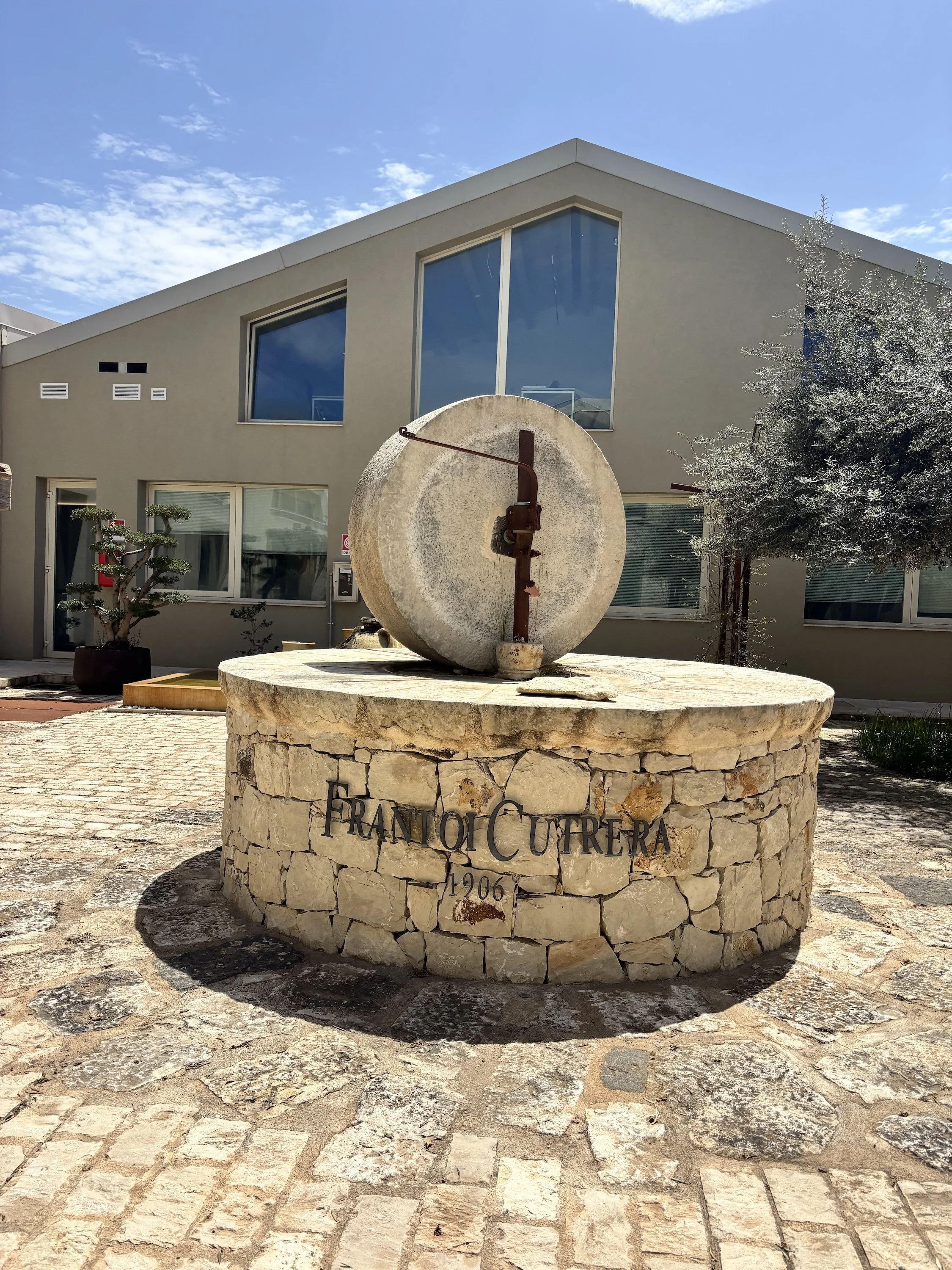
An ancient olive mill at Sicilian producer Frantoi Cutrera. Photo credit Luanne Savino O’Loughlin
In Italy, the harvest takes a winding pathway from Sicily to the north. The country’s hills and valleys feature pockets of trees ready to be picked before others. Most of the production in Italy is in hilly fields, where olives continue to be hand-picked, albeit with the assistance of “power rakes” — simply garden tools that are held by hand. Spain has more groves planted in super-intensive rows, and the flatter terrain allows the use of specialized machinery to harvest olives from the trees.
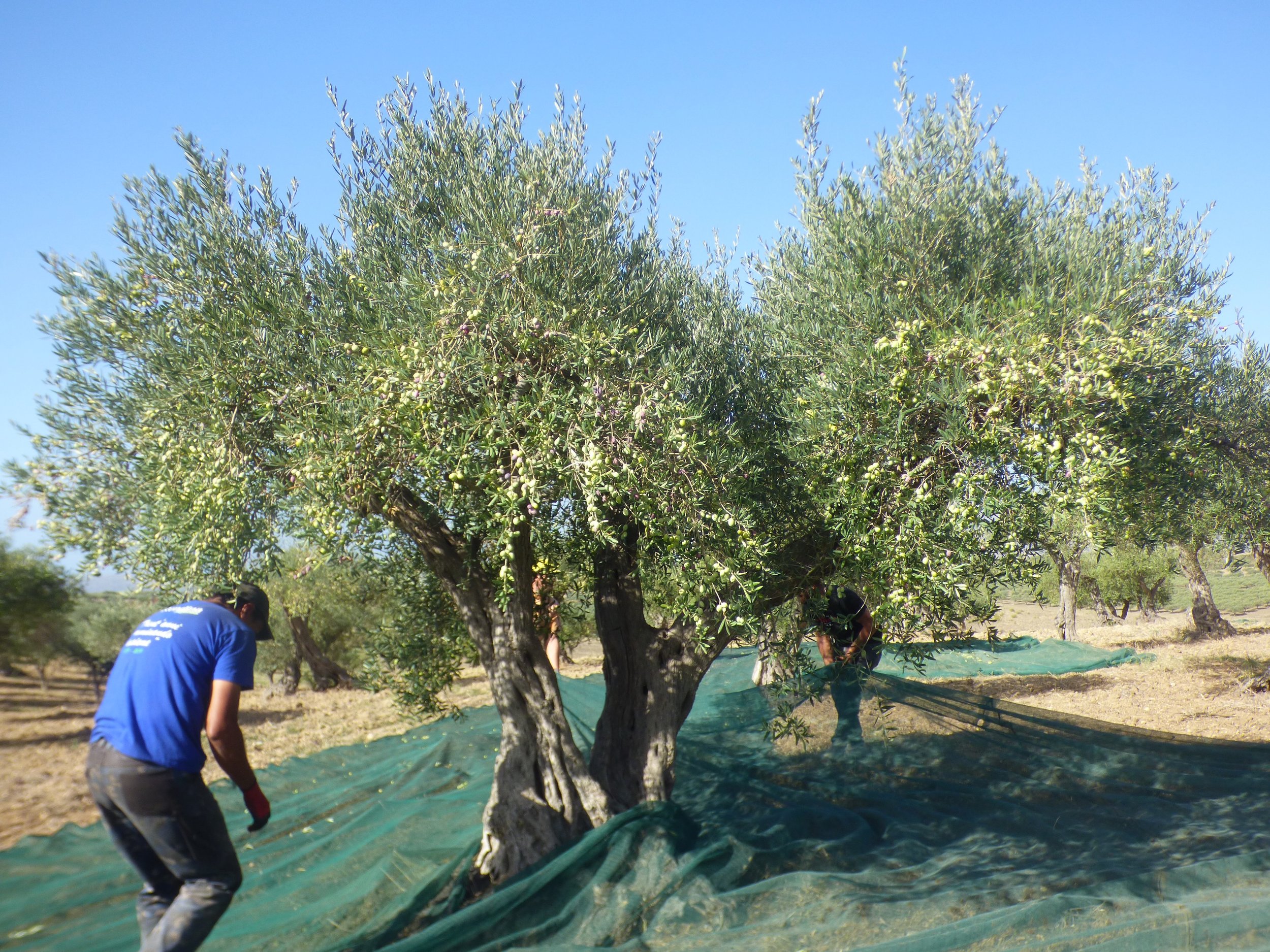
Harvesting olives by hand
Finally, the day comes when the harvest can begin. Depending on the size of the operation and the terroir, the picking and milling may be done in two weeks or two months. With current modern milling practices, olives are picked and pressed the same day. Each day’s pressing is evaluated continually, and generally placed in its own tank. At this point, it’s time for lab analysis, tasting, bottling, and shipping. Today’s labels include QR codes to provide more information about the oil.
By the time a bottle reaches your kitchen, it reflects a full year of decisions, labor, and care in the grove. And once the new oil has been analyzed, tasted, bottled, and shipped, the cycle begins again.