
Is Bag-in-Box Olive Oil Any Good?

Entélia, La Laguna, Poderi Borselli, Séka Hills and Corto
Plastic squeeze bottles burst onto the olive oil scene over the last few years and caught fire with consumers. While they are undeniably user-friendly in terms of functionality and price point, they have most olive oil pros shaking their heads since plastic and proximity to heat are not olive oil-friendly.
“It's just as easy to pour it out of a bottle as it is to squeeze,” says Chris Calvert, Professor Emeritus at U.C. Davis and owner of Ciarlo Fruit & Nut, who serves on the California Olive Oil Council, voicing the frustration that many pros have expressed about the meteoric rise in popularity of packaging—olive oil brand Graza tripled its previous year's gross sales in 2025, reaching approximately $144 million—that doesn’t benefit the product.
Yet, another type of plastic packaging gaining popularity alongside squeeze bottles is causing far less consternation—bordering on none—among those who take their olive oil seriously: bag-in-box, or boxes filled with plastic bladders usually associated with wine.
Bag-in-box packaging has been available to olive oil producers since the 1960s. The style didn’t catch on as it did with wine, however, since olive oil producers were as dubious about plastic bags as they were about plastic bottles.

Davide Borselli courtesy of La Seggianese
“Bag-in-box is much more durable than glass,” says Davide Borselli, the owner of Podere Borselli. “However, at the beginning, the plastic source used was made for wine, not olive oil.” He is concerned not only about the plastic compounds potentially leaching into the product, but also about the tap mechanism not being appropriate for the higher viscosity of oil.
Bag-in-Box Extra Virgin Olive Oil Advantages
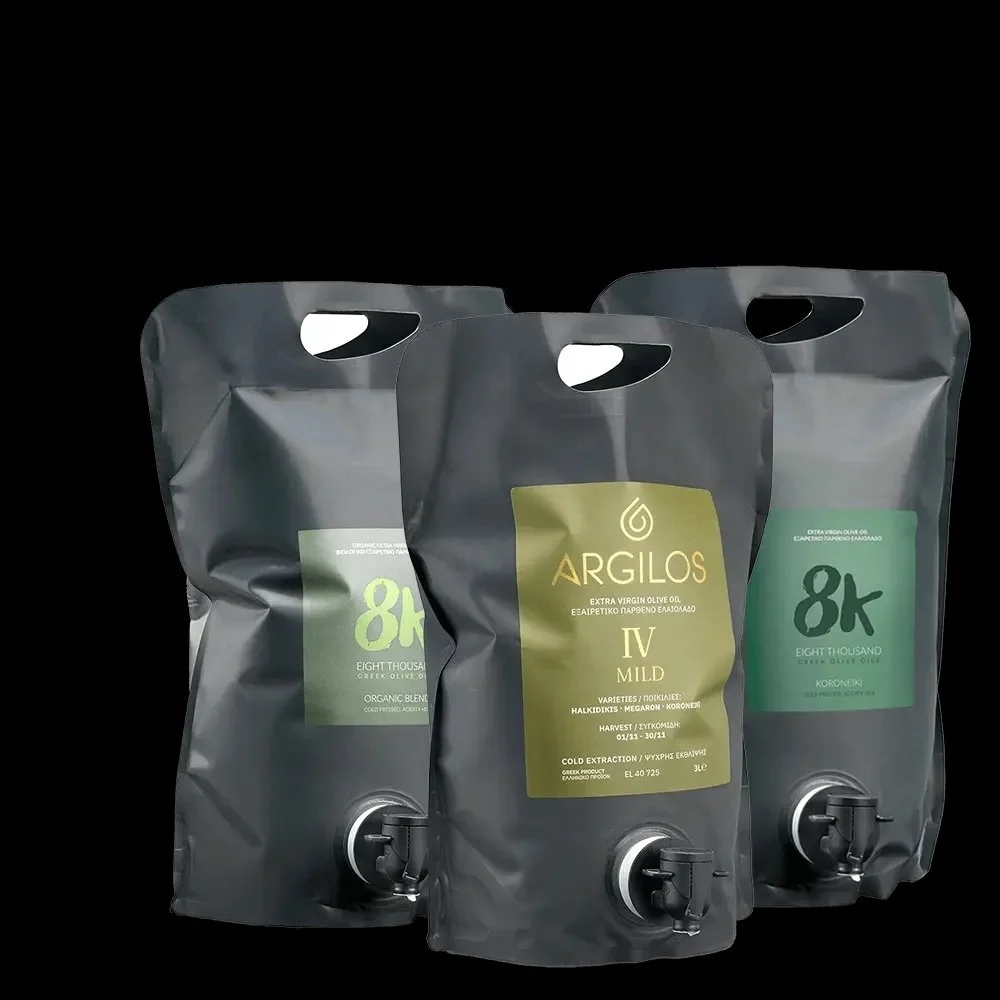
Olive Epitome olive oil pouches
Durable
More sustainable
Protective
Beyond being less breakable than glass bottles, one big advantage of bag-in-box packaging is its lower carbon footprint. Bag-in-box olive oil is much lighter than olive oil packaged in glass, so it’s less expensive to ship.
Plus, those cardboard boxes protect olive oil against its biggest enemies—light, heat, and oxygen—even better than traditional packaging.
Mylar Olive Oil Bags
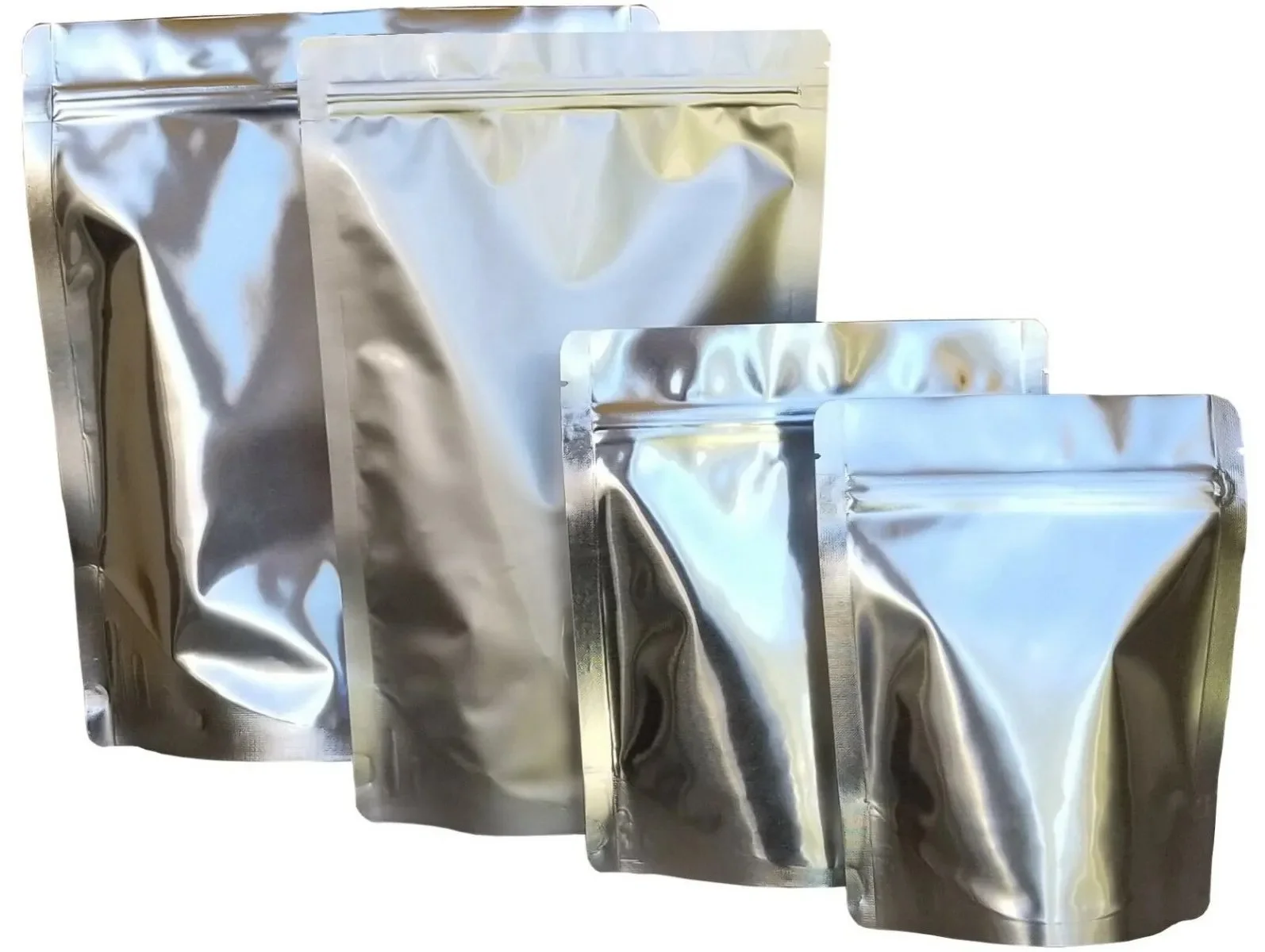
Mylar bags for olive oil
Used for dry food storage when it was first introduced in the 1950s, Mylar started entering the olive oil picture in earnest in the mid-2010s. Mylar is a type of polyester film known as BoPET (biaxially oriented polyethylene terephthalate). It is made from PET resin, the same polymer family used to make plastic beverage bottles, but processed into a thin, strong, flexible sheet instead.
“I'm looking at Mylar bags for a number of reasons,” says Calvert, whether or not they are also placed inside a box. “Mylar is good because it's not going to let in sunlight. When you use the olive oil, you open up the valve, you get the olive oil you need, and no air ever goes back in,” he says, keeping olive oil fresher than the traditional dark glass bottle or tin.
Those who associate Mylar with flimsy birthday party balloons may initially find this puzzling. Mylar is technically a form of polyester, but high-quality, food-grade Mylar bags include multiple layers of various materials. Alora Packaging, a maker of food-grade Mylar bags, says these bags consist of several polyester layers for insulation, durability, and heat resistance, alternated with aluminum for food protection, light resistance, and oxygen resistance.

Luanne O’Loughlin
“The first time I saw a Mylar bag was about 10 years ago,” recalls Luanne O’Loughlin, a former olive oil importer with olio2go, “when Natalia Ravida of Ravida in Sicily sent me an empty container so that I could see the empty Mylar and the empty box, which was fascinating,” she says. “It struck me as being a good thing for high volume.”
Indeed, restaurants were one of the earliest targets for bag-in-box olive oil. “Corto does a bag-in-box which is mostly for food service,” says Calvert. “They have a nice bag-in-box that they get certified extra virgin as well.”
“We sold a lot of bag-in-box to some really serious consumers,” says O’Loughlin. “There was a restaurant we did special orders for and brought in a bag-in-box of a particular oil from Lazio. So certainly the restaurants were comfortable with the format, and especially not to have glass that can break.”
High-quality Mylar pouches designed for olive oil work well for the product, are easier and less expensive to transport (which reduces the overall carbon footprint), and offer good value, but they aren't without drawbacks.
Drawbacks of Mylar Bags for Olive Oil
Functionality
Size
Bags-in-boxes are not as handy as bottles, even if it’s not that hard to aim the spout over whatever pan or vessel you’re using. Some brands have worked around this by offering olive oil in a Mylar pouch with a handle for easy positioning. Some worry that’s not how home consumers will use them, which could lead to practices — such as decanting the oil into other containers — that denature the oil or cause waste.
“A restaurant might decant it into a plastic squeeze bottle, which we might not like for other reasons,” says O’Loughlin, though restaurants may use oil quickly enough to empty the bottle regularly and keep the oil out of the bag for only a short time. “My fear is with consumers and bags-in-box, what do you waste,” she says. If home cooks decant into other vessels, they may toss whatever leftover oil was decanted for a specific use. If they decant it into a squeeze bottle and leave it near the stove, the benefits of Mylar packaging become inconsequential.
5 Bag-in-Box or Mylar Bag Olive Oils
As the bag-in-box olive oil category grows, several brands, though sometimes available in grocery stores or specialty markets, are easier to buy online.
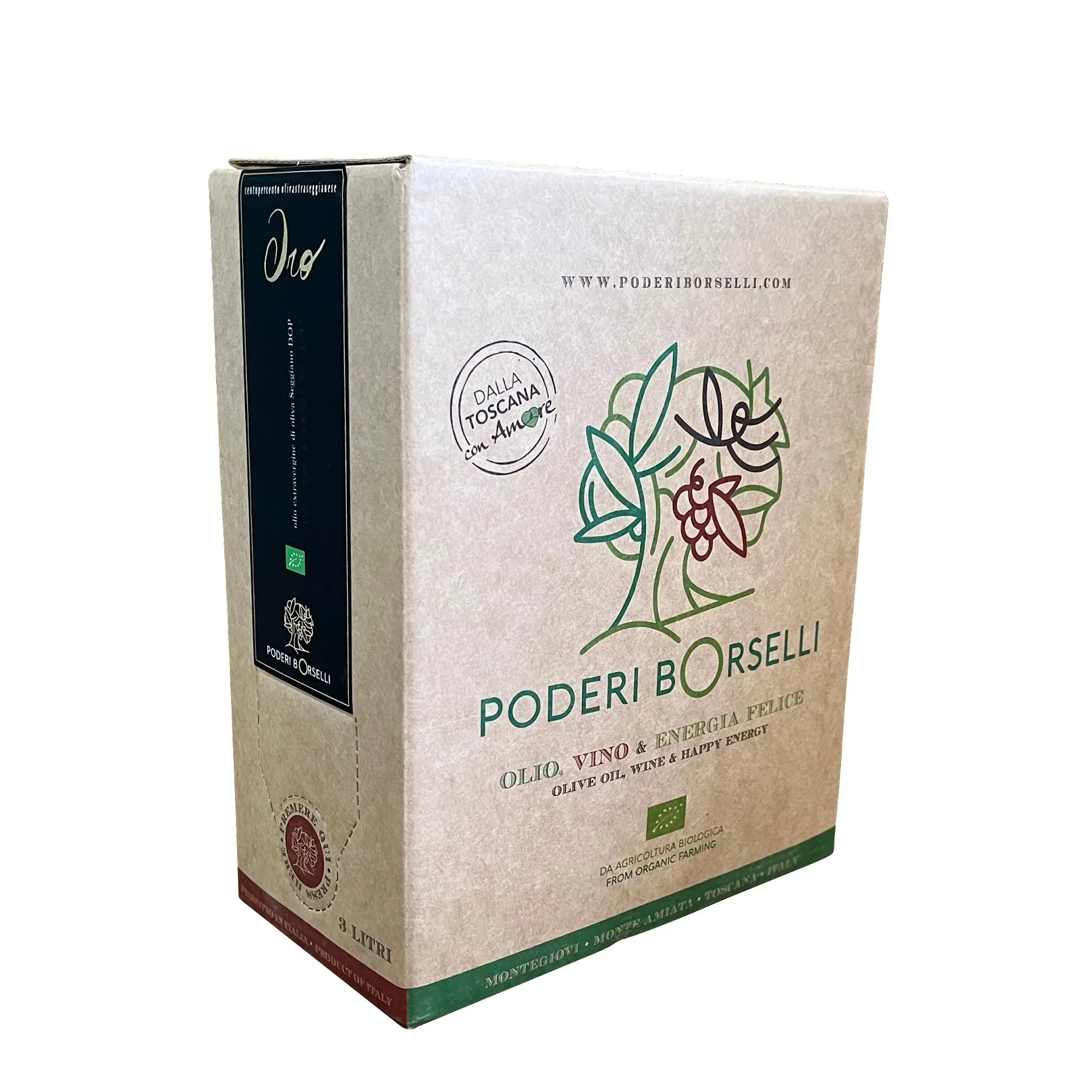
Poderi Borselli Organic Extra Virgin Olive Oil
Intensely fruity and spicy with mild bitterness, Poderi’s Oro is an organic olive oil made from lesser-known Tuscan cultivar Olivastra Seggianese.
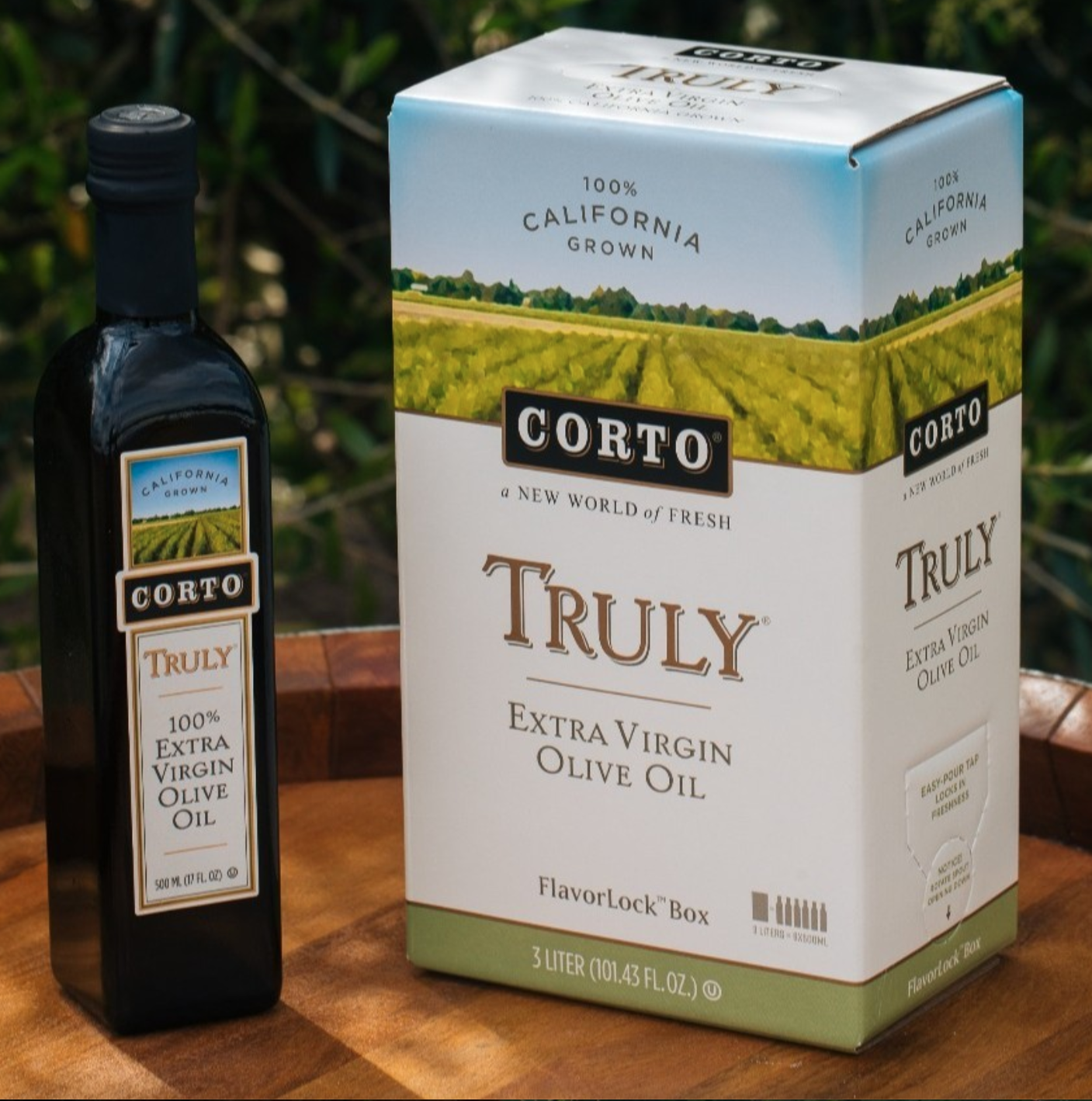
Corto TRULY Extra Virgin Olive Oil
Certified extra virgin by the California Olive Oil Council — meaning it has passed one of the strictest sensory evaluation panels in the world of olive oil — Corto’s TRULY is made with a blend of arbosana, arbequina, and koroneiki for a full-bodied, floral result.
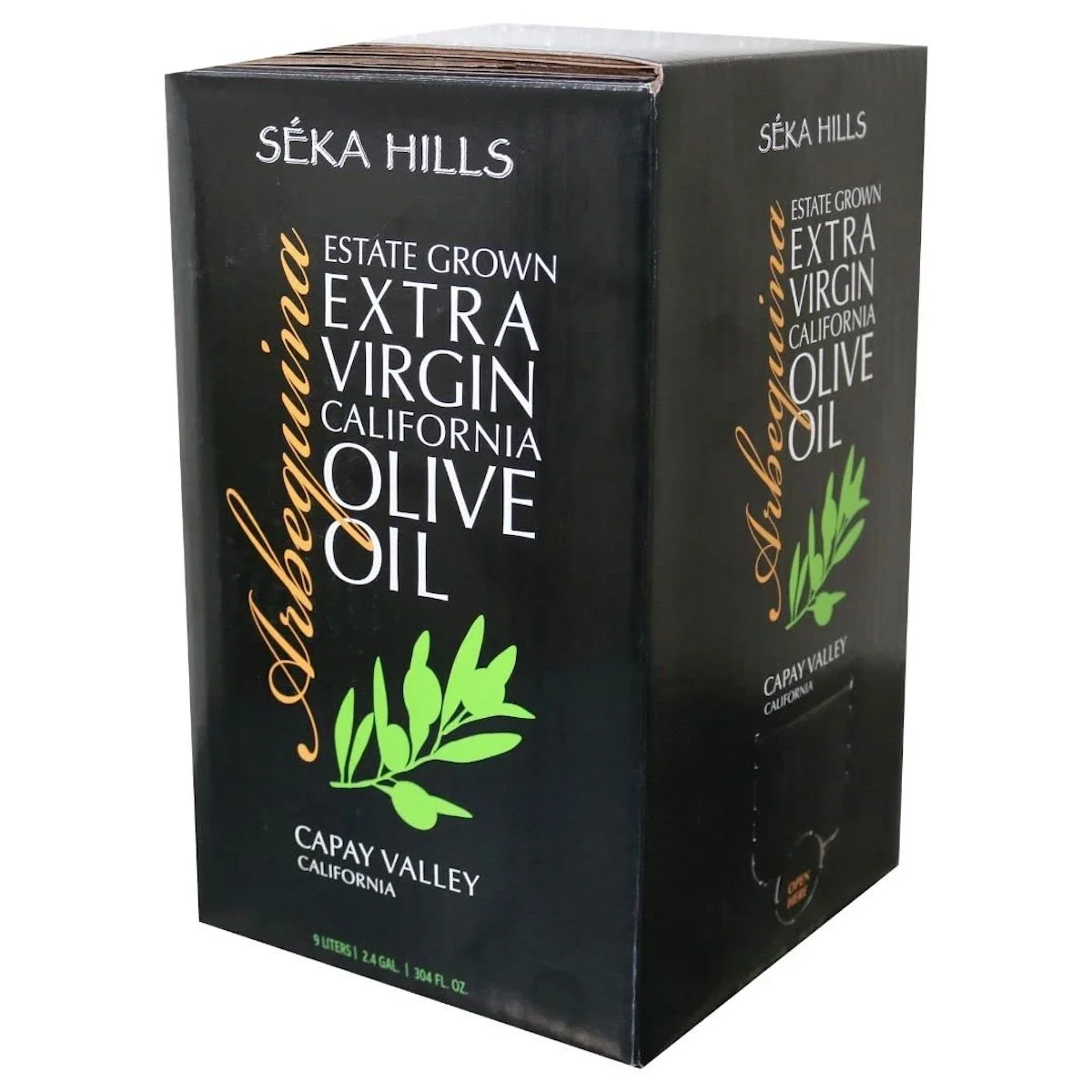
Séka Hills Arbequina Extra Virgin Olive Oil
Fresh and herbaceous, made from 100% California-grown arbequina olives, Séka Hills is an early favorite bag-in-box option among chefs for its balanced nature.
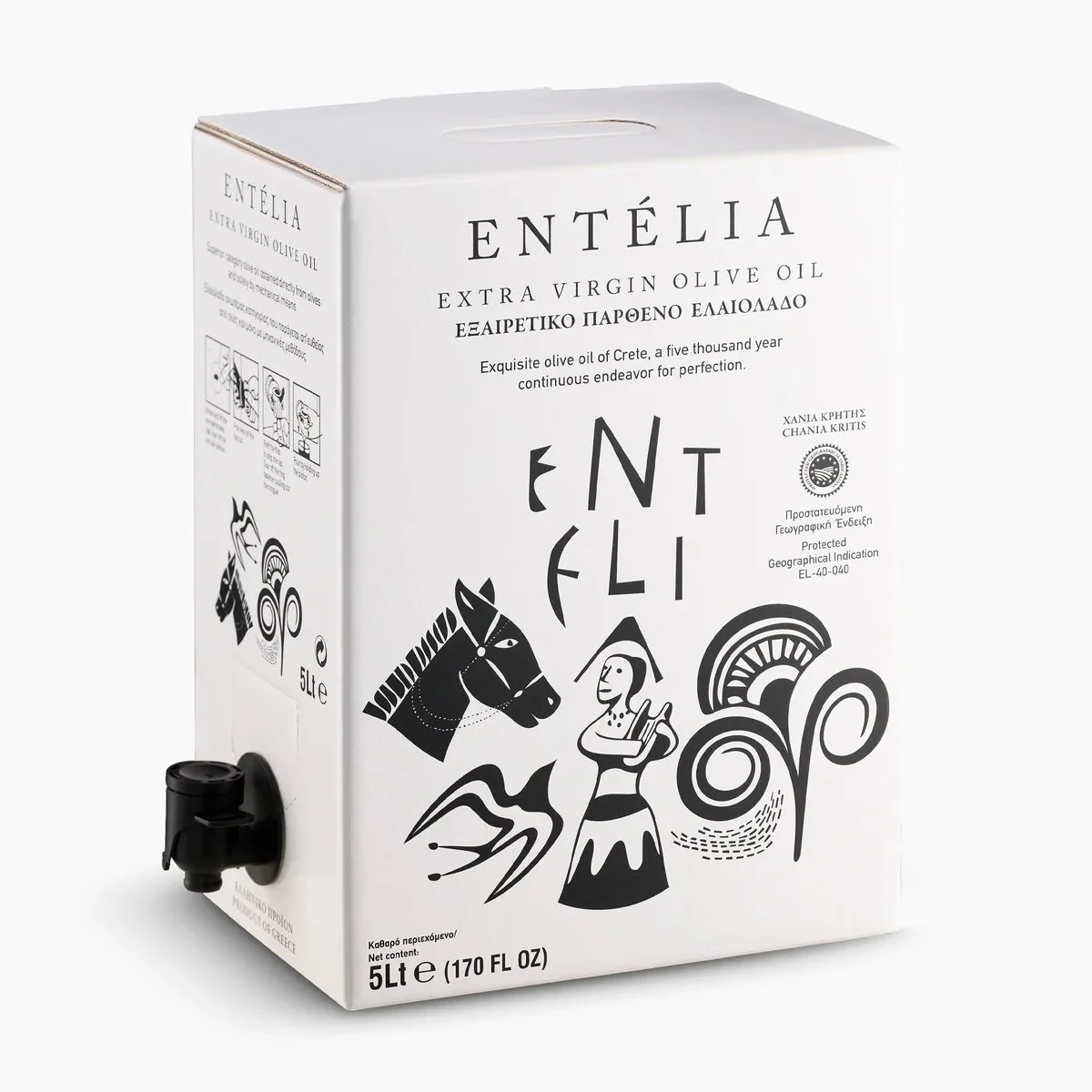
Entélia Bag-in-Box Extra Virgin Olive Oil
At 5L, this koroneiki olive oil from Crete is one of the best values you can find for a volume-packaged, extra virgin olive oil that doesn’t sacrifice quality and flavor. Mild and juicy in character, it’s perfect as an everyday cooking oil.
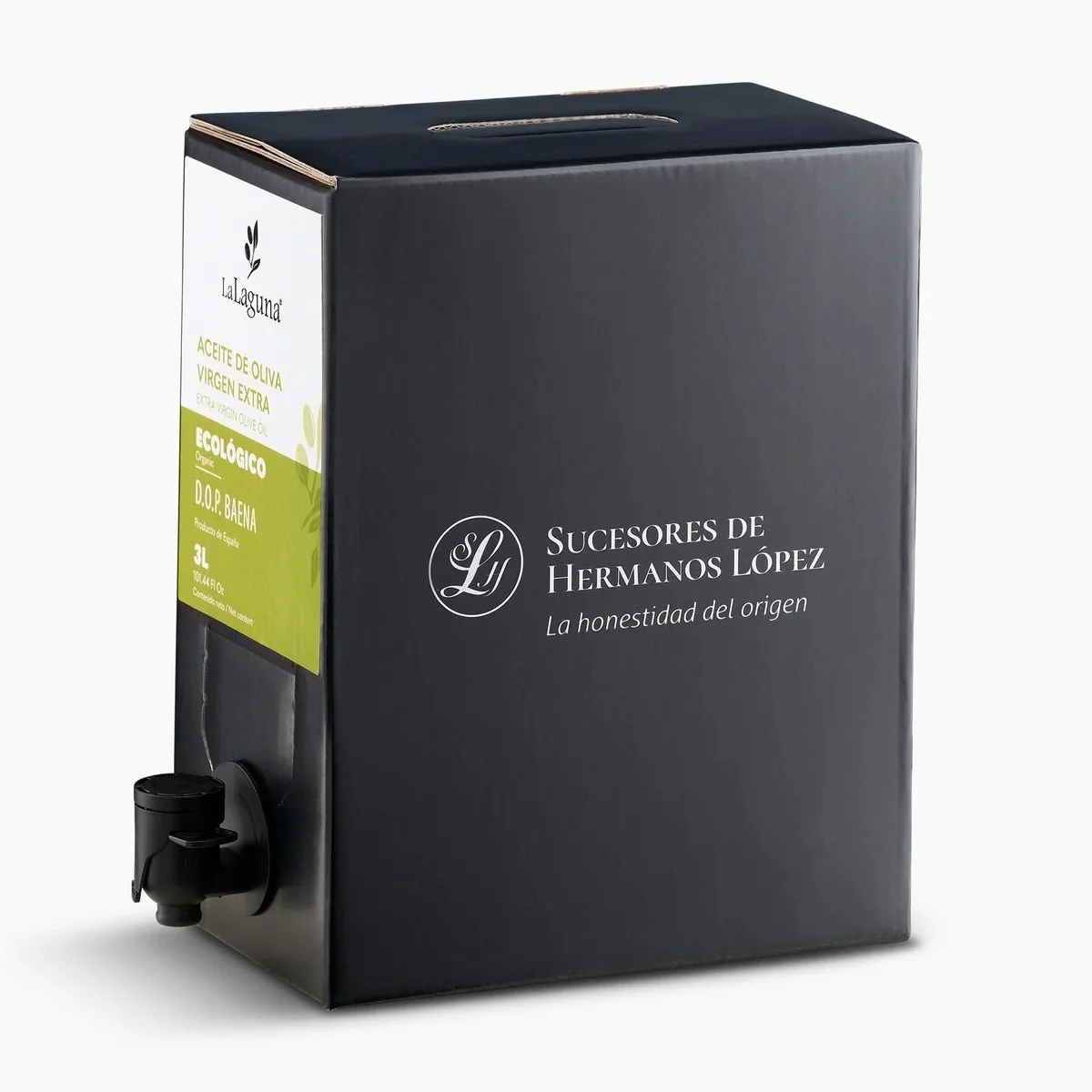
La Laguna Organic Bag-in-Box Extra Virgin Olive Oil
Three Spanish cultivars — picuda, picual, and hojiblanca — combine for an organic, extra virgin olive oil that is sweet and lush, with fruity and herbaceous notes, perfect for everyday uses like roasted veggies, white meat and seafood dishes, and salads.