
Moroccan Olive Oil Gets Big
Moroccan olive oil has been making steady inroads in the global market and climbing up the top-ten chart of international producers: the 2025-2026 harvest in Morocco came in at number seven. According to the International Olive Council (IOC), Moroccan producers experienced a significant bumper crop during that harvest that resulted in 200,000 tonnes of olive oil—more than double the previous year’s 90,000 tonnes.
The North African country benefited from this record harvest after a cooler-than-usual winter, followed by spring rains during the blooming season that produced healthy drupes with high oil content. Thanks to this windfall, Morocco dramatically boosted sales to Spain, from 103 tonnes in the first four months of 2025 to an extraordinary 10,385 tonnes in the same period in 2026.
The exceptional harvests in Morocco and its nearby North African neighbor, Tunisia, helped offset the supply shortage caused by much lower yields in European countries in recent years.
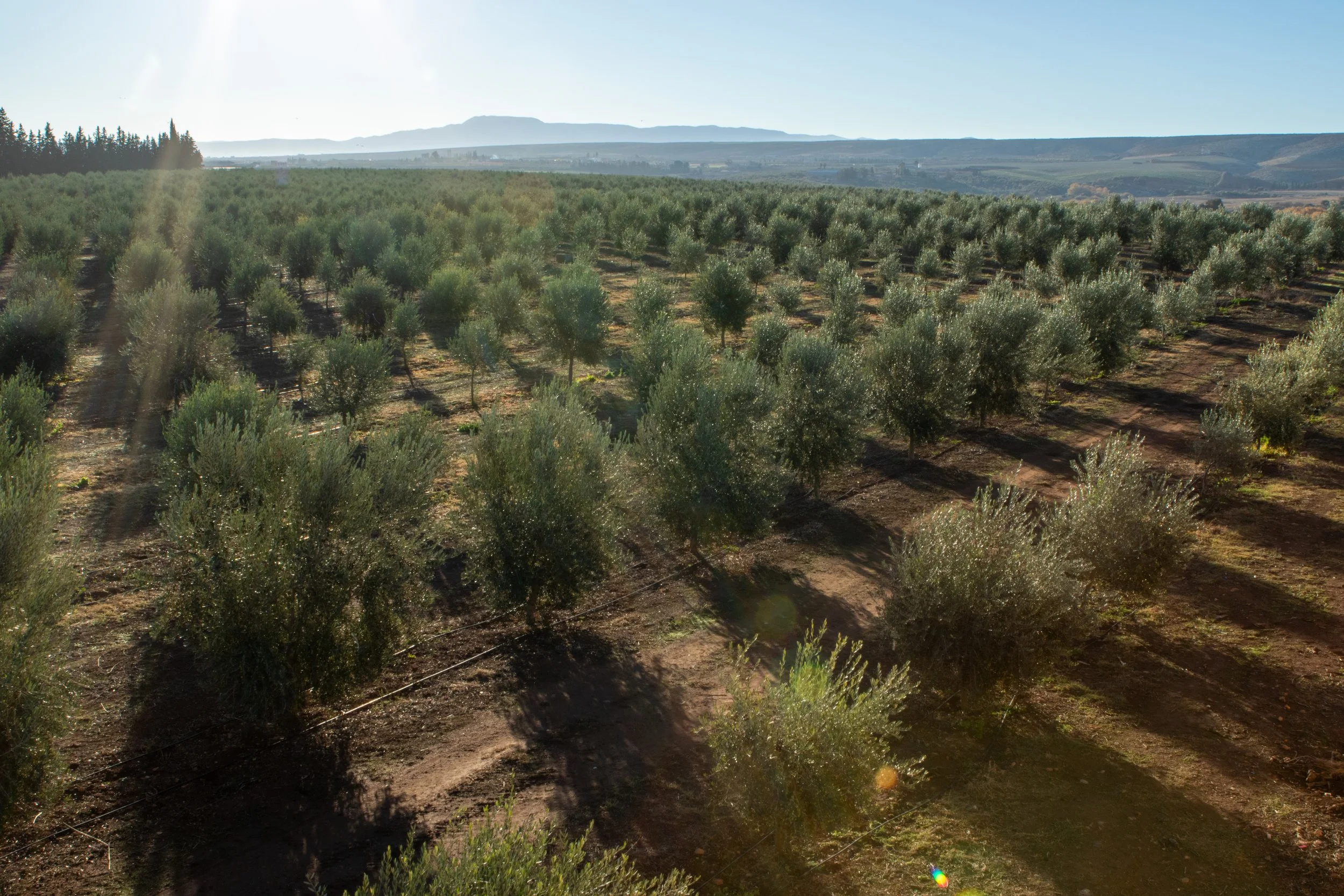
Olive groves
Morocco’s Domestic Olive Consumption
While many countries export most of their olive oil, Morocco consumes 75% of its olive oil domestically (an average of 4kg per capita). Olive oil is a staple of Moroccan cuisine, and people widely use table olives in dishes such as tajine, a slow-cooked stew made with chicken, lamb, beef, or vegetables. (Morocco is also a top producer and exporter of table olives, with an annual average of 90,0000 tonnes, 60,000 tonnes of which are exported. This puts it among other top exporters, which include Egypt, Spain, and Turkey.)
Morocco’s largest olive-growing region is Marrakech-Safi, where 223,600 hectares of agricultural land are covered in olive groves. Fès-Meknès, with rainfall above the national average in a country where drought is an ongoing challenge (37% of groves are irrigated), follows closely as another major contributor to the country’s olive oil output.
The central region of Béni Mellal-Khénifra receives minimal rainfall and depends on modern irrigation systems. Other olive-growing regions include l’Oriental, Tanger-Tétouan-Al Hoceima, Rabat-Salé-Kénitra and Casablanca-Settat.
Picholine Is Queen
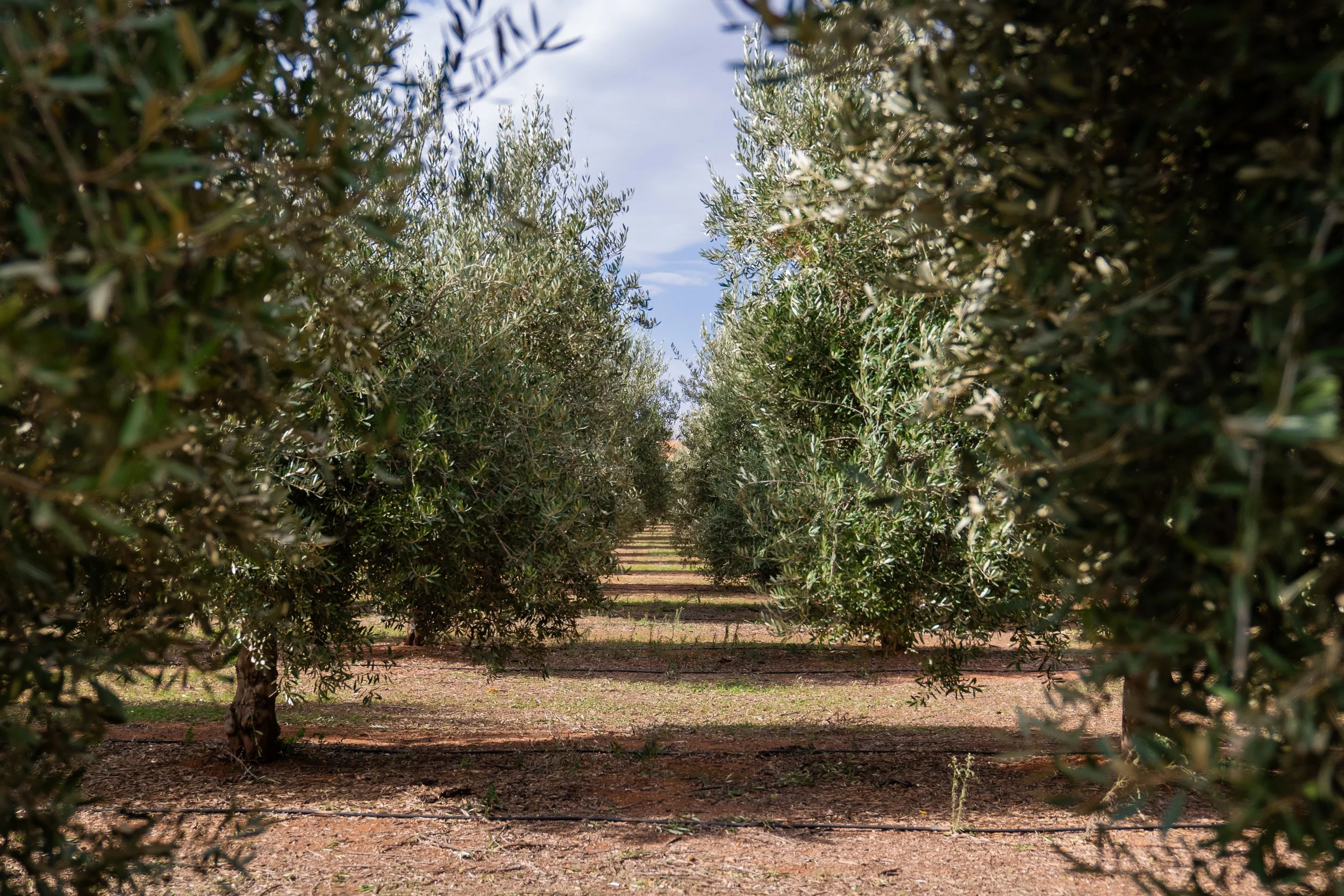
Moroccan picholine (not to be confused with French picholine) is a hardy olive cultivar that adapts well to local conditions and produces oval drupes and a mild fruity oil. That’s why 90-95% of groves across the country are planted with it.
Other important varieties in the northern regions include Bouchoukia, Bouchouk Laghlide, Bousbina, Meslala, Nouqal, and French picholine. Since the 1990s, Spanish varieties such as Piqual, Manzanilla, and Arbequina have been introduced to develop super-high-density plantations.
Expanding Export Potential
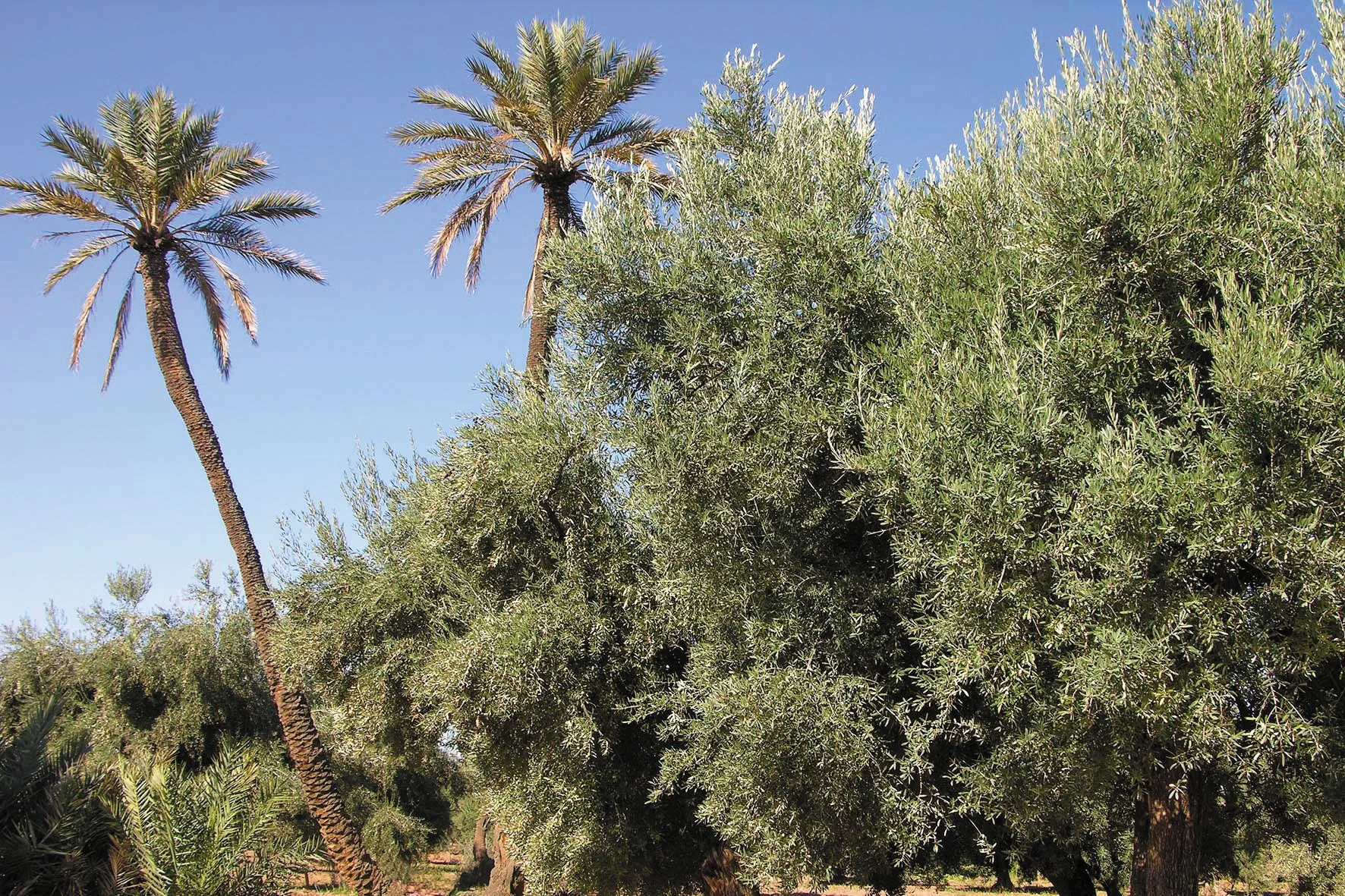
Marrakesh orchard
For the past two decades, the Moroccan government has sought to expand the country’s export potential and boost olive oil production.
The Plan Maroc Vert (Green Morocco Plan), launched in 2008, aimed to increase olive-grove area to 1.2 million hectares, modernize the olive industry with modern milling units, and significantly boost production.
Today, olive trees cover over a million hectares of the country’s agricultural land, with olive trees representing 55%of fruit trees, while over 1000 modern mills process olives into high-quality olive oil. In the past 25 years, Morocco’s olive oil production has increased by more than 70%, making it a significant global player.
Morocco’s olive producers range from large industrial producers to small and medium-sized family estates, as well as boutique producers focusing on small-batch premium extra virgin olive oil.
Atlas Olive Oils: Morocco’s Biggest Exporter of Olive Oil
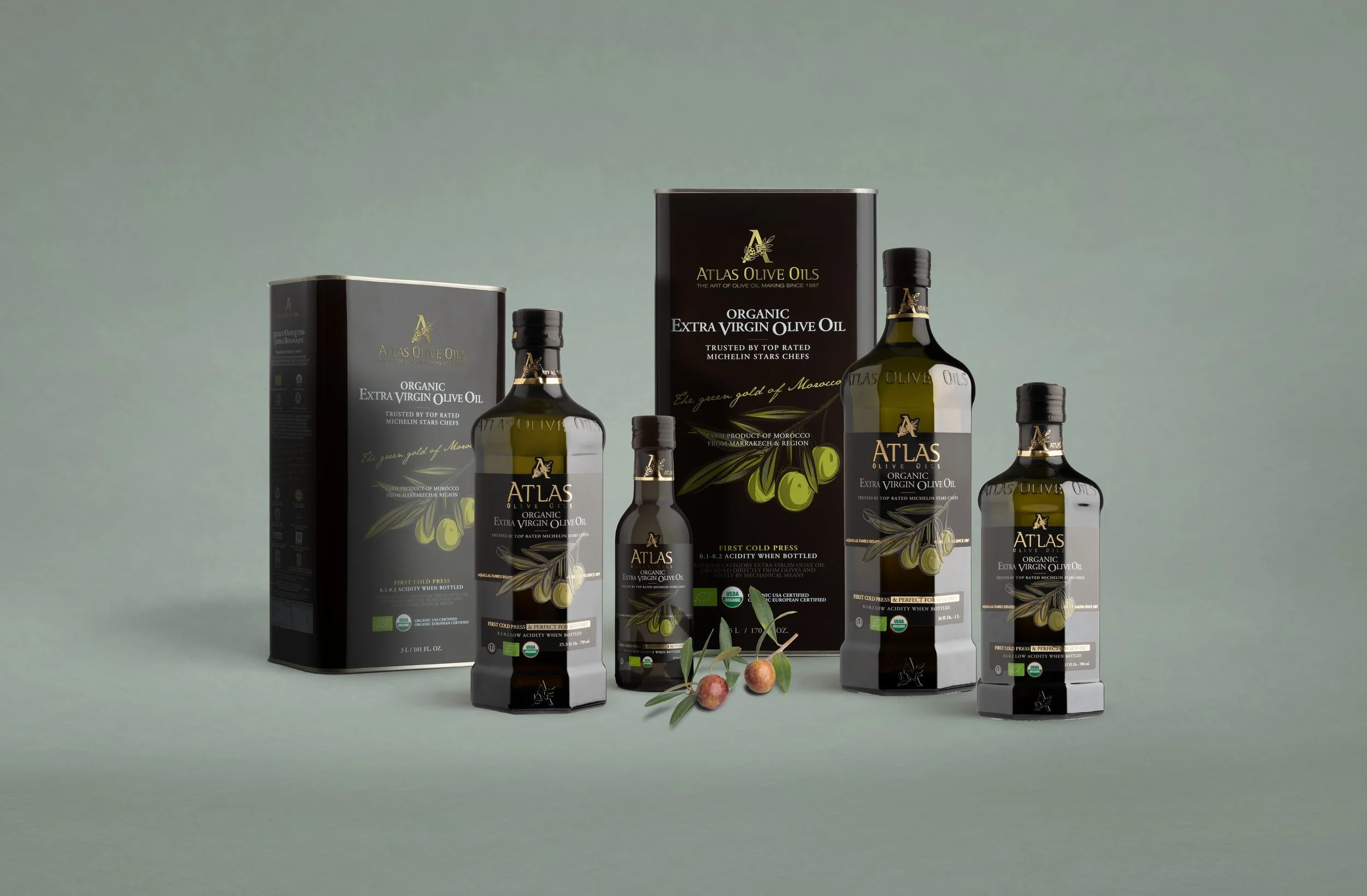
Atlas EVOO
The Aqallal Family has cultivated its groves at the foot of the Atlas Mountains since 1887. Atlas Olive Oils is a high-volume producer, producing over a million liters annually. This is Morocco’s biggest exporter of bottled extra virgin olive oil, which is shipped to over 35 countries around the world.
Across three estates, a million trees cover 1000 hectares near the south-western city of Marrakech. The majority of the varieties grown here are Spanish Arbequina and Arbosana, with a small quantity of native Dahbia and Greek Koroneiki varieties.
“Our olive groves are located near Marrakech, in a particularly dry and demanding environment,” says Othmane Aqallal, managing director. “Because rainfall is scarce and water is a precious resource, we use a carefully controlled drip-irrigation system. This allows us to deliver water directly to the roots while minimizing evaporation and waste. We closely manage irrigation according to the trees’ needs, the season, and climatic conditions. We just started a new project in the Marrakech farm of watering the olive trees using AI.”
In addition to frequent droughts, high temperatures, limited water resources, and unpredictable harvests, he adds that local producers also face rising costs when it comes to production, energy, packaging, and transportation.
Aqallal points out that responsible producers are careful to not compromise the environment in the race to increase production. “This requires continued investment in water-efficient irrigation, sustainable farming, modern milling technology, quality certification, and the development of skilled agricultural teams,” he says.
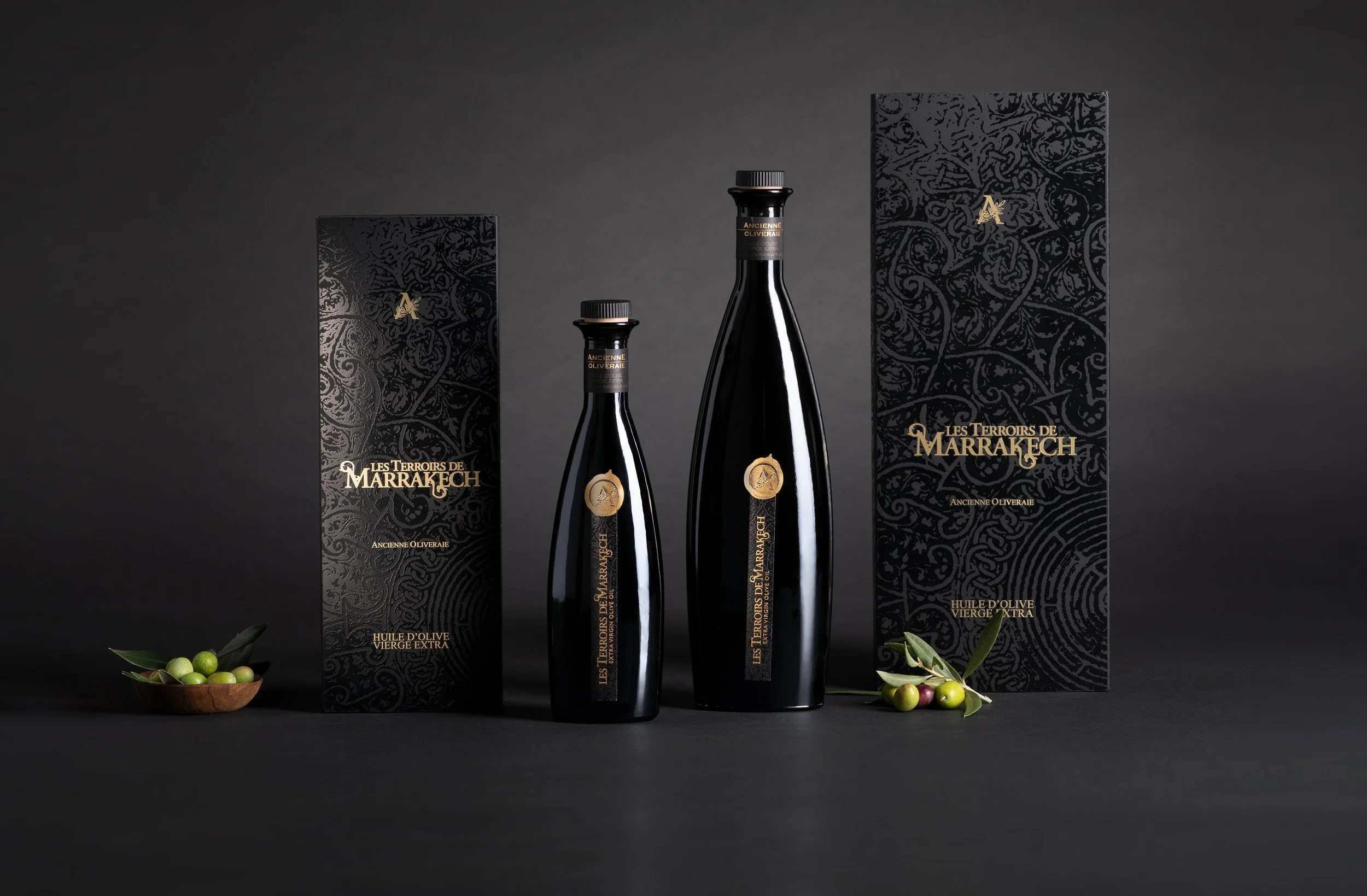
Les Terroirs de Marrakech
Les Terroirs de Marrakech is one of its premium small-batch organic olive oils pressed from the fruit of centuries-old groves of 3,000 trees of Moroccan Picholine, French Picholine du Languedoc, and native Dahbia, Menara, and Haouzia. Its high quality has earned numerous awards at international competitions, as well as recognition for the high-phenolic Desert Miracle organic extra virgin olive oil.
“Morocco produces excellent olive oil, but greater awareness and recognition of its quality and distinctive terroirs are still needed internationally,” he points out. “We believe Moroccan olive oil has an exciting future. Morocco combines ancient olive-growing traditions, distinctive terroirs, modern expertise, and considerable potential for innovation. We are proud to help introduce this heritage and quality to consumers around the world.”
Noor Fès: A Fast-Growing Boutique Producer
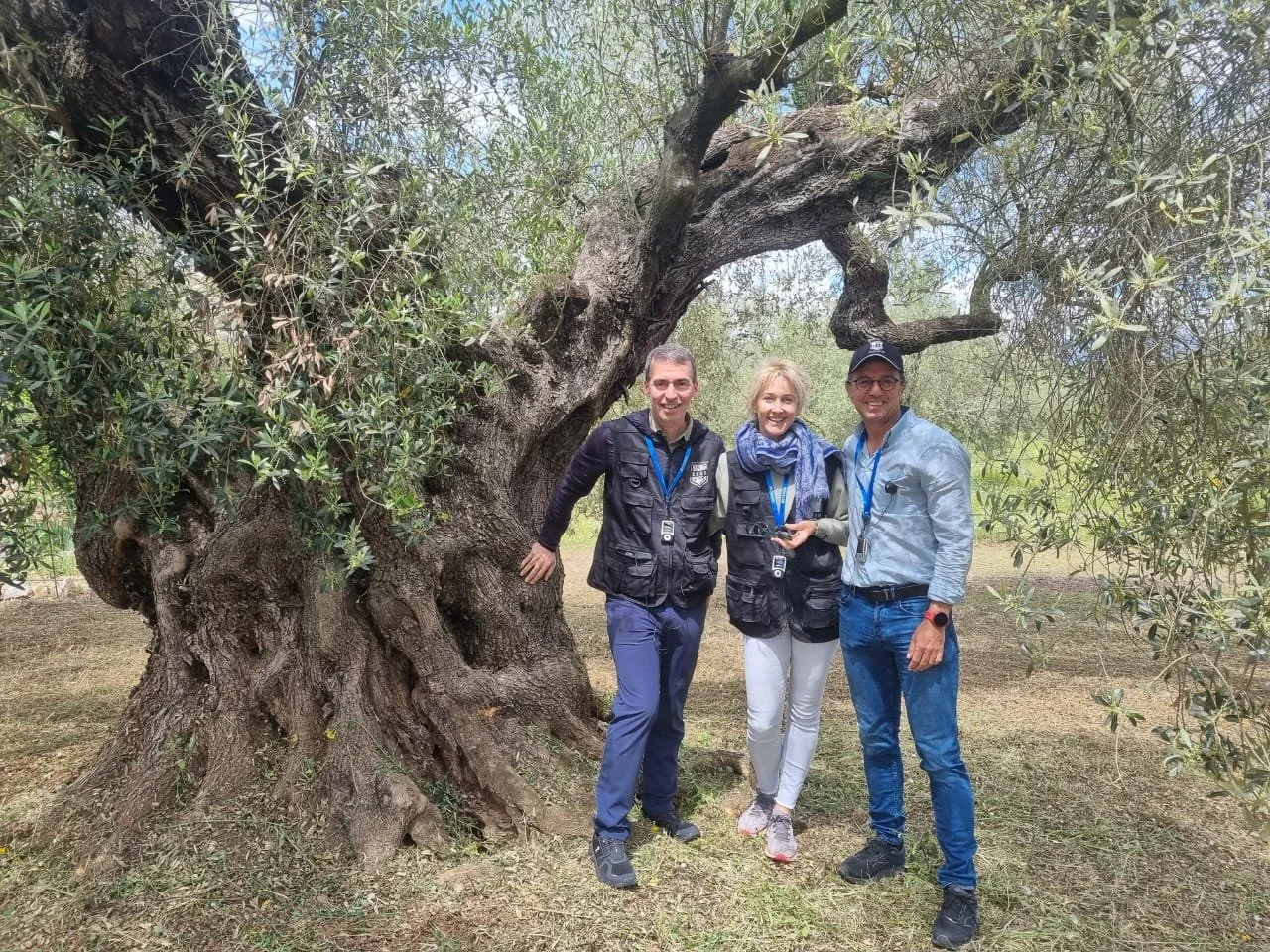
Noor Fès is a family-owned estate founded in 2019 that has grown quickly over the past seven years into a major Moroccan olive oil producer. The estate is made up of 70,000 olive trees across 320 hectares of the Saïs Plain near the southern edge of the Rif Mountains in northern Morocco, a region with a long tradition of olive growing.
To preserve the soil and manage water as well as possible, the approach focuses on sustainable and regenerative agriculture. “The Saïs Plain is known for its fertile soils and favorable conditions for agriculture,” says Ghizlane Tazi, Noor Fès’s general manager. “Our estate also benefits from its own water source. It’s a terroir particularly well suited to the Moroccan Picholine, the native variety we chose to cultivate.”
This boutique producer of organic extra virgin olive oil has won a number of platinum and gold awards from several international competitions in 2026. “For us, these awards are particularly meaningful because they demonstrate the consistency of the oil's quality from one harvest to the next and help put Moroccan olive oil on the international map,” says Tazi.
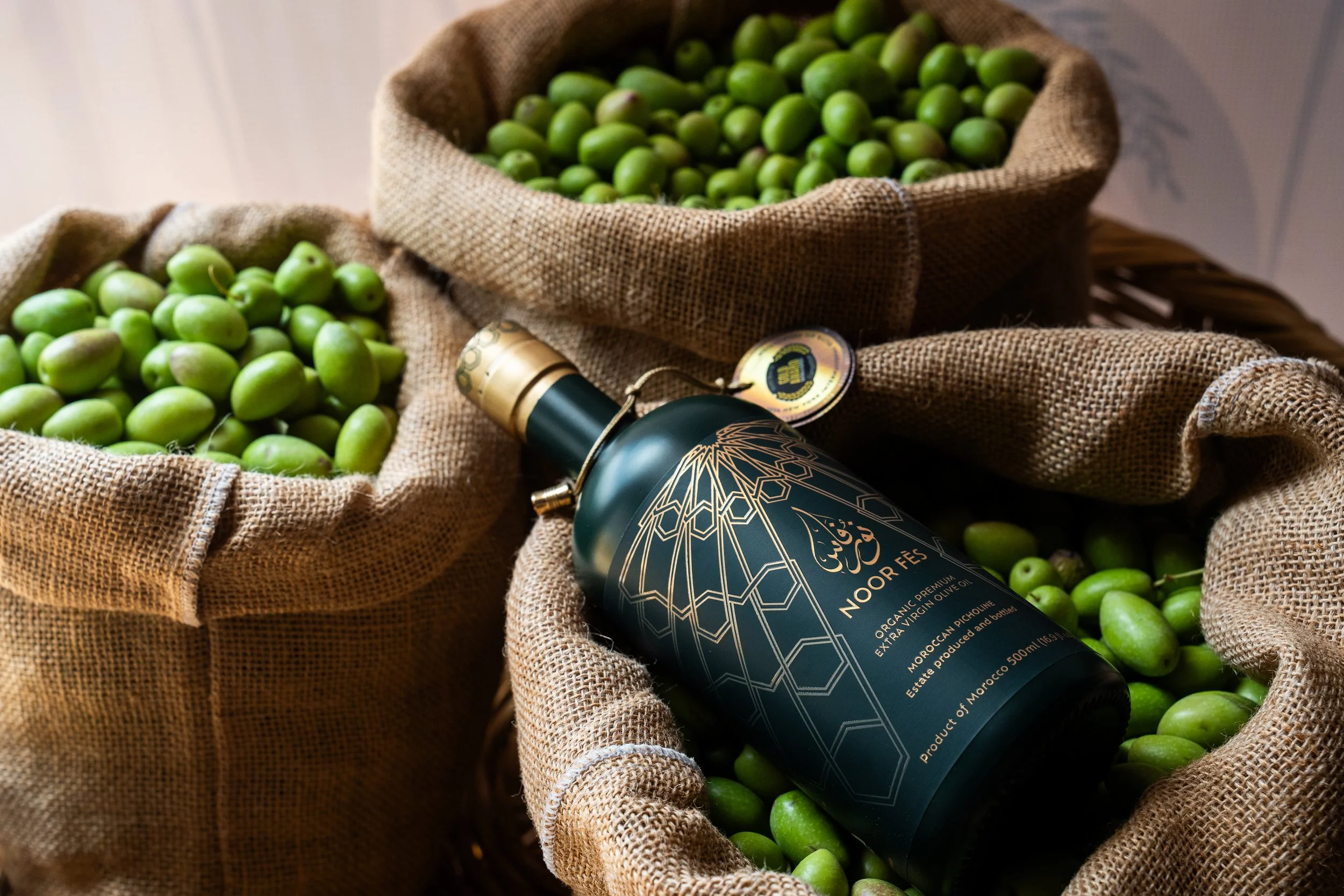
Noor Fès olives and olive oil
In the US, their premium extra virgin olive oil can be found on the shelves of Whole Foods Market and Erewhon stores, as well as specialty retailers such as Oil & Vinegar and The Olive Tap. The company has recently launched its own direct-to-consumer platform at www.noorfes.com in the US. Meanwhile, it is also expanding in the UK, where its premium oil is currently available at Planet Organic.
“Our ambition is to establish Noor Fès internationally as a reference for premium Moroccan extra virgin olive oil and to contribute to greater recognition of Morocco as a world-class olive oil origin,” shares Tazi. “We are simultaneously building a brand, developing international markets and helping change the perception of Moroccan olive oil. I am also a certified olive oil sommelier, which has allowed me to deepen my understanding of the product itself and of the standards that define exceptional extra virgin olive oil.”
“Morocco has an extraordinary olive-growing heritage, but premium Moroccan olive oil is still less internationally recognized than oils from countries such as Italy or Spain,” she adds. “Part of Noor Fès's ambition is to change that perception and to show that Morocco has the terroir, the native varieties, the expertise and the ability to produce olive oils that stand alongside the very best in the world.”