
Do High Olive Oil Polyphenol Counts Actually Matter?
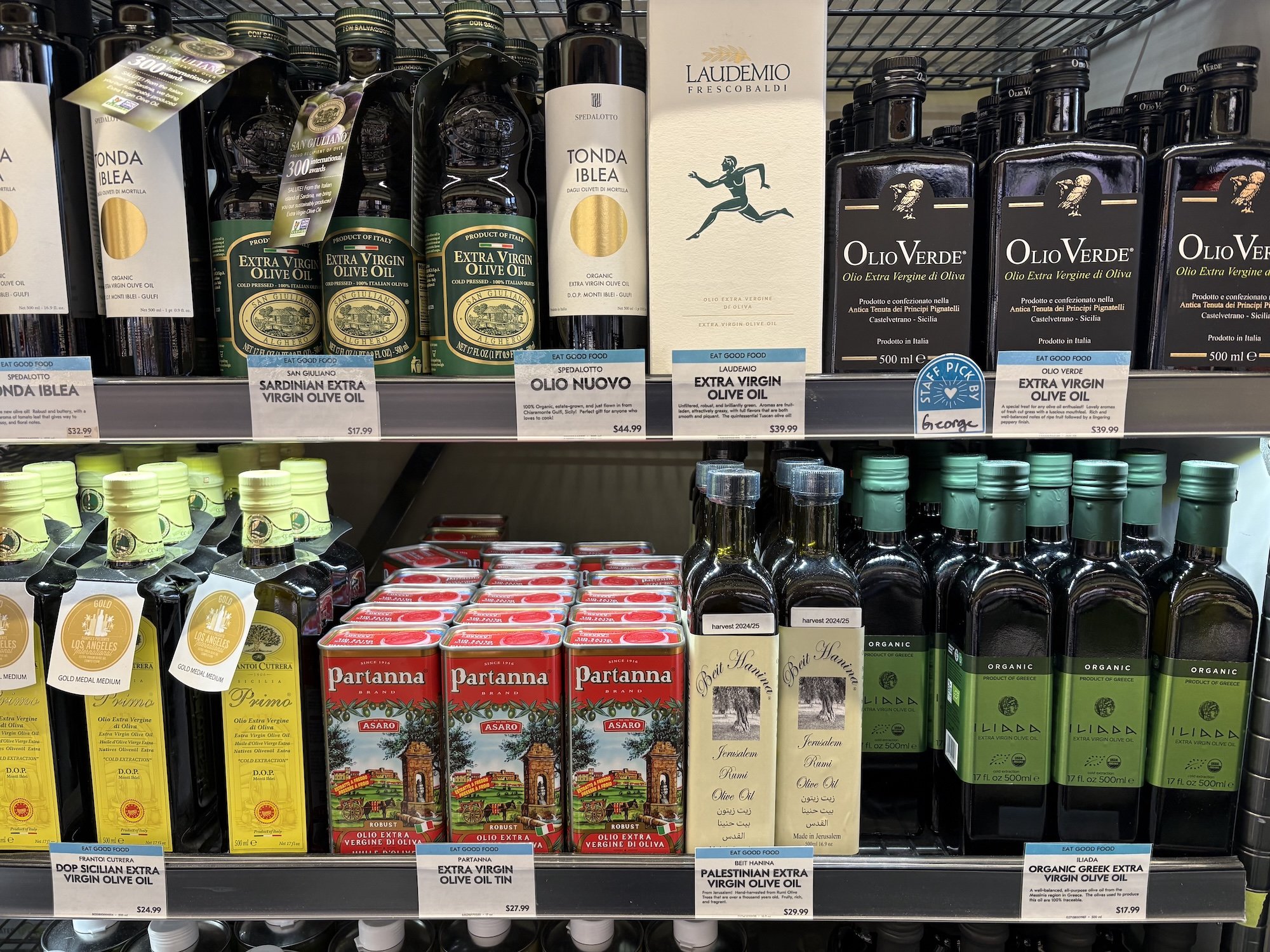
Olive oil bottles on shelf
Walk down the olive oil aisle of a good deli or gourmet grocer, and you will see the numbers everywhere: 500, 800, 1,000 mg/kg of polyphenols. They sit on extra virgin olive oil bottles like horsepower ratings, strongly suggesting the highest number belongs to the best oil. Most people don’t know exactly what the number means. They only know they want a high number. The higher, the better.
Do Polyphenols Matter?
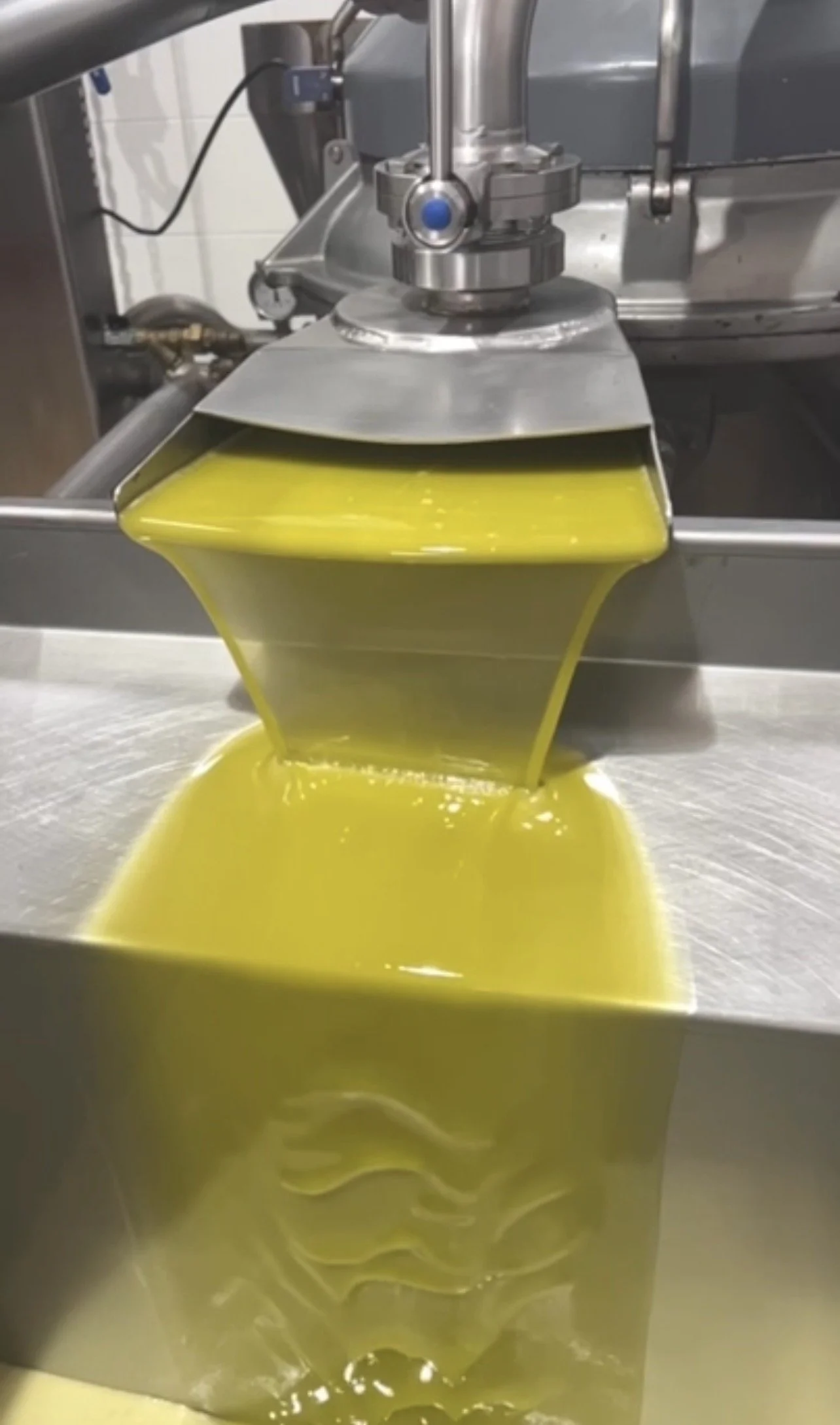
Fresh olive oil
Polyphenols really do matter. They contribute to bitterness and pungency, help protect oil from oxidation, and form part of the health story of extra virgin olive oil. But somewhere between the laboratory and the wellness shelf, a useful measurement began masquerading as a complete definition of quality. A good oil isn’t only about polyphenols. And when a single figure starts deciding what consumers buy, it can also start deciding what producers are asked to make.
That is the part of this conversation I care about most. As an educator, I want consumers to be curious about phenolic compounds. I also want olive growers and millers to be able to make the best oil their fruit, grove and season can give them, rather than being pushed towards a number that happens to sell well for a one dimensional reason. If we want great olive oil for generations to come, we have to protect the people and groves behind it.
What the Number Actually Measures
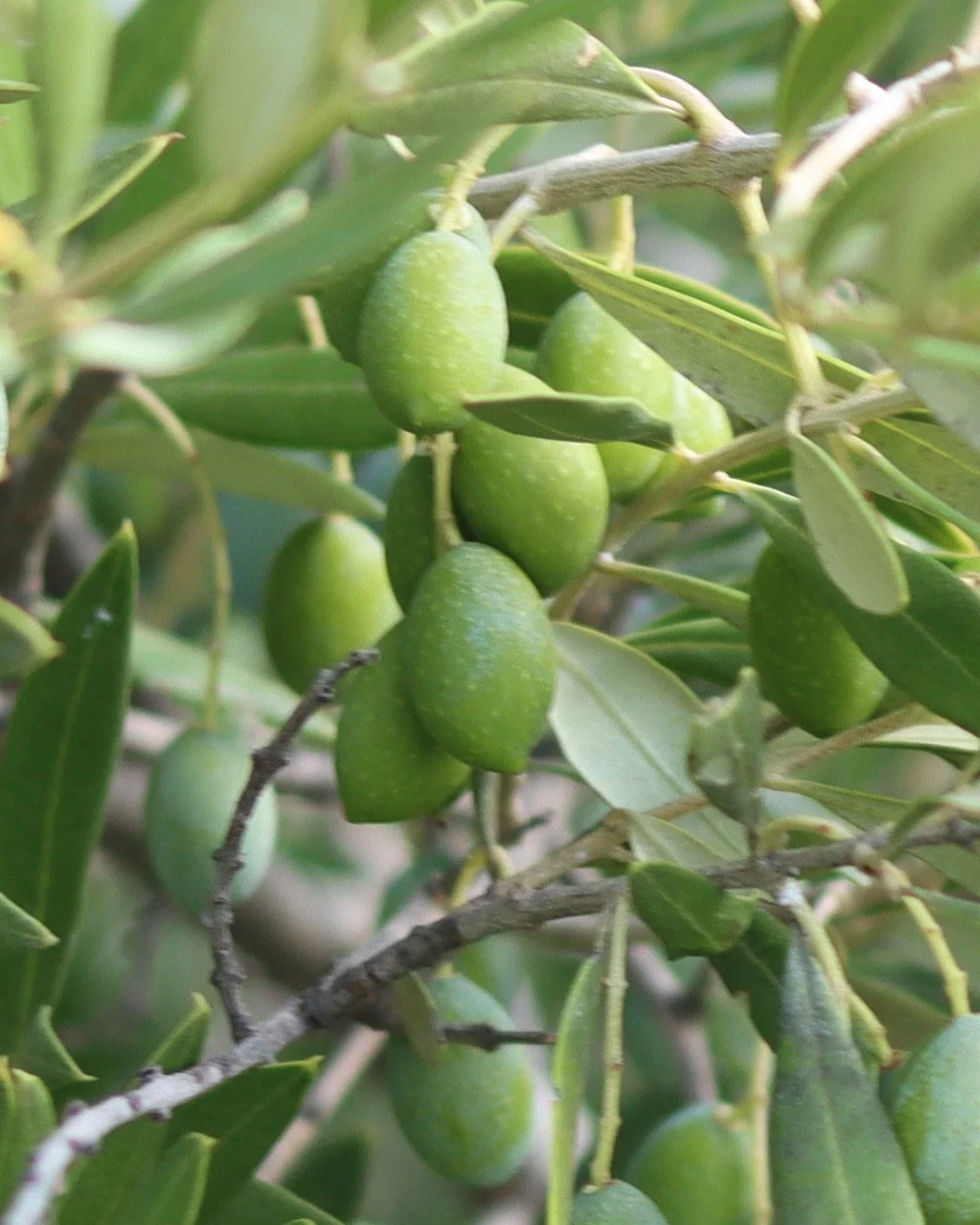
Olives growing
Extra virgin olive oil contains a family of phenolic compounds, including derivatives of hydroxytyrosol and tyrosol, secoiridoids such as oleacein and oleocanthal, and lignans such as pinoresinol. Their levels are shaped by cultivar, climate, water availability, fruit maturity, tree health, harvest date, milling choices, filtration and storage. The olive tree did not make them so that we could only take a quick morning shot of longevity juice, although there’s no harm in doing that as long as you still enjoy this oil with food throughout your daily life. They are part of the fruit’s own defense chemistry. We are so fortunate that they can also contribute to flavor, stability and biological activity. I always say polyphenols are the tree’s survival instinct. It’s there to protect the tree and, essentially, the seed (pit or stone, as some may call it).
Even the figure on a label needs context. “Total polyphenols” is a broad description, not a universally interchangeable score. Different analytical approaches can focus on different compounds or report results differently. A headline number may be useful, but you can’t compare it responsibly unless you know what was measured and how. Two bottles with impressive looking numbers may be telling related, but not identical, stories. Knowledge around polyphenols is also paramount, as phenolic composition changes during storage. Many of the compounds associated with bitterness, pungency and stability decline over time, although the exact pattern depends on the oil, its storage conditions and the method used to measure it.
The number advertised today is definitely not a fixed, permanent feature of the oil, It is a snapshot of the oil at the time it was tested, not necessarily what is still in the bottle by the time it reaches the consumer. Heat, light, a long journey, time on a shelf and questionable storage conditions can all affect an oil over time. Once opened, oxygen also begins to play its part in the breakdown of polyphenols. So that impressive number on the label may not be exactly what you are getting later on in your kitchen. Another reason not to treat it as a permanent promise of quality or health.
How a Health Claim Became a Scoreboard
The modern fascination with the number has a clear regulatory turning point. In 2011, the European Food Safety Authority gave a favorable opinion on a specific claim concerning olive oil polyphenols and protection of blood lipids from oxidative stress. The claim was authorized in EU law the following year. It may be used only for oils containing at least 5mg of hydroxytyrosol and its derivatives per 20g of oil, with information that the beneficial effect is obtained with a daily intake of 20g.
That is a narrow claim attached to a defined dose and for particular compounds. It was never intended to mean that the highest total polyphenol number is automatically the best oil, the best flavor or the best choice for every person. But marketing loves a number. Fruitiness has to be experienced. Balance requires judgement. A laboratory result looks absolute. Once a larger number could support a larger price, the market did what markets often do: 500 sounded good, so 800 sounded better. Then came 1,000 and beyond.
The science is real, but it is not a leaderboard
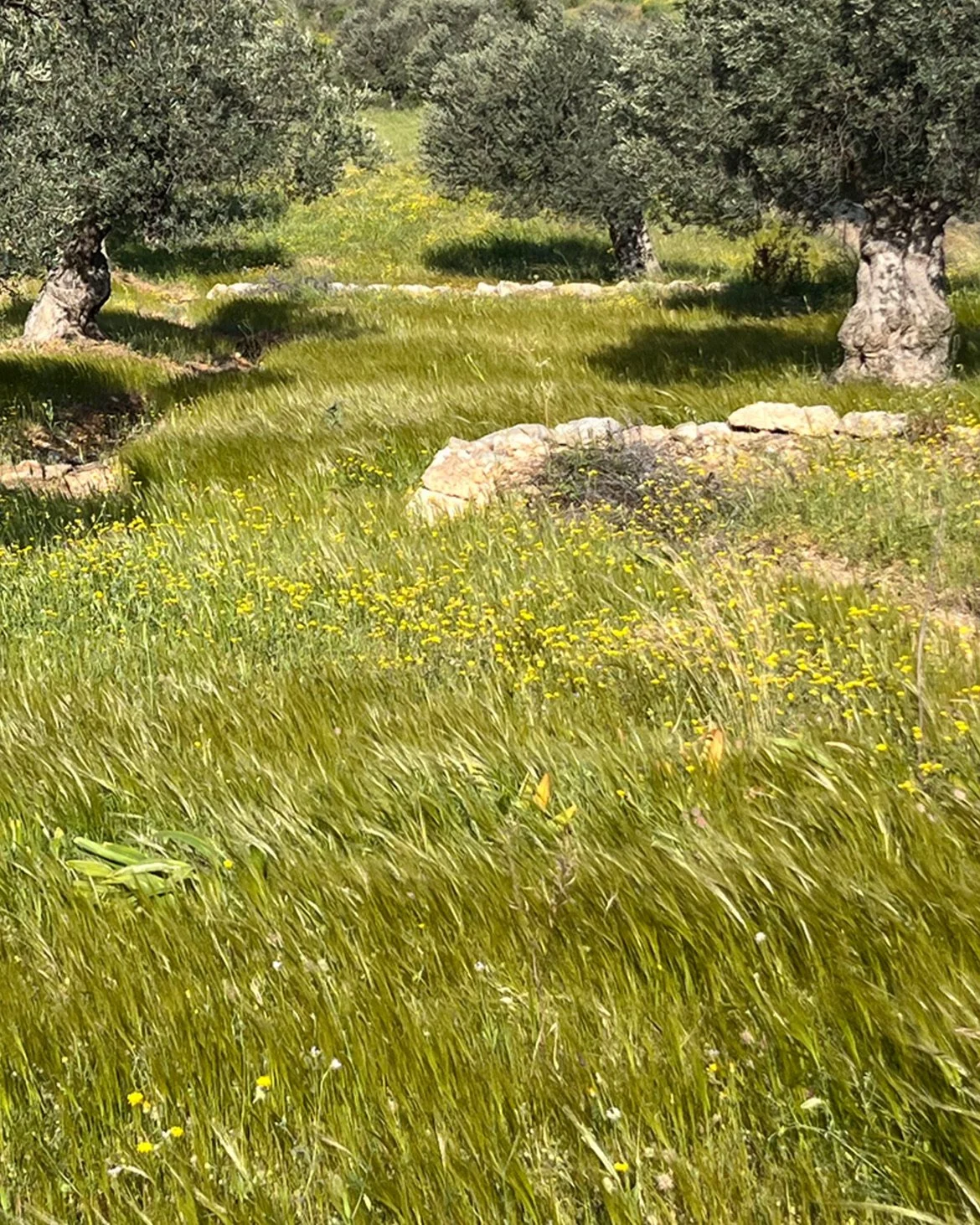
Ancient olive grove
I have spoken to many producers about this, but a recent conversation with Kevin Duncan, one of the founders of The Artistry of Olive Oil, stood out. We shared the same concern: that the high polyphenol craze may pressure producers to bring harvest dates forward only to achieve a marketable number. There is nothing wrong with early harvesting when it is the right decision for the fruit and the grove. But when it is driven by a label claim, we can lose the beauty of a balanced oil: the fruit, the complexity and the sense of place that a producer has spent a season trying to preserve.
Olive oil polyphenols are incredibly interesting and complex, and there are currently a few incredible studies and trials happening around how our bodies actually absorb these remarkable bioactive compounds.
Research has examined hydroxytyrosol and related compounds for antioxidant activity, and human studies have found that phenol rich olive oils can influence markers of lipid oxidation. Oleocanthal is famous for demonstrating ibuprofen like inhibition of certain inflammatory enzymes in laboratory studies. These studies are especially important.
Olive oil is food, not a medicine cabinet. A spoonful is not equivalent to an anti-inflammatory drug, and there is no established clinical scale showing that an oil labelled 1,000 mg/kg gives exactly twice the benefit of one labelled 500 mg/kg. Our bodies do not receive the label number intact, either. Individual phenolics are absorbed and metabolised differently, while dose, the food matrix, metabolism and gut microbiota all play a vital role in this process of absorption. The honest conclusion is less dramatic than the marketing, but much more useful: phenolic content matters, yet the biggest number has not been proven to be the healthiest choice.
What the Chase Can Do to the Harvest
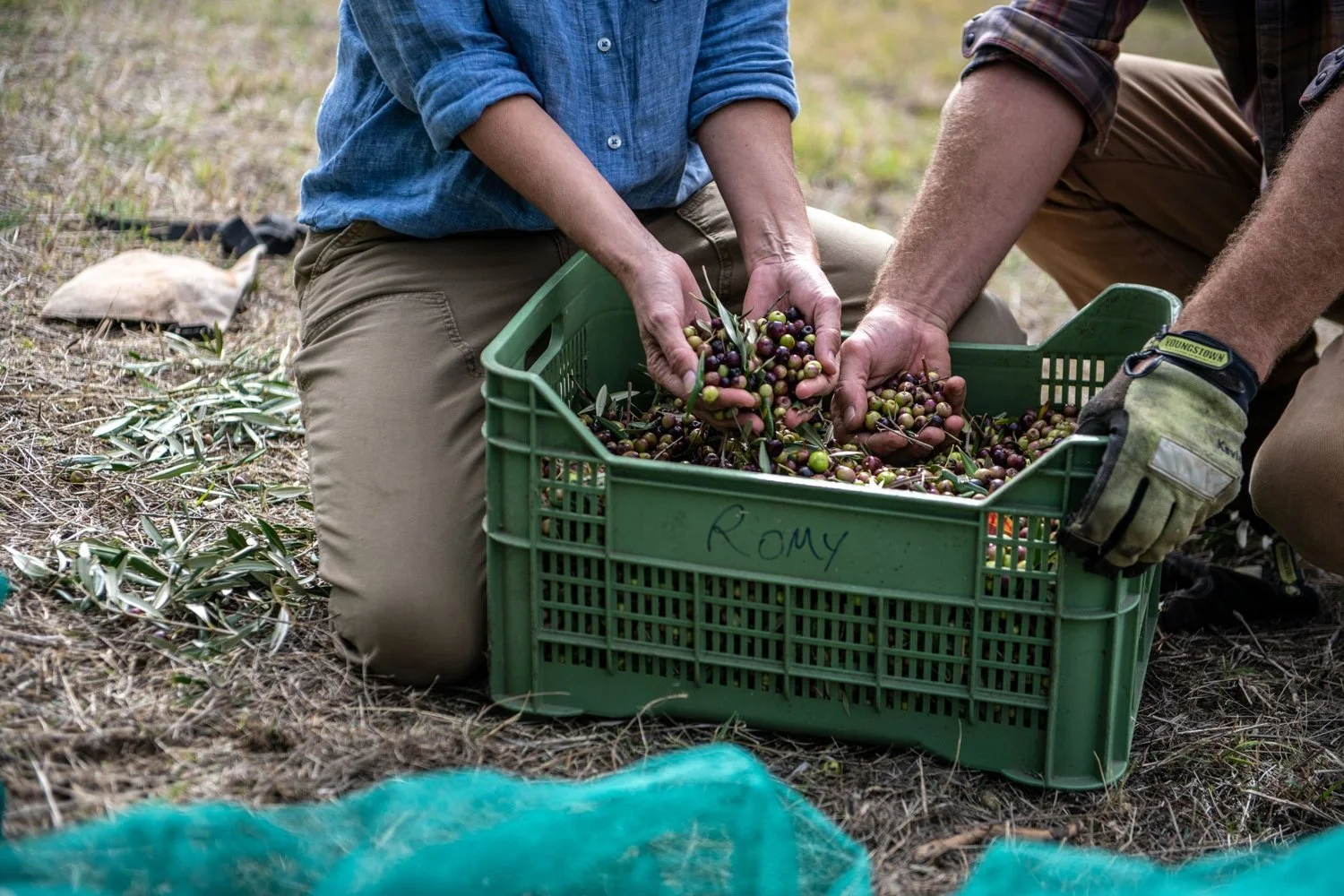
Hand harvesting olives photo credit Piro
Harvest timing is one of the strongest levers a producer has. In many cultivars, greener fruit can produce oils with more phenolic intensity and a more forceful bitterness and pungency. As olives mature, their oil content and sensory profile change. The exact pattern is never universal: cultivar, season, irrigation, fruit condition and processing all matter. But the commercial incentive is obvious. When buyers are trained to pay for a bigger polyphenol figure, picking greener fruit can become the easiest route to one.
Early harvesting is not the villain here. Some of the most thrilling oils I have tasted are intentionally early harvested: bright, structured and completely green. There’s nothing like it.
A beautiful coratina or koroneiki can have green tomato leaf, artichoke, almond, wild herbs and a clean pepper finish that makes you want to go straight back for another taste. The issue begins when the number, rather than the fruit, dictates the harvest date. I feel we lose a bit of magic there. Producers have spent years perfecting harvest times by watching the fruit and the weather, all for it to be put down to the polyphenol count.
Greener olives generally yield less extractable oil, which can mean more fruit, more labor and more cost for every liter. For a small family producer already dealing with erratic weather, as was the case this last summer, rising inputs and fragile margins, that is not a theoretical trade-off. It is money, timing, exhausted pickers, and another pressure on whether the farm remains viable for the next generation. Picking too early can also leave aromatic development behind. You can end up with an oil that is very loud but not especially layered: bitterness and throat-catching pungency, but not enough fruit to hold it all together.
A producer’s real skill lies in finding the right moment for that cultivar, that grove and that season. Sometimes it will be very early. Sometimes it will not. A target set in a marketing meeting should never replace that judgement.
Bitter Is Not Another Word for Better
The International Olive Council recognizes fruitiness, bitterness and pungency as positive sensory attributes in virgin olive oil. All three can be beautiful. None is a standalone certificate of excellence. A forceful oil is not automatically unbalanced, and a gentle oil is not automatically inferior. An excellent oil should express healthy fruit and origin convincingly, without defects, in the style its producer intended, and above all, be enjoyed!
When we teach consumers that the strongest burn equals the greatest quality, whole families of elegant oils become harder to value and to find. Softer oils are dismissed as weak, even when they are fresh, technically excellent and perfect with food. We lose vocabulary, variety and pleasure when every bottle is forced to compete against the same numerical ideal. Olive oil should not need to hurt to prove it is good. You don’t need to cough excessively for it to be beneficial.
A Better Question Than "How High?"
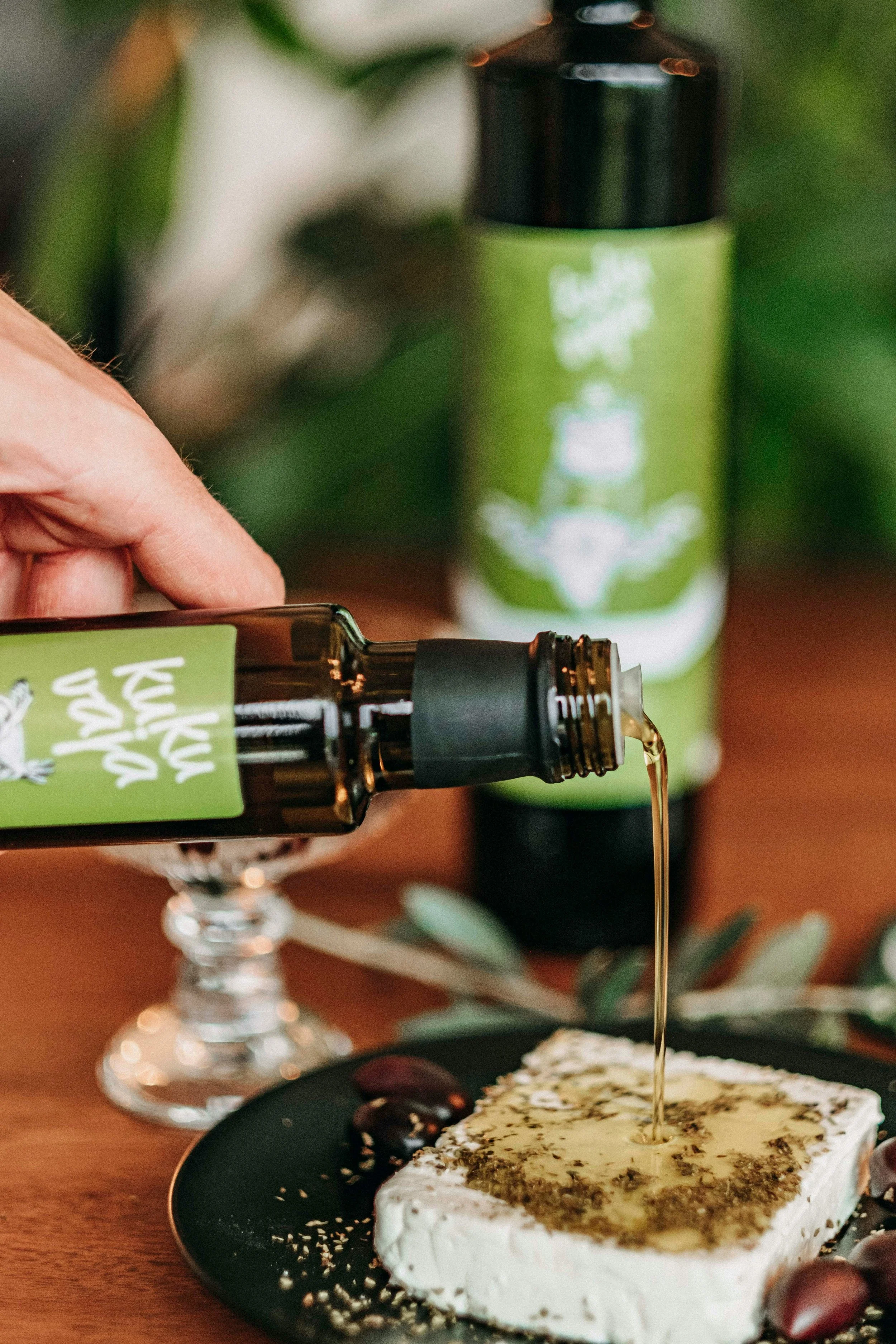
Olive oil being poured over feta
A phenolic result is useful information. It may help explain bitterness and pungency, contribute to our understanding of oxidative stability and, where the appropriate compounds and threshold are established, support the authorized European health claim. What it cannot tell you on its own is whether an oil is fresh, balanced, defect-free, well stored, or worth the price. It cannot tell you whether the number was generated by a method comparable with the bottle next to it. And it cannot tell you that four times a regulatory threshold will give four times the benefit. At least not yet!
So ask more of the bottle. Who grew the fruit? Which cultivar is it? When was it harvested and milled? How was it stored? Is the analysis and method identified? And then taste it. Does it smell alive? Is the fruit clean? Is there harmony between aroma, bitterness and pungency? Does it make you want to cook, dress, dip and pour generously, instead of treating it as only a short lived daily dose?
The healthiest olive oil habit is in choosing real, fresh extra virgin olive oil that you enjoy enough to use consistently, generously and with food.
Polyphenols deserve our attention, and this essay isn’t bashing polyphenols. It’s raising concern for the levels we are chasing with little evidence to prove the benefits. Polyphenols are great, they just do not deserve to become the whole story. Olive oil is agriculture, chemistry, craft, culture and flavor. It is also a living industry that depends on growers being able to care for old trees, plant new ones, weather difficult seasons and pass their knowledge on. We should want producers to have the freedom to make honest, delicious oils from their own groves, not chase whatever number is currently winning the internet. Quality is not a leaderboard.
I’ll leave you with this: when researchers studied the Blue Zones for the longevity found in those areas, they mentioned olive oil numerous times. But you know what they didn’t mention? Excessively high polyphenol numbers. Those people blindly consumed olive oil daily and consistently, likely from a neighbor, without knowing the polyphenol count. Go figure!