
4 Great Turkish Olive Oil Producers
Editor’s note: Special thanks to Şahizer Samuk Carignani for translation services.
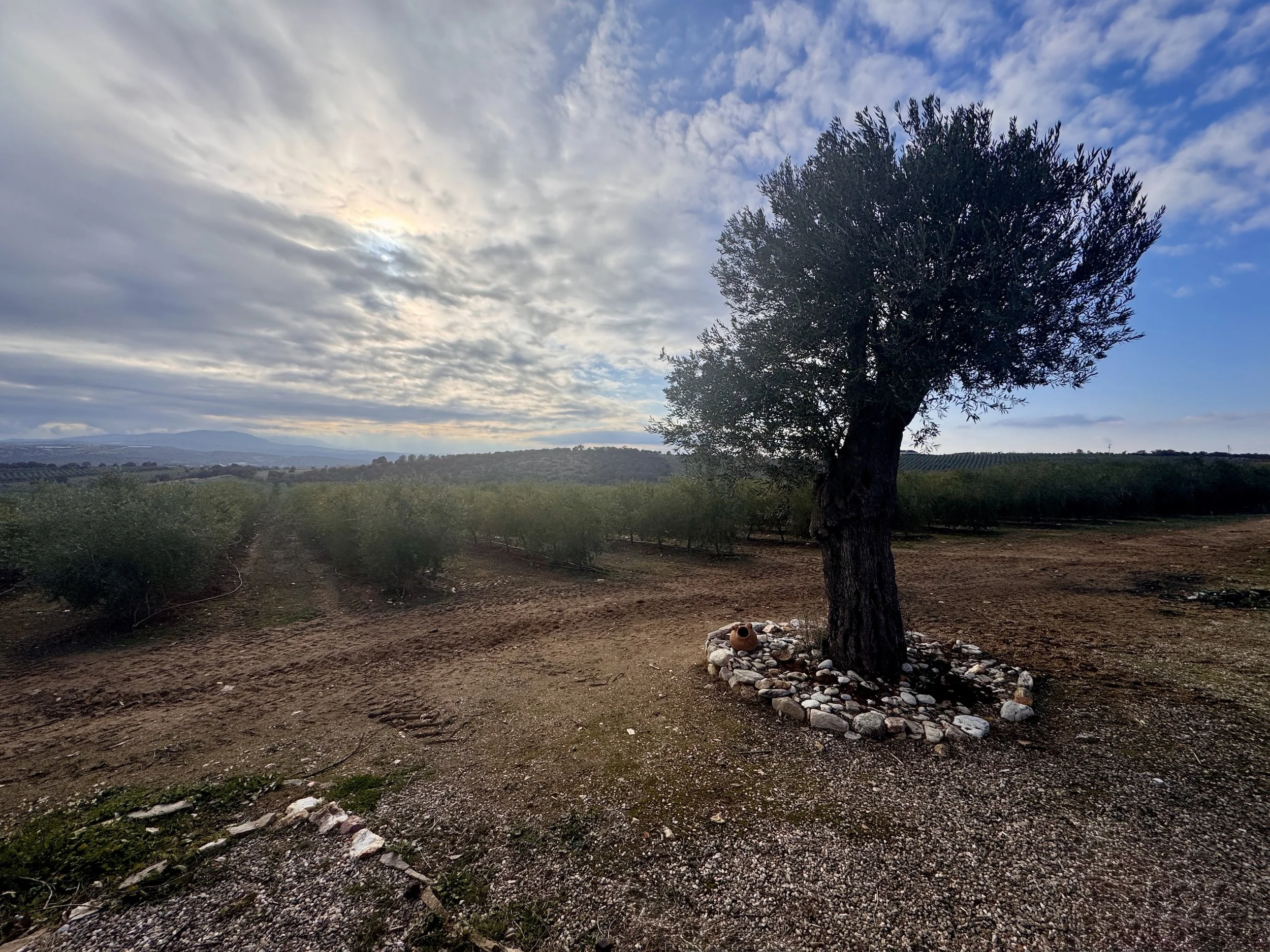
Zagoda's olive groves photo courtesy, Ceren Su Sahin, Zagoda
What’s the first place that springs to mind when thinking about olive oil? Is it a Mediterranean country with shores caressed by the sea? A place famous for its food, its landscapes, its historic architecture? Perhaps it’s on your bucket list for a dream vacation? Is it known as one of the leading producers of olive oil in the world? Were you thinking of Turkey? My guess is, probably not.
The Birth of Olive Oil
Browsing supermarket shelves, we are often presented with a selection of bottles from the usual Western Mediterranean suspects of Italy, Spain, and Greece. Less often is this spate accompanied by their oil-producing neighbors to the east. Turkey is one of the areas from which the olive tree, Olea Europaea (a distinctly western classification), originated before expanding civilizations spread the tree westward over 8,000 years ago. In the previous 2024-2025 season, Turkey took second place as the world’s largest producer, preceding Tunisia, Greece and Italy in the third, fourth, and fifth spots, respectively (Spain remains the global leader by a wide margin). Boasting the most diversified production and highest consumption of table olives worldwide, it’s surprising Turkey’s presence as a producer of high quality extra virgin oil has only recently emerged on the international stage over the last decade.
Emine Collins of Oro di Milas
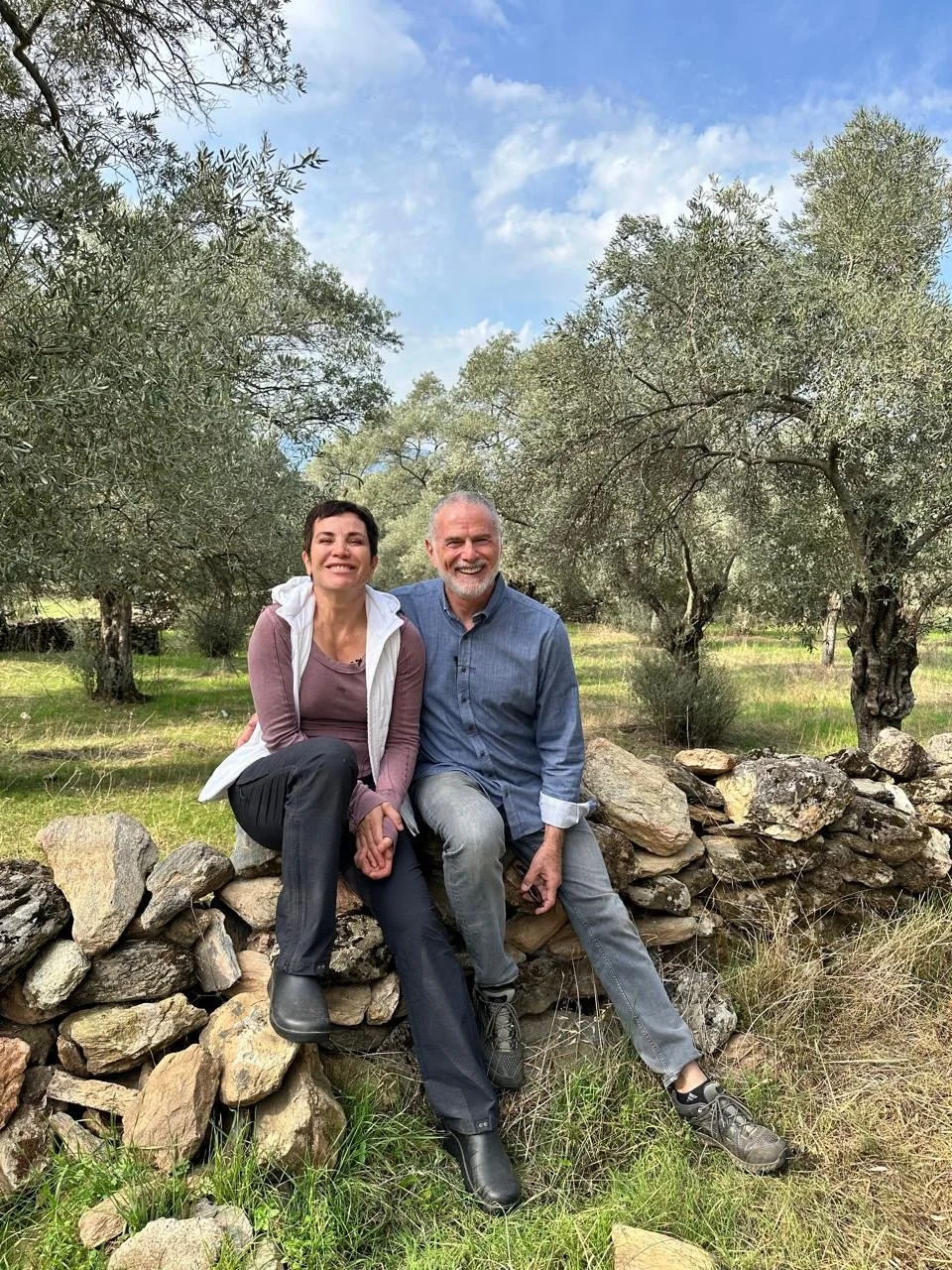
Emine Collins with her husband and partner Mark, photo courtesy, Oro di Milas
“So many people have no clue that Turkey produces oil. It's not just ten or twenty years but thousands of years that they've been producing olive oil. It was Mesopotamia, then the Hittites, then the Romans, Greeks, and Ottomans. There were so many empires coming and going, and throughout all this time, they produced oil.” Bringing awareness to this abundant cultural history is what Emine Collins, founder of Oro di Milas, is determined to share with the world.
Born in Istanbul, Collins moved to the United States at nineteen years old to pursue freedom and opportunity that wasn’t available to women in Turkey at the time. She became an endodontist with the US Army, eventually moving into private practice, and settling her family just north of San Francisco. Decades later, on a trip to introduce her homeland to her husband Mark, they fell in love with a particular valley in Milas, a small mountainous area with ancient terraced groves in the southwest province of Muğla. They didn’t set out to make oil, but one grove turned into four, eventually leading to over 500 hectares with nearly 8,000 centenarian trees, later planting over 2,000 trees in addition. Eventually, they needed to do something with all of that fruit.
“We live in California, it's a place for olive oil as well. At the market you have Italian oil, Spanish, Greek, Tunisian, and Moroccan oil, but no Turkish. So we wanted to share the culture and bring the heritage of Milas forward.” That heritage is expressed through their award winning Memecik monovarietal extra virgin olive oil, hand harvested and processed on site in their custom mill. Their compound serves a cultural center, including a restaurant featuring the oil in traditional cuisine, and employs locals from the surrounding villages. Collins supports women in every part of the process, from the purchase of the land, to the permitting, mill design, agricultural engineering, harvesting, and hospitality program. Even the bottle design is a cultural ambassador, taking inspiration from the historic textiles of Milas using the symbolic geometrical patterns of kilim carpets.
The oil of Milas has a recognized status as a Protected Designation of Origin (PDO) by the European Commission. However, a geographical indication can only go so far in the face of government interference. In July 2025 the Turkish Parliament passed a bill allowing the use of agricultural land for short term coal mining to reduce dependence on European energy supplies; a legislative initiative repeatedly rejected by parliament in previous years. Contradictorily, olive groves throughout Turkey are under protection of the Olive Cultivation Law of 1939, enacted to protect the groves throughout the country, with specific aim to foster production of this vital sector. The Muğla province has been earmarked as an area rich in coal deposits, and the groves in Milas are now directly under threat. The bill was met with fierce opposition in the face of flimsy promises of leasing land from farmers, relocating trees, and planting two new trees for every one felled. Farmers are outraged and fearful.
“There is a lot of uproar in the villages. Many farmers are fighting against it, but they’re small farmers. What we have today came to us from thousands of years ago. If these groves are destroyed, there is no way of bringing them back. These trees are deeply connected to their specific ecosystem. The idea that they can simply be removed and successfully replanted elsewhere is not realistic.” A goal of Oro di Milas is to lend a voice to this fight and continue sustainably farming in order to preserve the groves for future generations. “At the end, that's what we want to leave - the legacy of this area and this gift of the Memecık.”
Ceren Su Şahin of Zagoda
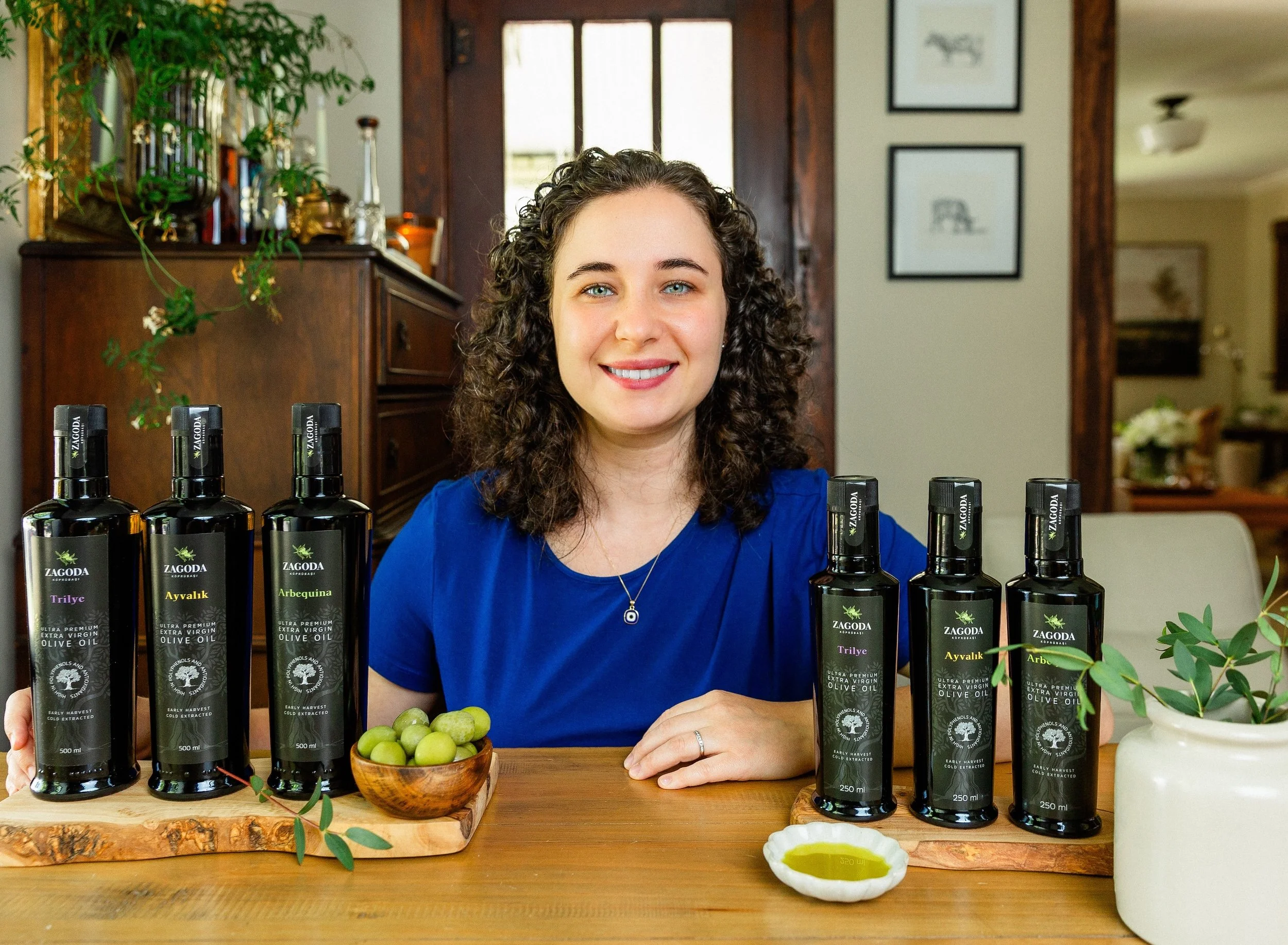
Ceren Su Sahin of Zagoda photo courtesy, Ceren Su Sahin, Zagoda
For Ceren Su Şahin, olive oil was a ubiquitous part of daily life in Ankara, the country’s central Anatolian capital. Interestingly, her family’s company, Zagoda began with her father’s first experience of an exemplary extra virgin from Spain. A mining engineer by trade, İsmail Şahin was nearing retirement in 2017. Nevertheless, he set his mind on producing a Turkish oil of the same quality he had tasted abroad. Buying land in Köprübaşı, northeast of Izmir, an area recommended by university studies as being optimal for olive agriculture, he planted ten hectares of roughly 16,000 trees: Arbequina for its stability and climate adaptation, as well as Ayvlık and Trilye for their native heritage and unique flavor profiles, highlighted in Zagoda’s three monovarietal extra virgin oils.
Her father’s pivot into agriculture spawned a new era for Sahin as well. Having trained as a concert pianist from a young age, she completed her doctorate in classical piano at the University of Michigan in 2022, where she lives with her husband in Ann Arbor. After bringing their olive oil back from Turkey for family and friends, she opened the importing branch of Zagoda, focusing on growing its presence in the US organically. “People are more open to spending money on good quality food. Their priorities are shifting. When I open up a bottle at a farmer's market and talk to people who don't know much about olive oil, they get interested and want to try it, and when they try it, they buy it.”
While Zagoda’s groves are maintained in accordance with organic standards, the cost and administrative complications of certification make it extremely difficult to label as such for outside markets. They abide by Turkey’s Good Agricultural Practices (GAP), a set of guidelines based on the principles of sustainable agriculture, environmental protections, traceability, and food safety which are increasingly being followed by small producers. GAP guidelines strive to increase trust in competitive export markets by ensuring quality and safety standards. The instability of the Turkish Lira adds to mounting economic challenges stemming from insufficient government subsidies, climate change, and an aging agricultural work force. With new tariffs imposed by the Trump administration, Sahin’s job is that much more crucial. “With grass fed steak, people know it's going to [be expensive]. For producers like us who don't compromise on quality, to exist in retail growth we must convince consumers this is something you should invest money in. In order to have producers like me continue producing, there has to be people buying so we can sustain the farm.”
Ece Er Aydin of Olizzi

Ece Er Aydin, founder of Olizzi photo courtesy of Olizzi
Investing in a healthy product is how Ece Er Aydin came to found Olizzi, a boutique olive oil line, in 2018. “I started Olizzi as a superfood company for people who care about what they eat.” Growing up in Izmir, a western port city known for its rich gastronomy and confluence of cultures, Aydin’s early understanding of olive oil came from her father, a surgeon who believes in the health benefits of extra virgin oils, and her mother, a former food engineer who taught her the nutritional value of healthy fats. An avid food enthusiast, Aydin prioritizes olive oil as a gustatory experience as well as a nutritional one. “I don't believe in pushing polyphenols as a marketing tool. What I'm selling are great tasting, enjoyable food products.”
Aydin’s background in industrial engineering and marketing, working for Coca Cola in Istanbul before completing her MBA at Pepperdine University in Los Angeles, gave her a solid foundation for creating a high quality private label olive oil. “[Turkey is] the second biggest producer of olive oil in the world, but we don't have global brands. Unfortunately, our producers underestimated the value of marketing and branding and just sold bulk. It's the reason Turkish olive oil is so underrated today.” Rather than be reliant on a single grove or agricultural area, Aydin hand picks oils from a variety of trusted producers across the country. This allows her to sample the diversity of each harvest across a broad territory, and enables Olizzi to maintain consistent quality year over year. Trained as an official taster at the Organizzazione Nazionale Assaggiatori Olio Di Oliva (ONAOO), Italy’s premier school for olive oil education, she performs the sensorial analysis and blending herself to create Olizzi’s three product lines - an award winning Memcık organic monovarietal, a Classic organic blend of Memecık and Trilye, and a Baby organic Arbequina, whose mild flavor is geared towards younger palates.
A majority of Olizzi’s sales come from the US market, but even for a private label, the challenges of producing in Turkey remain consistent. Aydin echoes the difficulties of currency fluctuation, rendering the country unable to compete with major players like Spain and Tunisia. In addition to the new coal mining legislation, farmland is often sold for real estate development in coastal regions, a further threat to agricultural resources. “It’s about seeing olive oil production as a long term investment. We're not like Spain, we’re still hand [harvesting]. It increases quality, but also increases input costs. And when the output is not realistic due to the currency rate, the country who can produce more efficiently is going to be the winner.”
Burcu Efe Dincer of La Mia Oliva

Burcu Efe Dincer, founder La Mia Oliva photo courtesy La Mia Oliva
For Burcu Efe Dincer, her olive oil heritage came with the literal territory. Born in Ayvalık, a northwestern province famed for the olive of the same name, she grew up with the understanding that olives provide a way of sustaining life - cultivating, consuming, and selling the fruit. When her family moved to nearby Izmir, each Sunday her father would have them watch videos he had filmed of their grove throughout the seasons, observing the trees under different conditions. Despite her upbringing in the cradle of the trees, Dincer took a different path at the start of her adult life, earning a degree in food engineering and later an MBA in marketing before moving into the private sector. Yet olive oil never left her subconscious. Remarking on her inevitable trajectory, she quips, “All roads lead to olive oil.”
Per capita oil consumption is highest in the Aegean coastal regions of Turkey, where olive agriculture is the most plentiful. Dishes called ‘zeytinyağilar’, meaning ‘cooked in olive oil’ (a style of cuisine shared by Greek and Arab cultures) are entirely vegetable based, prepared using large quantities of oil. Recognizing the value of olive oil culture at a time when Avalık was beginning to market year round tourism, Dincer began to apply her work in marketing to increase awareness and consumption throughout the country. Her efforts are tireless. In 2006 she became a founding member of Zeytindostu Derneği, an influential NGO bringing together sectors across the olive oil industry alongside consumers and professionals in gastronomy, journalism, art, and science, holding Anatolive, the first olive oil trade show in Turkey the following year. In 2012 she received certification as an official taster by the International Olive Council (IOC) and serves as a panel member for the sensory evaluation of oils applying to use the Avalık geographical indication, recognized by Turkey since 2006 (and currently awaiting induction by the EU). In 2015 she contributed to the establishment of EGESÜRCED, the Aegean Sustainable Environment and Development Association based in Urla, İzmir, whose objective is the protection of culinary heritage and sustainable development of agriculture and gastro tourism.
At that time in Ayvalık, emphasis was on oil quantity as opposed to quality. Milling and harvesting methodology was largely outdated and updated technology was lacking. With the land inherited from her grandfathers, Dincer started La Mia Oliva in 2017, with the objective of producing a high quality extra virgin by modern means. The grove has now grown to 4,000 trees over 150 hectares, using hand harvested, local varieties Ayvalık, Gemlik and Domat. She constructed a mill for continuous cold extraction and is a participant in the Carbon Balance Project of the IOC, becoming an exemplar of advanced methodologies that have influenced production quality in the area. As with many small producers, a majority of La Mia Oliva is sold internally within Turkey, however Dincer reaches beyond borders via her Etsy shop. The upwards trends in Turkish oil she has witnessed in recent years are promising, with an increase in small producers throughout the country focusing on higher quality oils. Larger companies have also realized this potential, moving towards upgraded technologies, placing more emphasis on sensory analysis in addition to chemical analysis, and reserving quality batches for export.
Despite these advances, climate change is a persistent challenge with summertime irrigation becoming both increasingly necessary and unaffordable. Over the last eight years she has seen oil yields drop significantly due to low rainfall and high temperatures, influencing the timing of flowering and fruit set, resulting in lower oil development. Yet Dincer remains hopeful. With a rise in health oriented travel she welcomes tourists, professors, and oncologists who visit her production while studying the beneficial properties of olive oil and its relationship to the Mediterranean diet. With such a profound history of olive oil throughout its diverse regions, Dincer and her fellow producers continue to advocate tirelessly for the recognition of Turkish oil and an agricultural future that centers the olive tree as a pillar of Turkey’s value and culture.