
A Beginner’s Guide to Australian Olive Oil
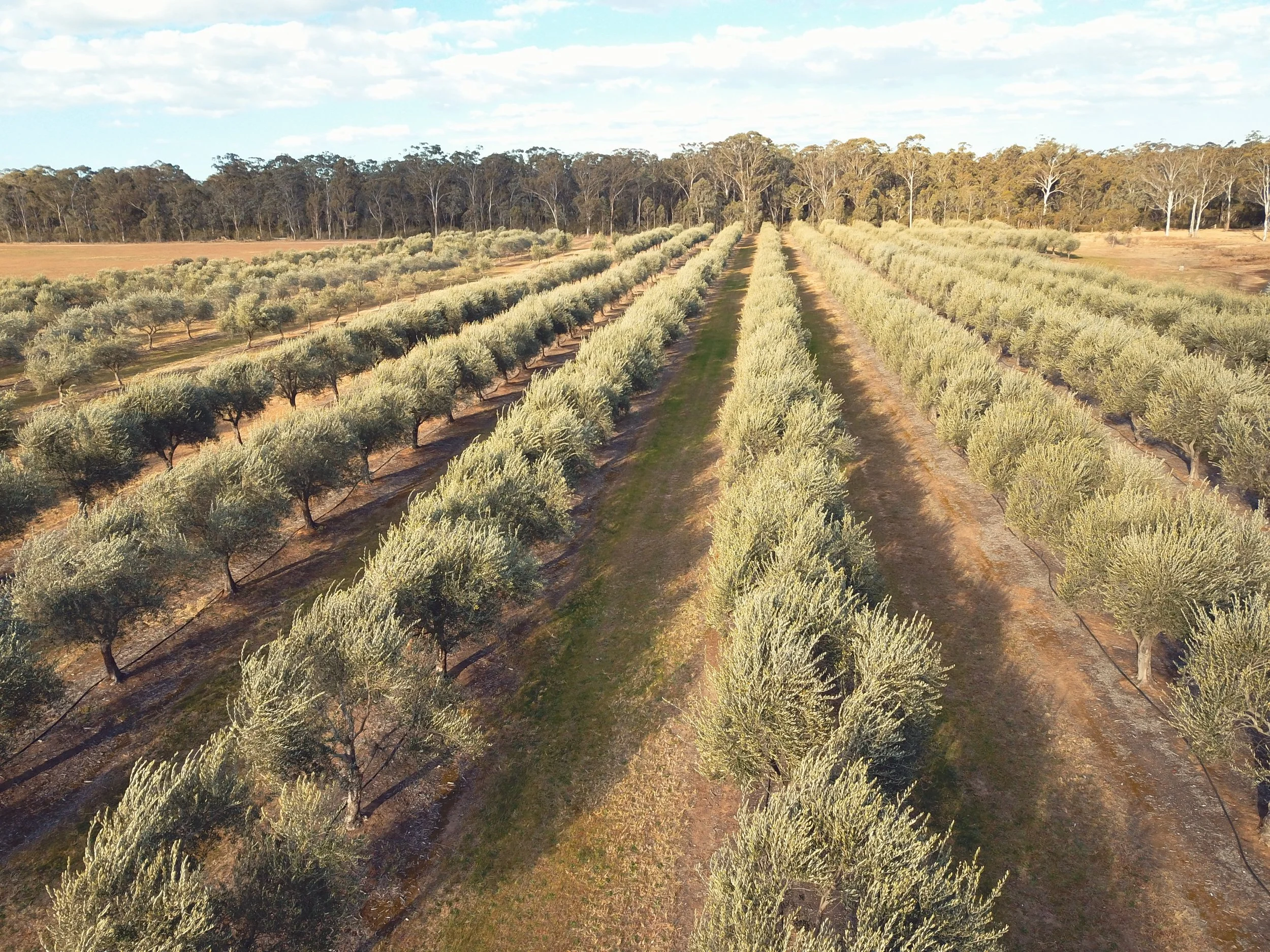
Australian olive grove photo credit Michael Thomsett
To the average North American consumer, Australia might not be the first, or even the last country that comes to mind when it comes to olive oil production, but its olive oil industry has been gaining both traction and notice since it officially began almost 40 years ago. “Olive trees have been grown in Australia for well over 100 years, almost going back to when Australia was settled by Europeans,” says Michael Southan, Chief Executive Officer of the Australian Olive Association, “but it was never a commercial industry until about 1990, when there were some significant large plantings that occurred as a result of government incentives to plant trees. That's what really got the number going and was the start of the industry as we now know it.”
While Australian olive oil comprises only a tiny fraction of the world’s overall production, that still includes over 33,000 hectares, and 14.5 million litres, according to a 2024 industry snapshot. Cobram Estate, Australia’s largest olive oil producer — by a large margin — also recently purchased California Olive Ranch, demonstrating that Australia’s influence in the global olive oil industry is not to be overlooked. Earning accolades at international tasting competitions and found on shelves throughout the world, here’s a primer on Australian olive oil, its history, cultivars, and a selection of bottles to be aware of.
History and Climate in Australian Olive Oil

Michael Southan, AOA CEO
Australia’s olive oil industry began in earnest in the early 1990s, not with an entrepreneurial movement (which drove its sister wine industry around the same time) but with an ecological one. Former Australian Prime Minister Bob Hawke introduced the 10-year, One Billion Trees initiative in 1989 to revitalize rural areas and improve soil quality, among other environmental goals. “The government had these managed investment schemes, so it was essentially through tax deductions that investors were encouraged to get more trees in the ground,” says Southan. “So it was sort of a general tree planting program that included not only olive trees, but pine plantations, eucalyptus plantations, and those types of things.” (A more recent plan to plant one billion new trees by 2050 was also established in 2019.)
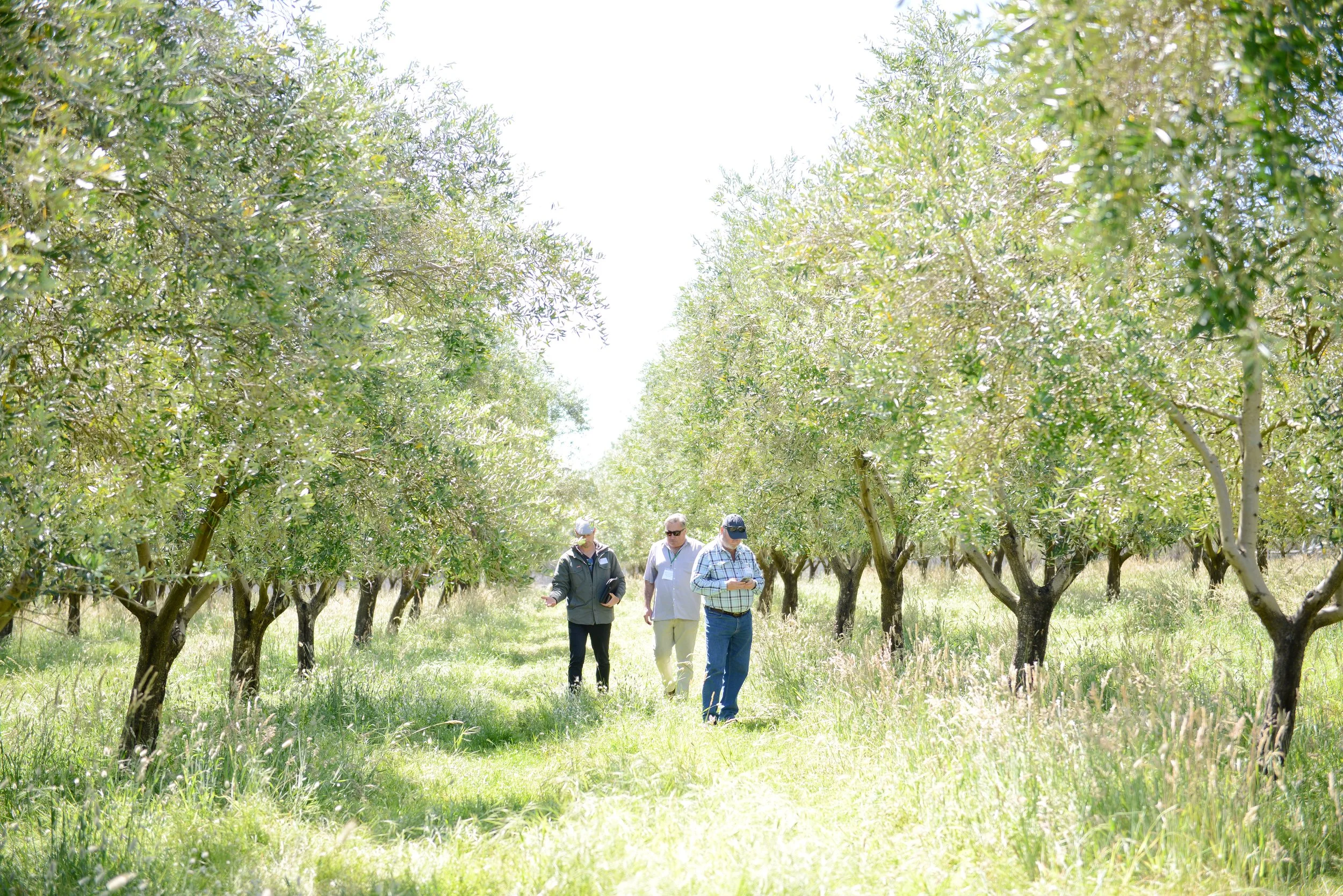
Olive groves in Australia credit Laura Thomas
The climate in certain parts of Australia made it especially suitable for olive trees. “We certainly have quite a Mediterranean climate, and olives are grown generally right across Australia, particularly in the southern half of the country,” says Southan, with hot and dry summers, and mild winters that experience plenty of precipitation. Perhaps counterintuitive, however, to the idea of a Mediterranean climate, “most of the olive-growing areas are not on the coast, but inland,” says Southan, with the country’s largest olive grove on the border between northern Victoria and New South Wales.
Because olive trees take several years to mature and produce olives, some companies who initially planted them in the 1990s didn’t survive to see them pay off in olive oil, but some groves were later purchased by potential producers in order to do so. On the heels of the original 1990s initiative, Cobram Estates began independently in 1998.
Regions and Cultivars
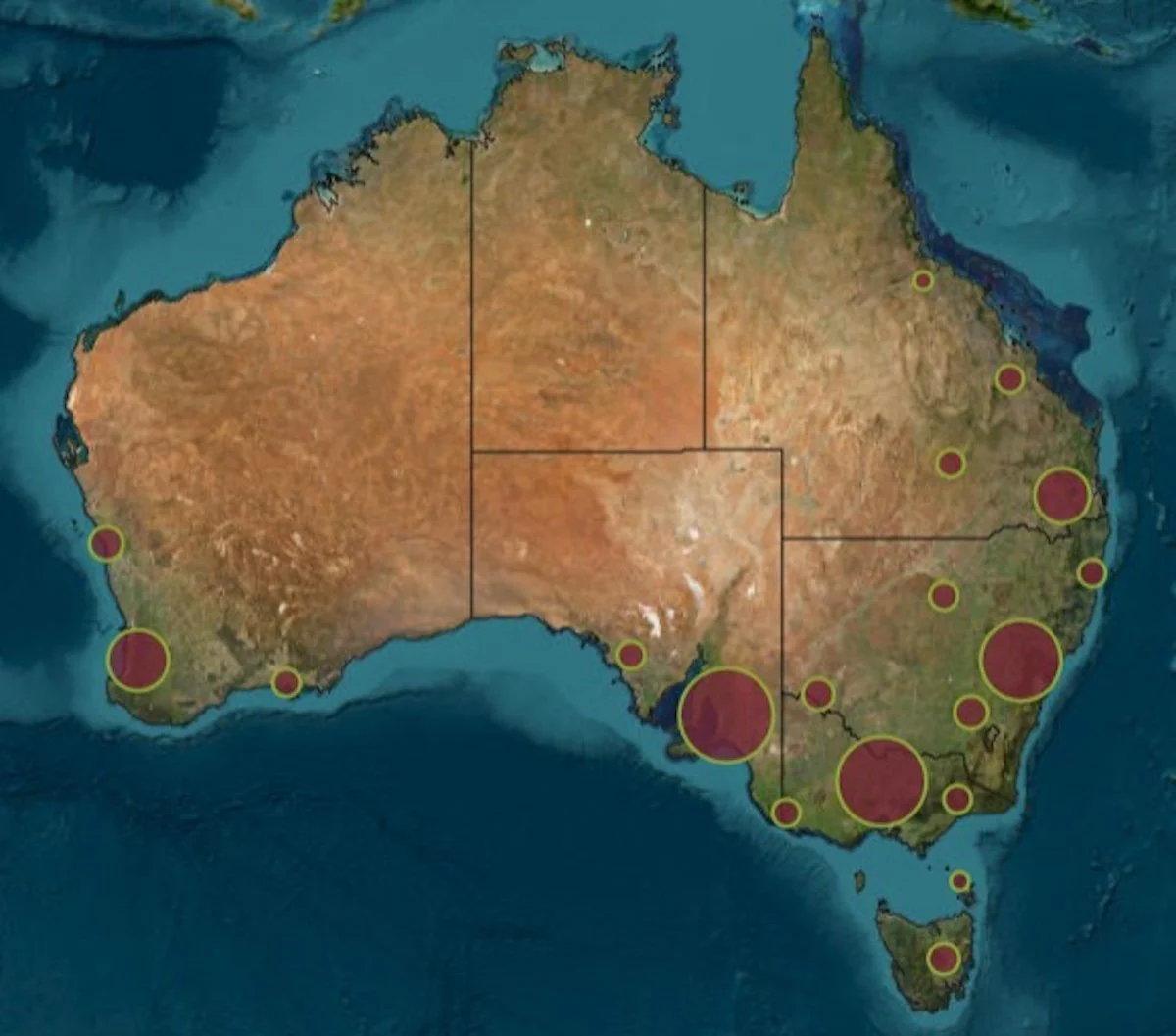
Australian olive map credit Australian Olive Association
The map of Australian olive oil production matches closely with that of its wine production, though few producers dabble in both. Victoria, South Australia, New South Wales, and the southern half of Western Australia all sport abundant olive groves, with the largest plantings around north-central Victoria, and just north of Perth in Western Australia.
Australia doesn’t have any indigenous olive varieties, (though some cultivars have been successfully bred there) but the climate supports a wide variety of different cultivars. “There's quite a big range of olives that are being grown here,” says Southan. “Probably the main varieties in Australia would include picual, leccino, coratina, and hojiblanca,” says Southan, all of which are workhouse olives that are widely planted around the world both for their vigor and flavor.
Australian Olive Oil Quality Standards
What really characterizes Australian Olive Oil in the eyes of its champions, more so than any particular brand, region, or cultivar, is the commitment to quality that guides its production. “We're really heavily focused on quality. Olive oil is the only food in Australia that has an Australian standard,” says Southan. “That’s how seriously the industry takes its quality.” More than 90 percent of olive oil production in Australia is extra virgin, and the Australian Standard for Olive Oils and Olive Pomace Oils, established in 2011 and revised in 2020, actually holds producers to stricter standards than does the International Olive Council.
“There are more parameters that you need to achieve in terms of quality,” says Southan. “We're not interested in producing anything but extra virgin olive oil, apart from flavored oils, of course, and table olives. Anything that's not not up to the extra virgin level basically doesn't get sold, or it gets sold for industrial uses,” he says, but not as a food product.
Goals for the future of Australian olive oil are aimed at producing volumes of high-quality oil that can fill the demand for the country. “We only produce in Australia about half of our requirements in terms of olive oil, and importers will bring in other grades of olive oil, which are of course a cheaper product and not necessarily as good,” says Southan. “But we're still we're still hoping to be able to eventually grow enough olives to produce enough olive oil to supply all of the demand here in Australia.”
6 Australian Olive Oil Brands
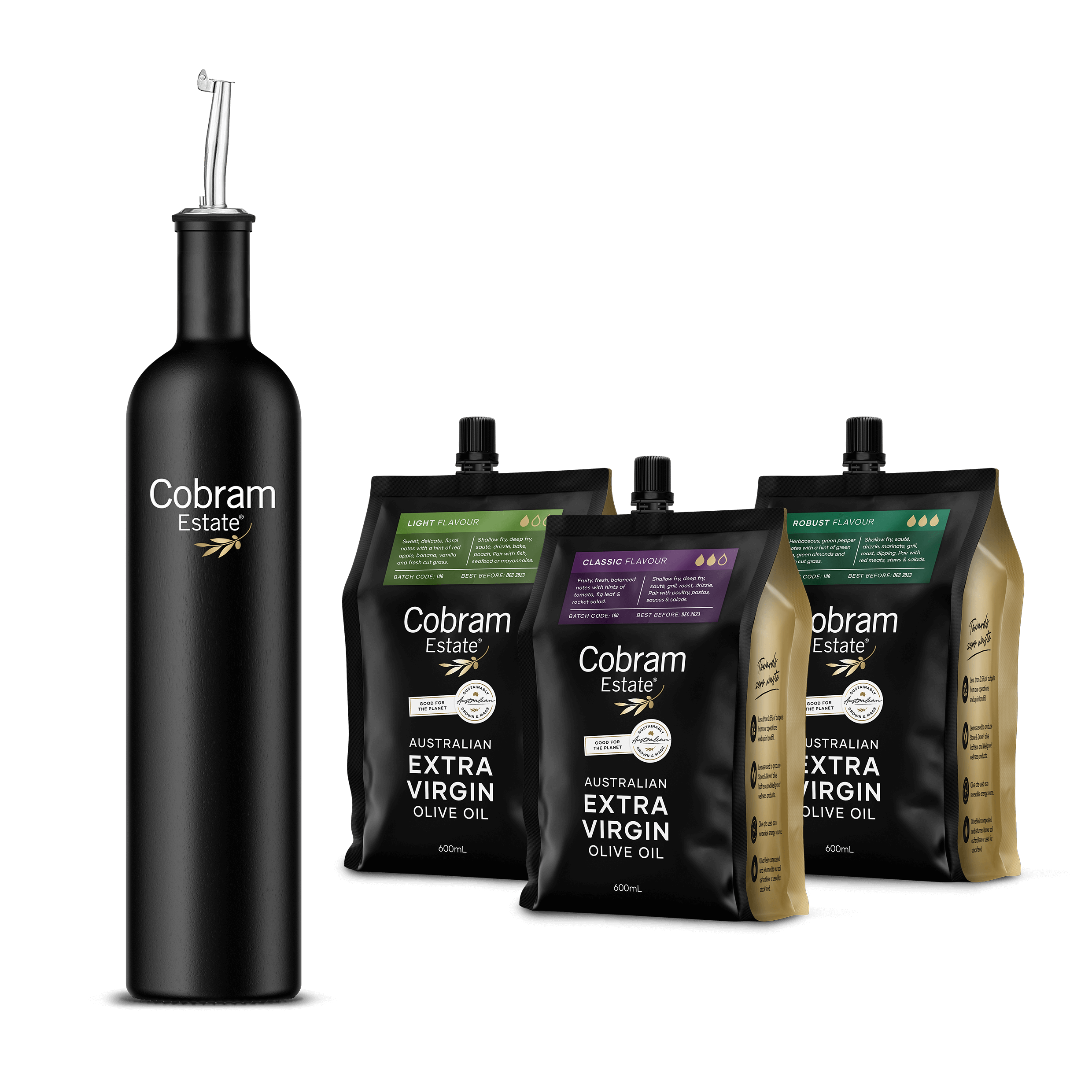
Cobram Estate Bundle
Cobram Estates was founded in 1998 by two classmates from agricultural school, Rob McGavin and Paul Riordan, and the brand now accounts for almost 70 percent of the production in Australia. Their sizeable lineup includes “Everyday Essentials” extra virgin olive oils in Light, Classic, and Robust flavors, Ultra Premium, single cultivar oils from Picual, Hojiblanca, and Coratina, and infused oils in six different, culinary-friendly flavors. Cobram Estate also owns Red Island, a common grocery store olive oil brand in Australia.
The following five producers represent several of the highest scoring producers from around the country in the 2025 Australian International Olive Awards.
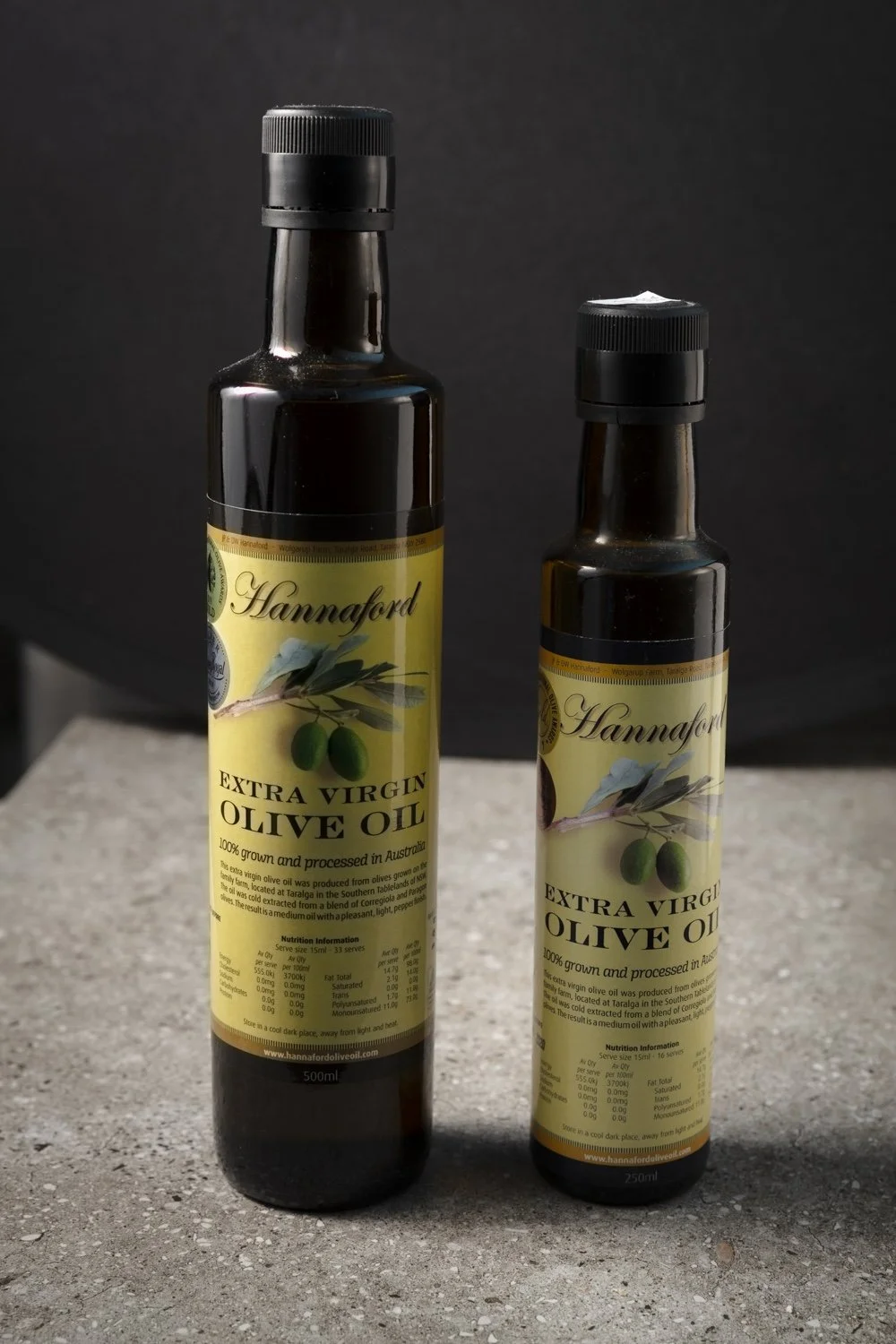
Hannaford Olive Oil
Located on a family farm with decades of history, the Hannaford family began their olive grove in 1998. After several startovers in order to find olive trees suited for their southern New South Wales climate, they settled on Tuscan cultivars Corregiola and Parragon, known for their vigor. The brand produces a single Extra Virgin Olive Oil.
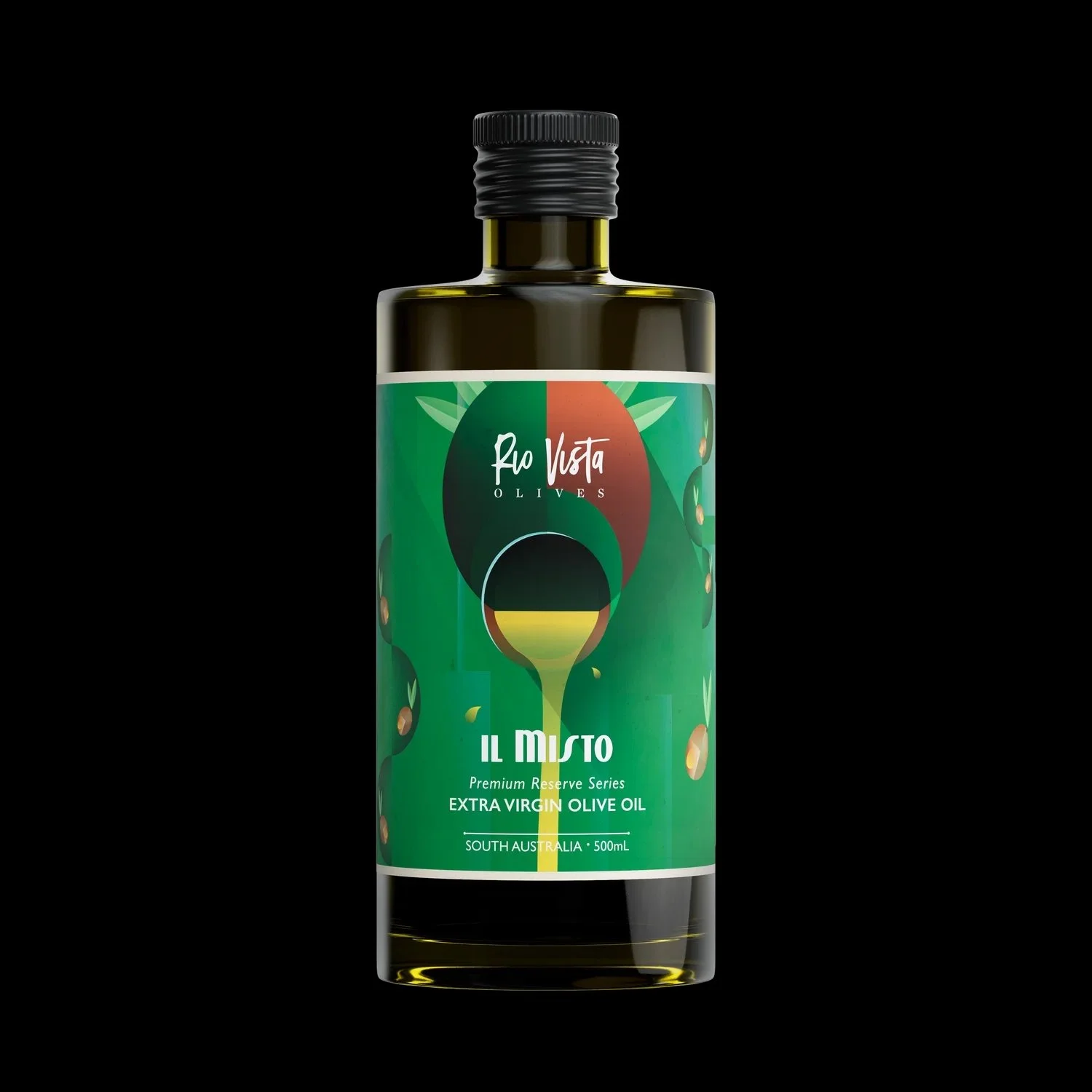
Rio Vista
Producing both table olives and olive oil, Rio Vista is located in South Australia. Their extra virgin olive oil selection includes a wide variety of options, including an Olio Nuovo “First Harvest” expression, a Chef’s Selection series, a Premium Reserve series, flavored Agrumato oils where various herbs or vegetables are pressed alongside the olives themselves, and a single cultivar series consisting of Koroneiki, Signore, Nevadillo, and Manzanillo selections.
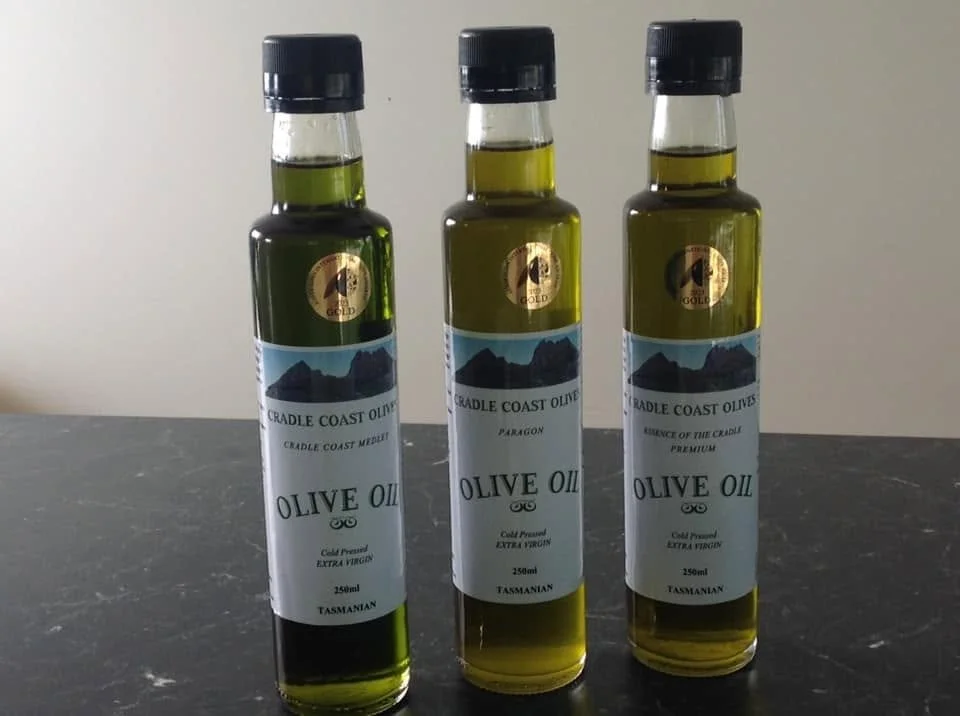
Cradle Coast Olive Oil
An olive grower and a boutique olive oil processor in northwest Tasmania, features a signature olive oil, Essence of the Cradle, made with Manzanillo, Paragon, and Sevillano olives. Singular cultivar bottlings of those same varieties are also made on the premises, with Cellar Door Tastings available to visitors every day but Saturday.
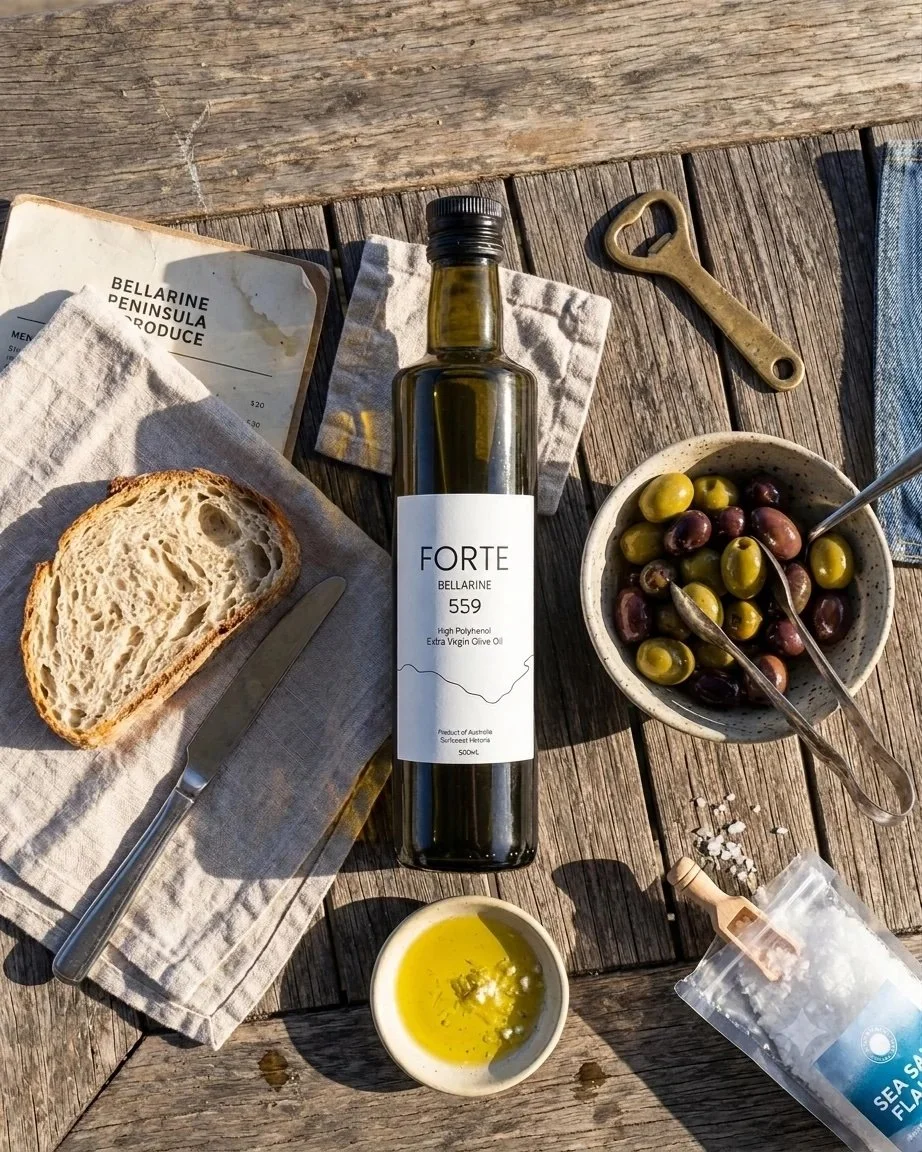
Geelong Region Olive Oil
Formerly Mt Moriac Olives, the brand evolved into Geelong Region Olives in 2018, collaborating with other growers in the region to be able to produce extra virgin olive oil on a greater scale. The brand now encompasses 1500 olive trees of Frantoio, Leccino, Picual and Arbequina varieties. In addition to products under the Mt Moriac label, the Geelong Region brand is known for its Forte, high-phenolic oils.
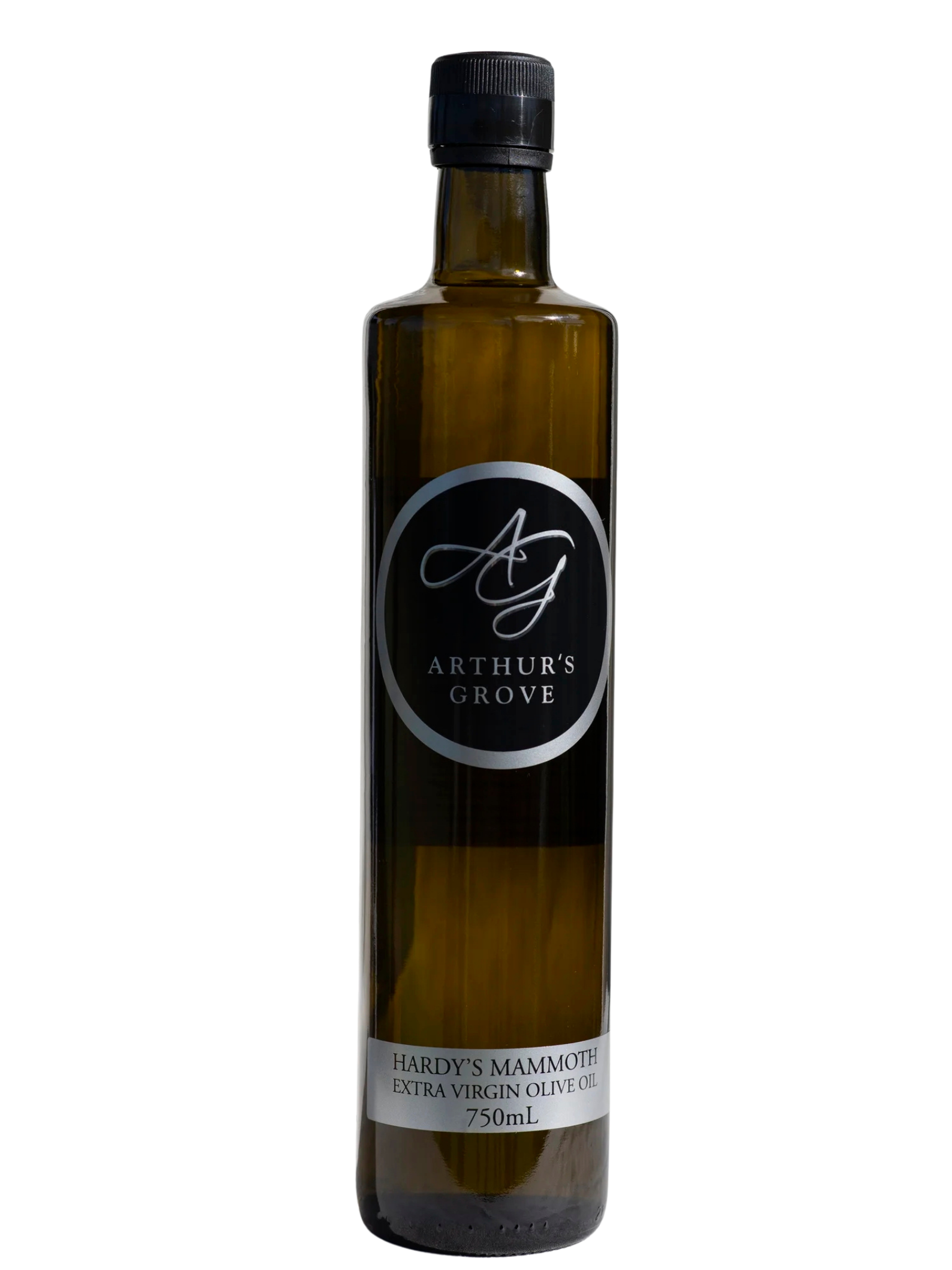
Arthur's Grove
In Australia’s southwest region, Arthur’s Grove produces not only table olives and olive oil, but also skincare. Their signature extra virgin olive oil is a unique blend of Manzanillo, Frantoio, Kalamata, and Hardy’s Mammoth olives — a cultivar bred in Australia in the late 1800s. Arthur’s Grove also produces single cultivar bottlings from all but Kalamata, meaning it’s possible to have a taste of one olive that’s uniquely down under.