
Which Are the Best Olive Oils at Whole Foods?

Whole Foods private label California small batch and unfiltered olive oils
It's challenging to find a good olive oil. Store shelves are filled with bottles and tins, and prices are all over the map. So, at the store, how can you find good, if not great, olive oil? While tasting it is the best way to know what an olive oil is like before you buy it, that's rarely possible, unless you are in a specialty store; that's why we gathered a team of experts to pick out the best options at Whole Foods and then to taste them, side by side.
Our tasting panel chose oils to taste in line with how experts advise consumers to shop. Harvest date, certifications, glass or tin containers and clear labeling around region, country, and olive varieties are all determining factors in how to choose what to buy, and how to choose what to taste as an expert. Ultimately, the more information provided on the bottle, the better.
Whole Foods "Quality Commitments"
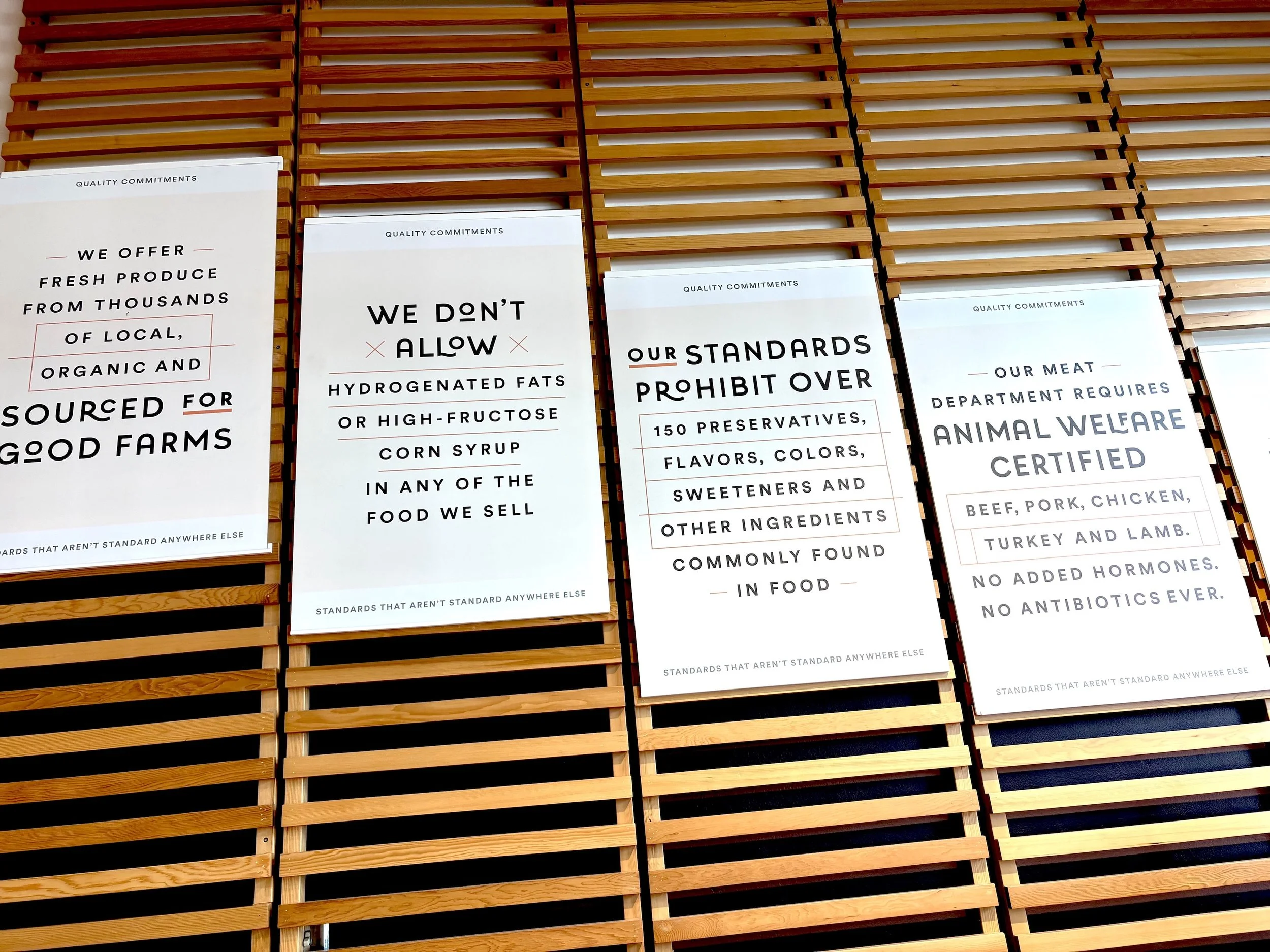
Whole Foods Quality Commitments
Whole Foods prides itself on "responsible sourcing," "quality standards" and "environmental stewardship," and their customers seem to value organic, high-quality food and ingredients, prioritizing tenants of environmentalism, social responsibility, and transparency. So, we were curious about Whole Foods' criteria for olive oil.
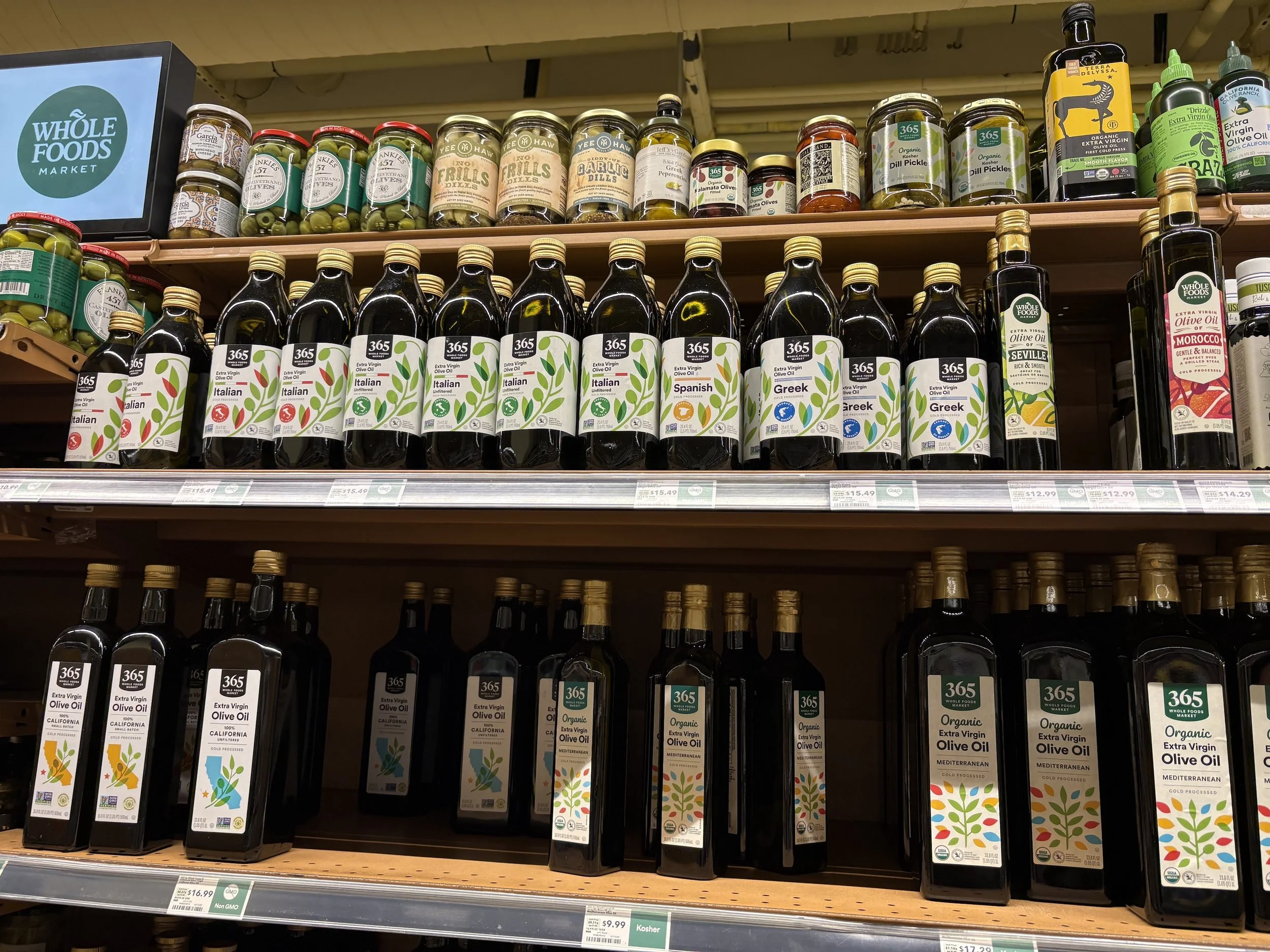
7 different Whole Foods private label olive oils
At the store we visited, there were seven different house-brand olive oils in addition to dozens of other brands. Yet, they declined to share their requirements for the category (unlike other categories they sell, such as seafood, where their guidelines are very clear). The result is that, even with their own house brand olive bottles, the oils do not meet easily identifiable standards. While you may notice the "no GMO" shelf label, there is no GMO olive oil. All olive oil is (currently) GMO-free.
The panel wanted to learn specifically about Whole Foods' criteria for private-label bottles and why only two of them had harvest dates listed. Whole Foods declined to comment when contacted.
The Tasting Panel
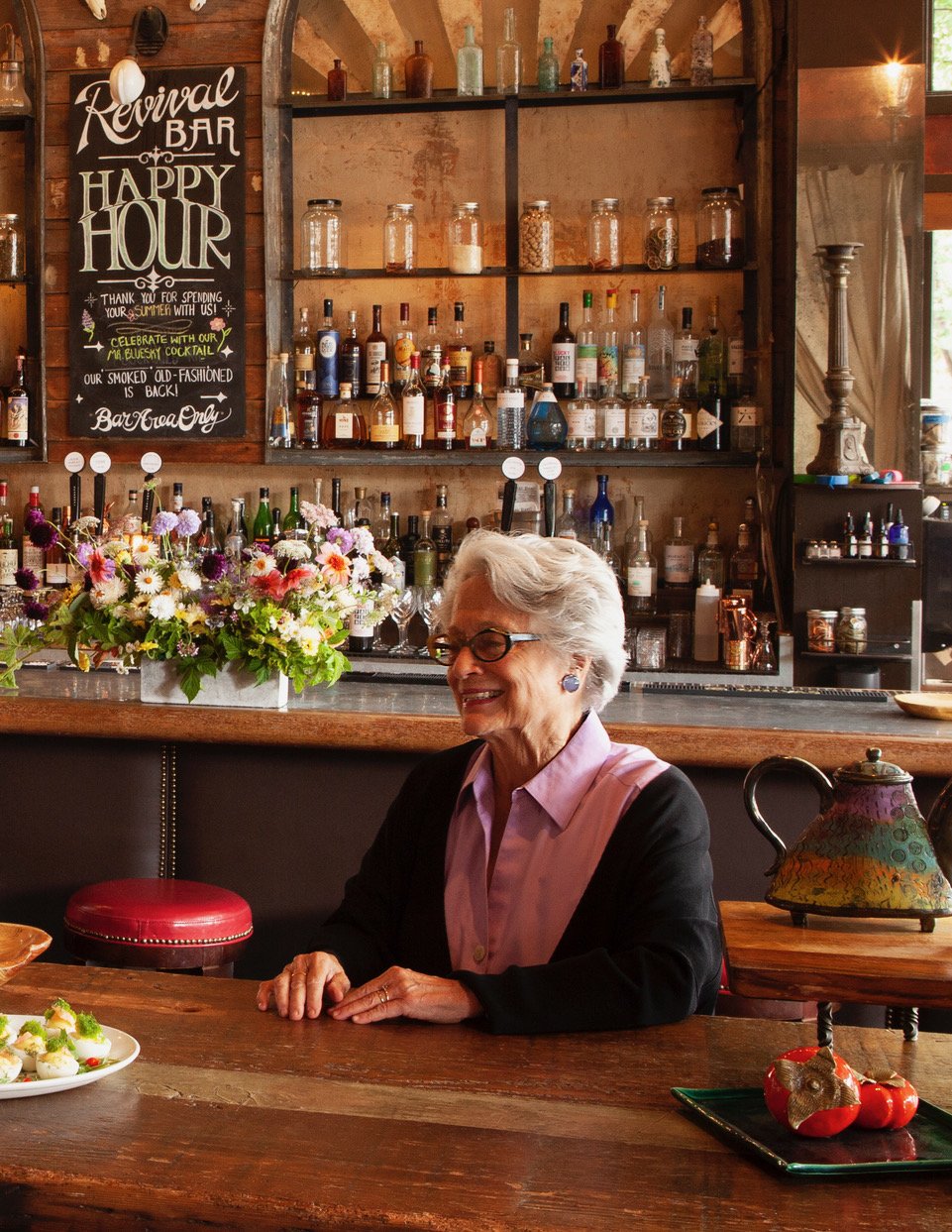
Based in Oakland, CA, Roberta Klugman is the principal of Klugman & Associates, a firm specializing in strategic communications, event management, and educational programming for Bay Area food and wine professionals. Her work with the California Olive Oil Council (COOC) Board has focused on strategic planning and marketing, culminating in her receiving the organization's Pioneer award in 2017. A recognized authority on olive oil, she has conducted educational seminars for prominent organizations including Google, Les Dames d'Escoffier, the International Association of Culinary Professionals, and the San Francisco Professional Food Society. She also serves as Committee Co-Chair for the Good Food Awards Oils Category.

As founder and CEO of DKPR, Inc., Deborah Kwan brings extensive expertise in public relations and strategic brand development, specializing in the food, beverage, and publishing sectors. Before launching her independent consultancy, Kwan led the San Francisco division of a New York-based boutique firm, where she directed the consumer lifestyle portfolio and spearheaded business expansion initiatives. Her deep connection to the culinary world extends beyond client work—she trained as a pastry cook in both San Francisco and New York City, earning her blue ribbon diploma from Peter Kump's New York Cooking School (today's Institute of Culinary Education). A San Francisco native, Kwan holds a Bachelor of Arts in English Literature from the University of California, Berkeley. It should also be noted that Kwan says “everything I know about extra virgin olive oil is because of Roberta Klugman.”

Linda Sikorski has extensive expertise in specialty foods, both as an educator and a buyer. Most recently, she was the senior specialty food buyer at Market Hall Foods (previously known as The Pasta Shop) before retiring. In this role, she oversaw an extensive portfolio, with curated a wide range of premium extra virgin olive oils from around the globe. Market Hall was one of the first grocers to commit to buying olive oil from California in the late 1990s, and she had a keen eye on tracking what the consumer was looking for and buying. She was chair of the Specialty Food Association Retailer Network and contributed insights as a board member for both the California Olive Oil Council and the San Francisco Professional Food Society, and has been at the forefront of the olive oil community since the beginning of the industry in California. Currently, she serves as Committee Co-Chair of the Oils Category for the Good Food Awards.
The Process
The first step in a blind tasting is to smell. It's good to start with a rancid oil, to calibrate the nose. Any oil can go rancid in a matter of days if left out in the sun or exposed to heat, even a high-quality oil.
Oil easily becomes rancid. The key indicators of rancidity are aromas of petroleum, stale nuts, paraffin, metallic, rubber or eraser.
Desirable aromas are fruity, fresh, grassy, green, complex, nuanced, and herbaceous. As oil ages, the olive fruit flavors fall off.
When tasting, experts will refer to bitterness, which occurs up the front and side of the mouth and pungency in the back of the mouth and throat. Intensity of aroma and taste are also noted. All of these considerations fall into Delicate, Medium or Robust characteristics in an oil.
Klugman advises consumers to get used to the concept of olive oil being a seasonal product, just like produce. Some experts who really pay attention to quality and flavor buy California oil half the year, then switch to an oil that is at its prime from a different country based on seasonality there.
“We should remember these oils are close to a year old,” says Klugman about the two 365 private label oils the panel tasted, emphasizing her advice that olive oil is a seasonal product and will degrade further from the harvest date. The fact is that many oils available on grocery shelves are past six months from the harvest date, if the date is noted at all, which is not ideal for freshness and flavor and is also a reflection of what’s generally available. At the Whole Foods we visited, we found a bottle with a harvest of 2023. That's not the producer's fault, but every shopper should be aware of this, and read labels very carefully.
Criteria
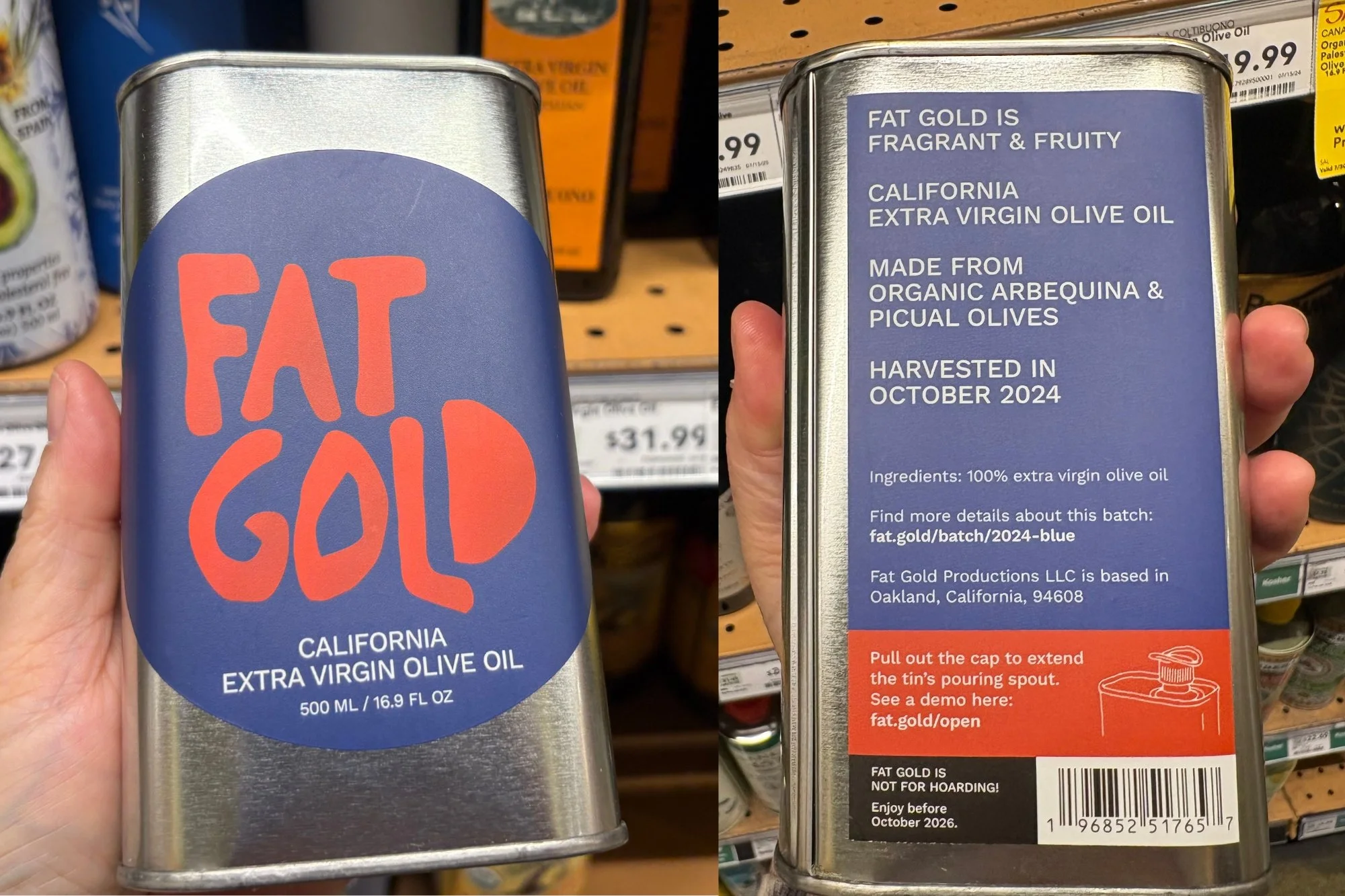
Fat Gold extra virgin California olive oil
What to look for on bottles of olive oil
A harvest date
A dark glass bottle or tin
Origin
Cultivars
Some examples of good choices that are not Whole Foods private label, commonly found in stores that meet The Olive Oil Professor standards in terms of harvest date, glass bottle or tin, listing of origin and cultivars:
Séka Hills Estate Grown California Extra Virgin Olive Oil
Read all about Séka Hills
Enzo Organic Estate Grown California Extra Virgin Olive Oil
Read all about Enzo
Fat Gold California Extra Virgin Olive Oil
Read all about Fat Gold
Kosterina Greek Extra Virgin Olive Oil
The Tasting
Here are the results after reviewing the two house-label bottles at Whole Foods that met our requirements.
*Ranked in order of recommendation
365 Extra Virgin Olive Oil 100% California Unfiltered

365 Extra Virgin Olive Oil 100% California Unfiltered
33.8 Fl Oz
$19.79 ($0.59/fl oz)
Harvest Date: November/December 2024
Country of Origin: USA
Intensity: Medium
Aroma/Taste Descriptors: Grass, artichoke, tomato leaf, ripe banana
Bitterness: Medium
Pungency: Medium
Complexity: Yes
Balance: Yes
Certifications:
Non-GMO
Olive Oil Commission of California. This seal means the oil has passed these commission standards and random tastings throughout the year.
Certified Extra Virgin Applied Sensory Panel. The only tasting panel left in California, run by a sensory scientist.
Comments:
“Definitely better for cooking than as a finishing oil,” says Klugman
“Good for cooking, baking or in a vinaigrette,” notes Kwan
365 Extra Virgin Olive Oil 100% California Small Batch

365 Extra Virgin Olive Oil 100% California Small Batch
16.9 Fl Oz
$12.99 ($0.77/fl oz)
Harvest Date: November/December 2024
Country of Origin: USA
Intensity: Delicate
Aroma/Taste Descriptors: Muted, mild, green apple, ripe banana, buttery
Bitterness: Delicate
Pungency: Medium
Complexity: One-sided, banana note
Balance: No
Certifications:
Non-GMO
Olive Oil Commission of California. This seal means the oil has passed these commission standards and random tastings throughout the year.
Certified Extra Virgin Applied Sensory Panel. The only tasting panel left in California, run by a sensory scientist.
Comments:
“It is very mild, which is pretty typical of a California olive oil,” says Sikorski, adding. “It’s going to fall off.” “No bitterness is a classic sign of Arbequina”, says Klugman. “Banana flavors can also be a cue of Arebequina.” She explains that Arbequina is probably 70% of the California olive crop, and this oil presents characteristics that would lead one to think it is Arbequina. “I would use this for cooking and baking,” notes Kwan.